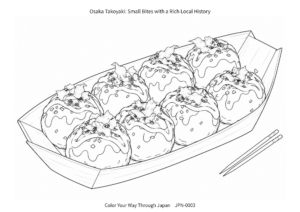
※ You can download the coloring page PDF for free.
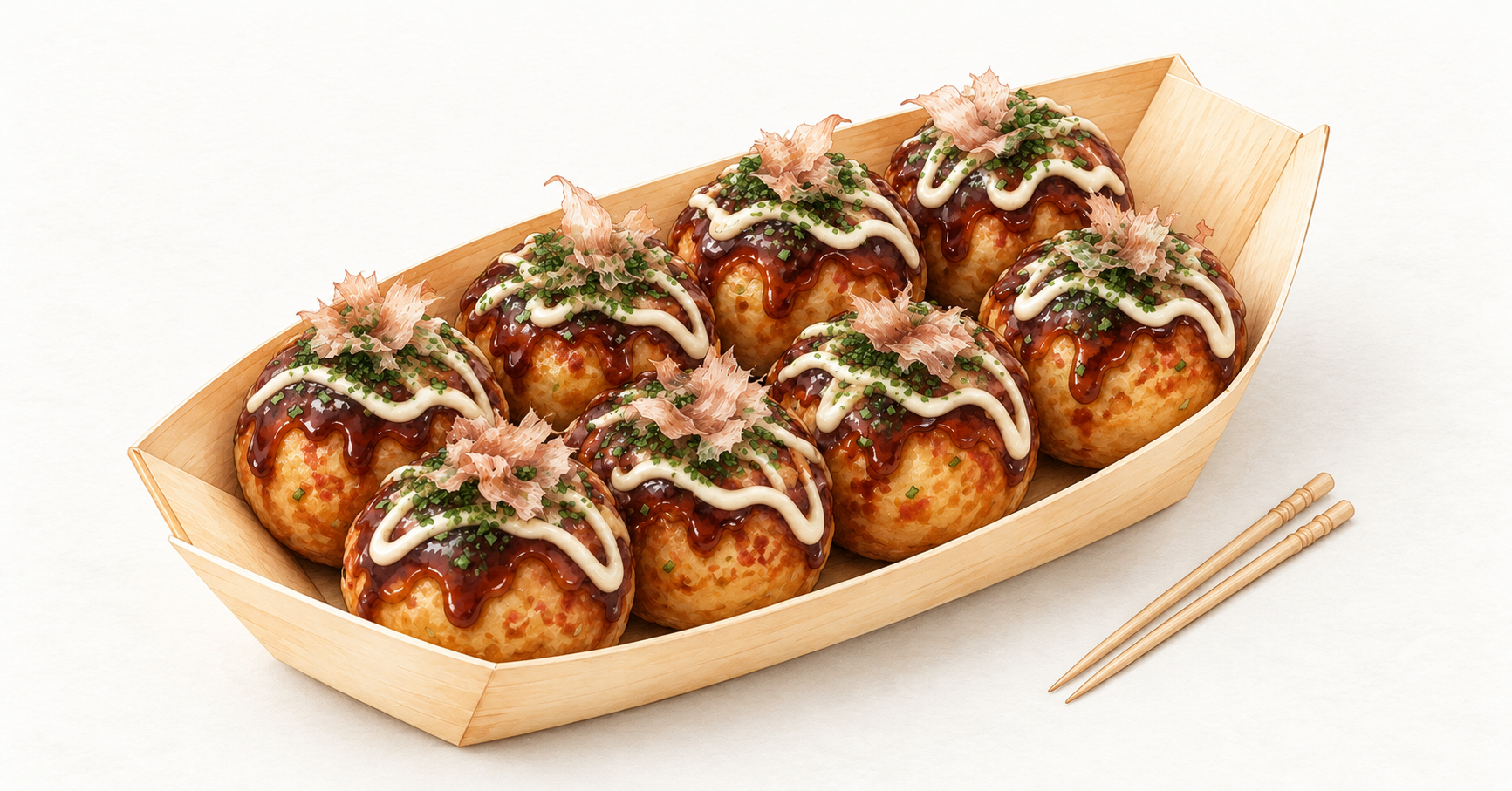
A shallow boat tray, a pair of toothpicks, and a cluster of round, sauce-covered bites form one of Osaka's most familiar food images. Takoyaki contains pieces of octopus enclosed in cooked batter. Its appeal lies partly in the contrast between the browned surface, the soft interior, and the firmer bite of the filling. Beneath the toppings is a dish whose character depends as much on its batter as on its seafood.
Takoyaki belongs to Osaka's broad family of konamon, foods made with flour. This family includes okonomiyaki and udon, even though their shapes and cooking methods differ considerably. Dashi, a savory stock, helps connect these dishes within the city's food culture. In takoyaki, it gives flavor to the batter itself, before any sauce reaches the plate.
From Liquid Batter to Round Bites
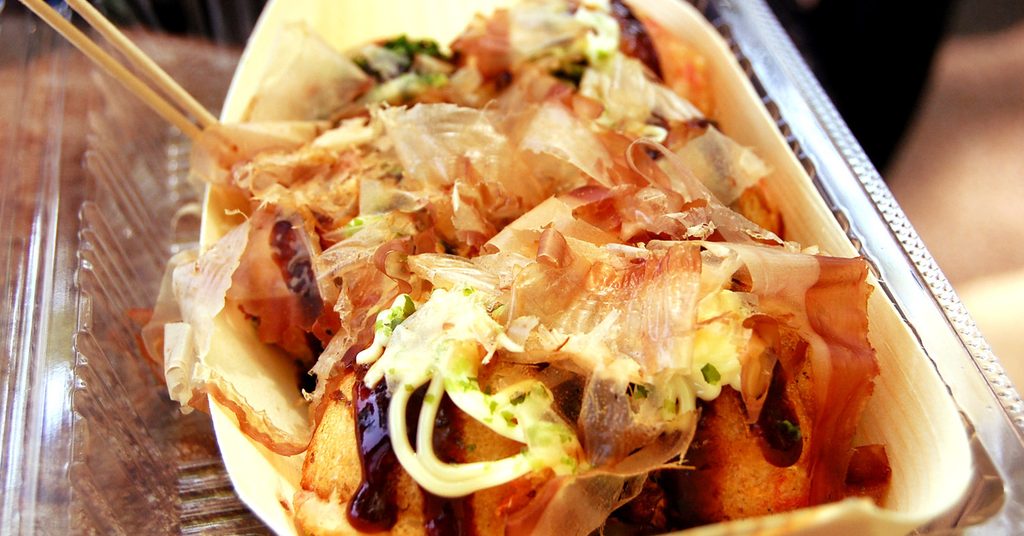
A takoyaki pan has rows of rounded hollows. The cook oils the hot surface and pours in a loose mixture of flour, stock, and egg, then adds pieces of boiled octopus. Tenkasu, small pieces of fried tempura batter, are another familiar ingredient. The mixture spreads beyond the individual wells at first, so the finished spheres are not simply the result of filling a mold and waiting.
As the edges set, the cook separates the batter around each hollow and turns it with a pointed pick. Loose edges are tucked inward while the still-fluid mixture moves into contact with the hot pan. Repeated turning gradually closes the shape. A tray of finished takoyaki therefore records a sequence of small movements: separating, folding, rotating, and browning.
The outside can develop a light crispness while the center remains soft and creamy. The octopus supplies a distinctly firmer texture within that tender surrounding batter. Different shops balance these qualities differently; a deeply crisp shell is not the only expression of Osaka takoyaki. The contrast between exterior and interior matters more than a single uniform finish.
Toppings add another set of textures and shapes. Dark sauce spreads across the rounded surfaces, mayonnaise forms pale ribbons, and aonori, a green seaweed seasoning, appears in small flecks. Shaved bonito adds thin, irregular flakes. In a crowded serving, these toppings overlap, but the rounded outlines of the individual pieces remain the dish's basic visual rhythm. A simple boat-shaped tray gathers them into a compact portion that can be eaten with toothpicks.
An Osaka Snack with More Than One Style
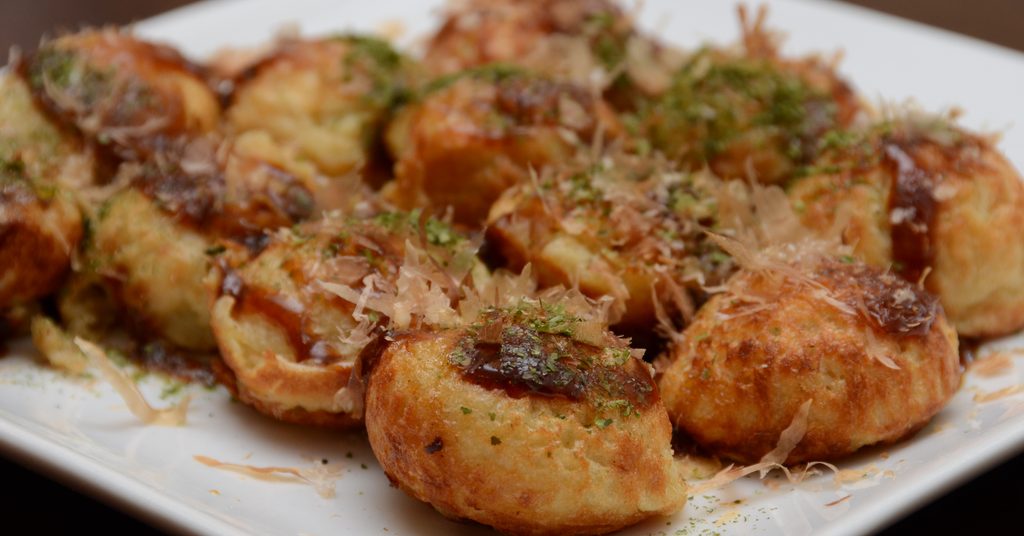
Takoyaki's history includes earlier cooked-batter snacks, rather than a single unchanging recipe handed down over centuries. Osaka's Aizuya traces its takoyaki to founder Tomekichi Endo in 1935. Its account describes the development of an octopus-filled version of radioyaki, an earlier snack with other fillings. The name radioyaki reflected the novelty and appeal of radio in that period.
Aizuya's longstanding approach gives the batter enough seasoning to be eaten without an added coating of sauce. This plain style is a useful reminder that the glossy, heavily dressed serving now associated with takoyaki is one branch of its history. The octopus and seasoned batter already make a complete combination; toppings change its emphasis rather than define its entire identity.
Sauce-covered versions became established after the Second World War. Shops subsequently developed their own combinations of seasoning and toppings. Koga-ryu in Osaka's Americamura, for example, is known for combining sauce and mayonnaise with batter made using kelp and dried sardine stock. Such differences make the dish recognizable across shops while leaving room for individual recipes and preferences.
Its place in Osaka also extends beyond takeaway counters. Takoyaki is a home-cooked snack, and many households have a dedicated pan. The same repeated turning that shapes a commercial batch can take place around a domestic cooker. Sold well beyond Osaka today, it nevertheless remains closely associated with the city and its everyday flour-based foods.
Takoyaki brings several layers of Osaka food culture into a small serving: stock-flavored batter, skilled handling of a hot pan, and a history of changing finishes. Whether served simply or under sauce and bonito flakes, its rounded form holds together a distinctive combination of softness, texture, and local memory.