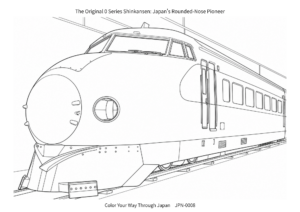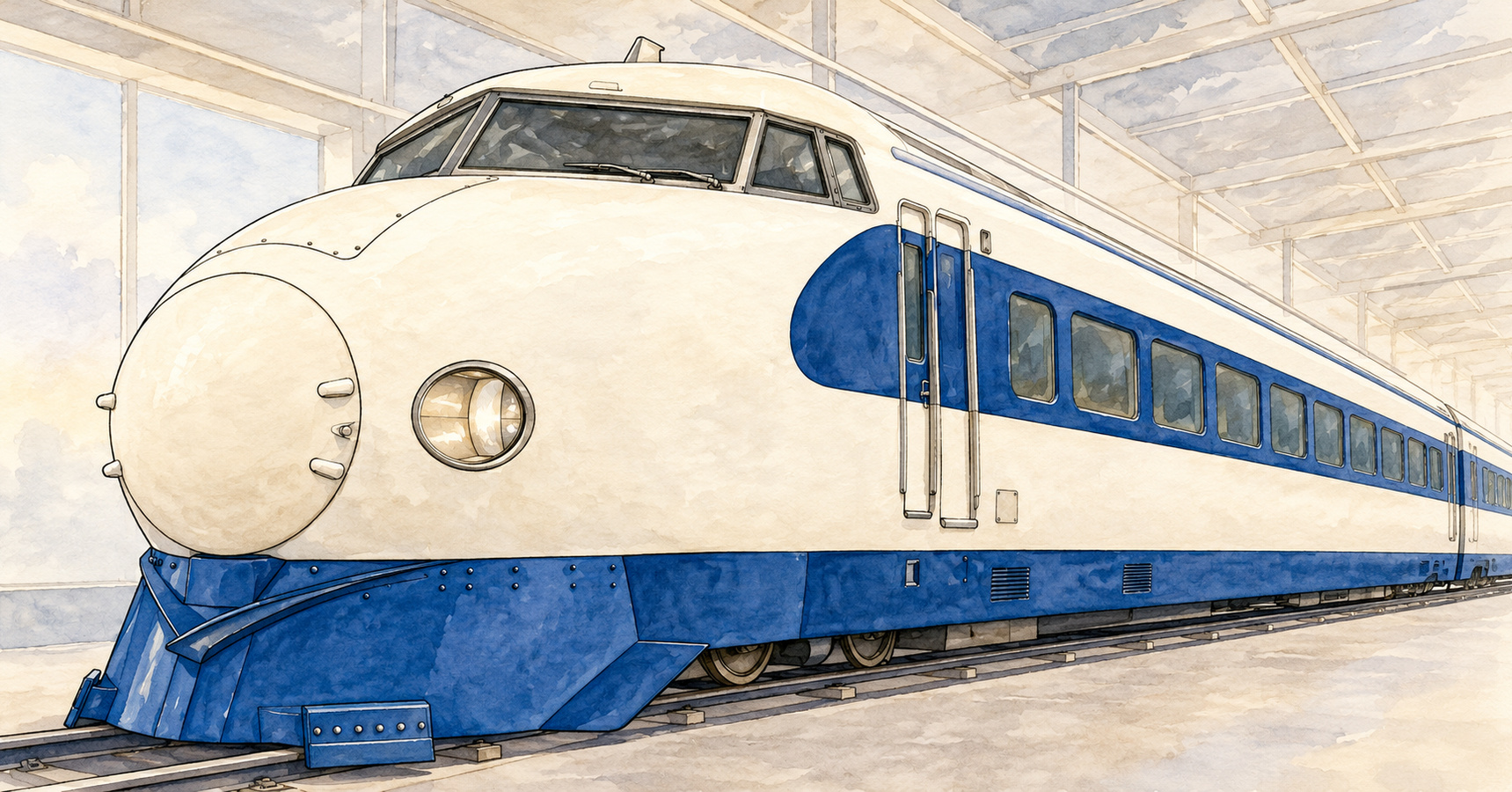
※ You can download the coloring page PDF for free.
The first Shinkansen has a face that is easy to recognize. A rounded nose projects below the driver's windows, a circular lamp sits to either side, and a blue band runs along the passenger windows. Its shape belongs to the beginning of Japan's high-speed railway story: the 0 series, introduced with the opening of the Tokaido Shinkansen in 1964.
Seen today as a preserved vehicle, the train brings a large transport system down to a human scale. A cab window, a narrow door, and the edge of a wheel become visible details rather than a passing blur. The familiar nose attracts attention first, but the long body behind it explains that this was a train built to carry many people between major cities.
A New Railway for Faster Journeys
The Tokaido Shinkansen opened on October 1, 1964, shortly before the Tokyo Olympic Games. Linking Tokyo and Shin-Osaka, it introduced a new kind of intercity journey. The fastest services initially covered the trip in four hours, compared with six hours and thirty minutes on a conventional express. That change gave the new train a significance extending beyond its distinctive appearance.
The 0 series was developed for commercial speeds of up to 210 kilometers per hour. Its performance depended on the railway beneath it as well as the vehicles themselves. The new line used a track gauge of 1,435 millimeters, wider than the 1,067-millimeter gauge common on Japan's conventional railways. This supported a different approach to vehicle dimensions and high-speed travel.
The original trains were formed of twelve cars, with traction distributed throughout the train. They drew electrical power from an overhead supply. The rounded leading car was therefore part of an electric trainset, rather than a separate locomotive pulling a line of unpowered coaches. This distinction helps explain why the passenger body continues so smoothly behind the cab.
The new railway also became associated with Japan's postwar modernization. Opening just before the Olympics placed it within an international moment when visitors were arriving in Tokyo and attention was focused on the country. The train offered a highly visible expression of that change: a new route, new equipment, and a substantially shorter journey between two major urban areas.
Reading the Shape of the First Generation
A three-quarter view brings together the train's front and side. The nose is short and broadly curved, with a circular cover at its tip. Above it, the cab glazing forms an angular contrast. The change from rounded metalwork to flat window panes gives the front its particular character, while the wipers and window borders make the driver's position easy to locate.
Along the side, the blue window band draws the eye toward the rear. The large passenger windows of the reference vehicle repeat at regular intervals, interrupted by doors and other fittings. Beneath them, the lower body panels conceal much of the machinery. The drawing leaves the main contours clear, with only a small portion of the wheels visible above the rails.
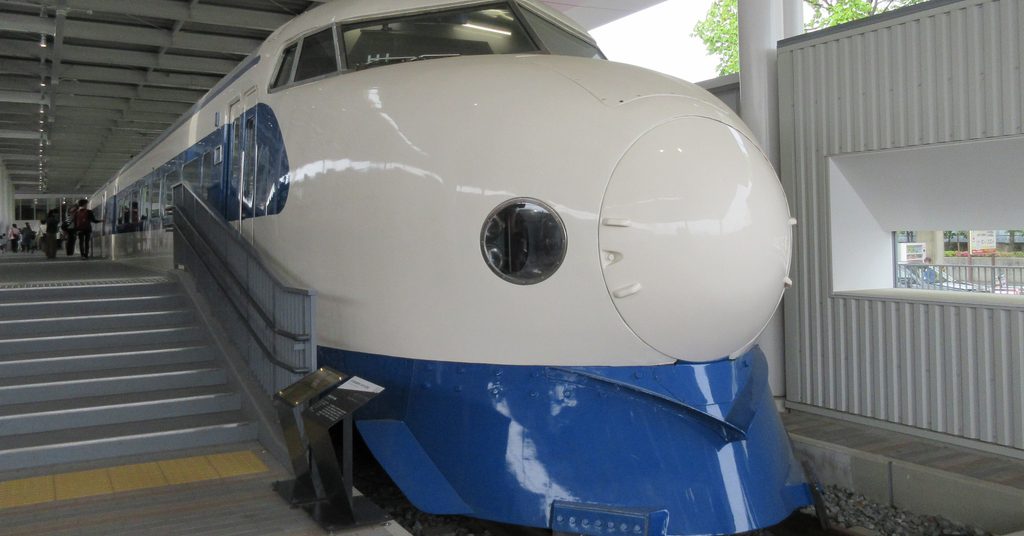
Preserved cars provide different ways to examine this first generation. At Kyoto Railway Museum, car 21-1 is one of four displayed 0 series vehicles built in 1964. The group includes a leading car, a Green Car, a buffet car, and another leading car. These different roles show that the original Shinkansen was also an organized passenger environment, with more than one type of accommodation aboard.
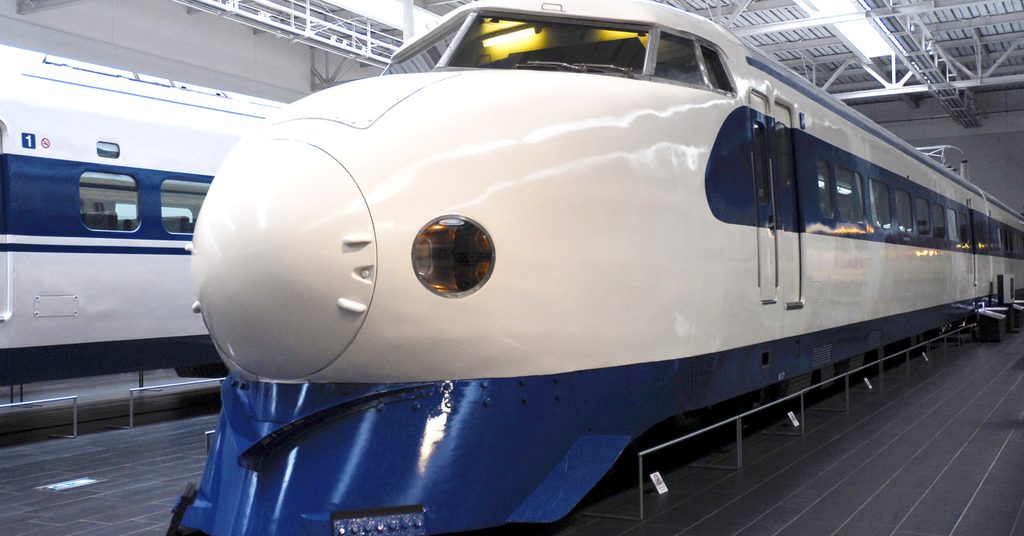
Another preserved example, car 21-86 at SCMAGLEV and Railway Park in Nagoya, shows the same relationship between the prominent cab and the long passenger body. Seen close up, the round lamp housing and small fittings around the nose cover contrast with the broad metal surfaces. These modest details give the large vehicle a sense of scale that photographs of a distant moving train can conceal.
The 0 series connects a recognizable shape with a practical transformation in travel. Its nose remains memorable, but the achievement it represents involved the entire railway: track, electrical power, connected passenger cars, and a new expectation of how quickly cities could be reached.