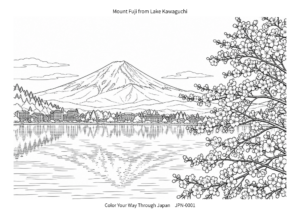
※ You can download the coloring page PDF for free.
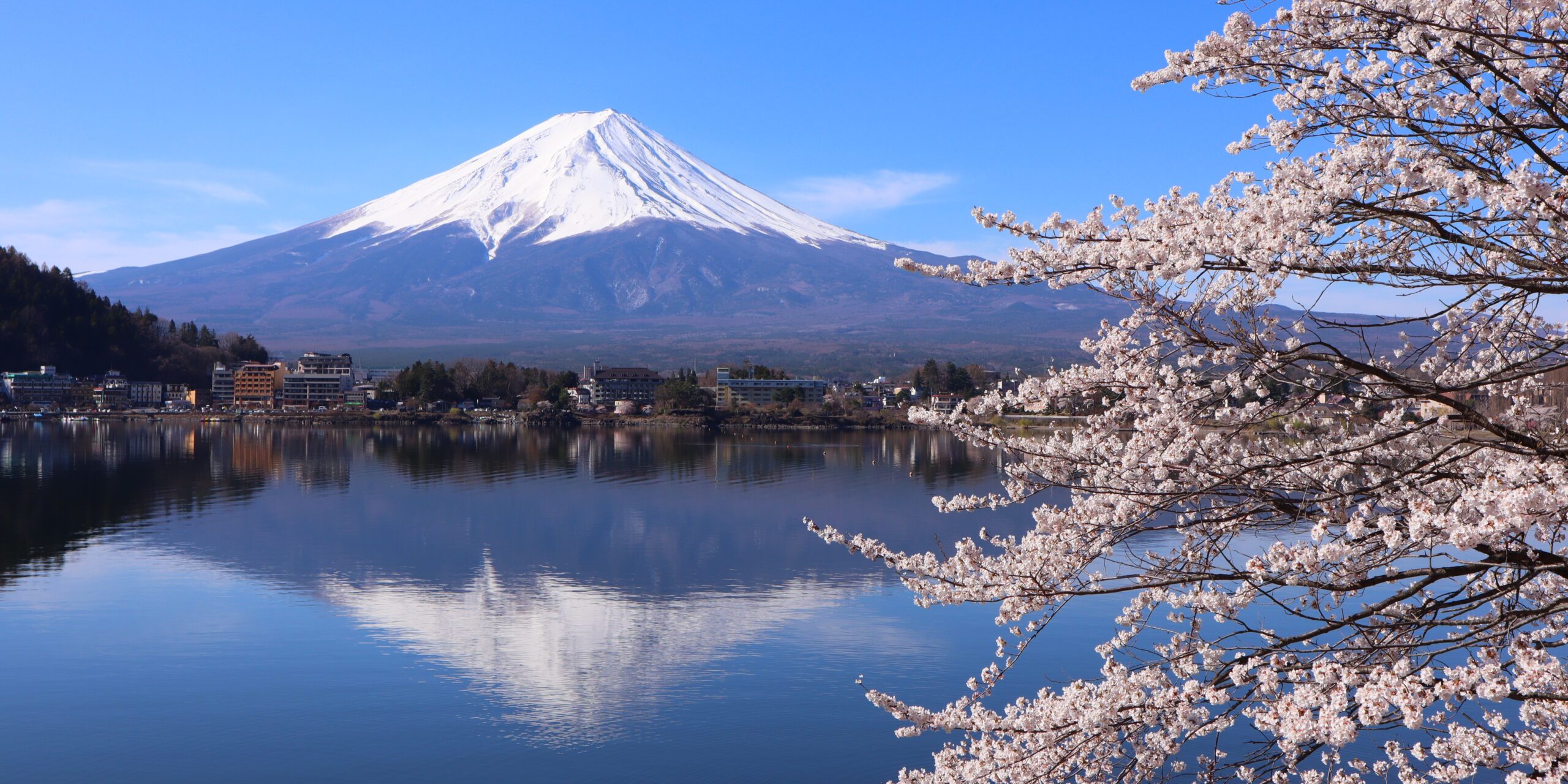
A broad stretch of water separates the shore of Lake Kawaguchi from the long slopes of Mount Fuji. From the northern lakeside, the mountain rises beyond a strip of buildings, trees and lower hills, its summit standing clear of the surrounding landscape when the weather allows. The foreground belongs to the lake: a curving bank, scattered plants and ripples that catch fragments of the mountain's reflection. This combination of open water and distant height gives the view its distinctive sense of space.
Lake Kawaguchi, also known as Kawaguchiko, lies in Yamanashi Prefecture on the northern side of Mount Fuji. It is one of the Fuji Five Lakes, alongside Yamanaka, Sai, Shoji and Motosu. The lake is both a contemporary destination and part of a much older cultural landscape, connected with mountain worship, pilgrimage and images of Fuji that have circulated far beyond Japan.
A Mountain View Shaped by Water and Distance
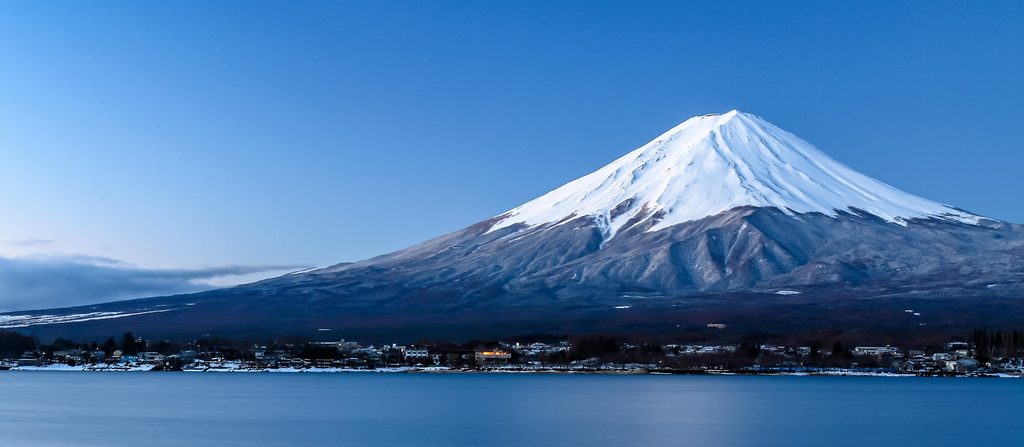
The northern shore places the lake between the observer and Mount Fuji. That simple geographical relationship explains much of the familiar composition: water spreads across the foreground, the opposite shore provides a low horizontal band, and the mountain rises behind it. Fuji does not emerge directly from the lake. The intervening land, settlements and wooded slopes give the scene several distinct layers.
The view near Kawaguchiko Circular Hall includes a wooded promontory on the left and the low span of Kawaguchiko-ohashi Bridge beyond it. Against the scale of Fuji, the bridge and shoreline buildings appear small. They establish a human presence without interrupting the broad mountain silhouette. The contrast between the bridge's horizontal deck and the rising slopes is one of the quiet structural features of this lakeside scene.
Fuji's familiar outline is more varied than a simple triangle. Its flanks spread outward, while gullies and ridges break up the upper slopes. Snow follows this uneven ground, producing an irregular lower edge rather than a straight band around the mountain. The amount and pattern of snow change with the season and weather, so photographs from different months can show markedly different surfaces beneath the same recognizable summit.
Water adds another source of variation. A calm surface can return an inverted image, while ripples divide reflected forms into interrupted bands. In a lightly disturbed lake, the reflection may be suggested by pale streaks instead of a complete second mountain. The shoreline remains a firm boundary, but the image below it shifts with the surface. That difference between solid land and moving water is central to the character of the view.
A Lakeside Landscape with a Cultural History
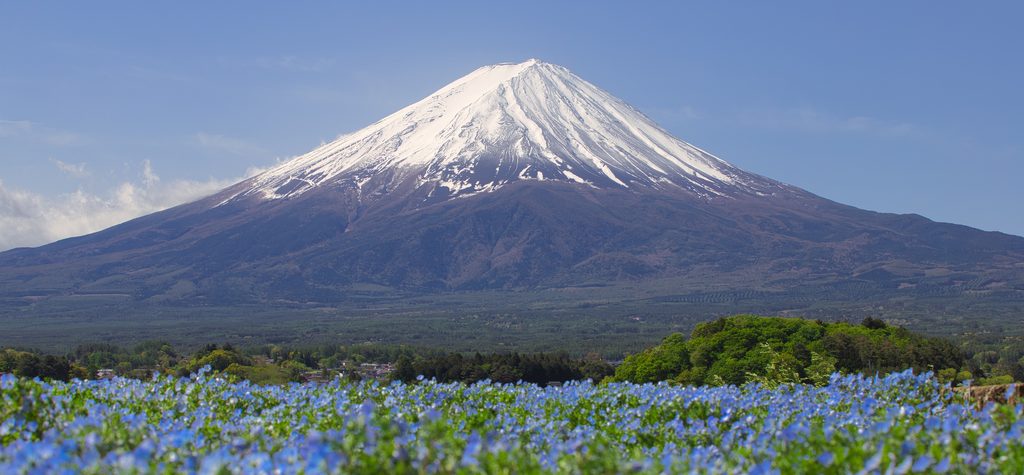
Mount Fuji is Japan's highest mountain, reaching 3,776 meters, and remains an active volcano. Its significance extends beyond those physical facts. In 2013, UNESCO inscribed Fujisan as a cultural World Heritage property for its associations with sacred practice and artistic inspiration. Lake Kawaguchi belongs to this wider landscape of places connected with the mountain.
For followers of Fuji-ko, religious associations devoted to Fuji, the lake had a place in pilgrimage. Travelers arriving through Misaka Pass encountered a view of the mountain before descending toward the water. At the lakeside, purification practices linked the journey to the mountain with the lake itself. The alternative name Funatsuko, or Funatsu Lake, recalled a boat landing associated with these water rituals; Funatsu survives as a local place name.
The relationship between lake and mountain also entered Japanese art. Both Hokusai and Hiroshige depicted the Kawaguchi landscape in woodblock prints. Their images belong to a long history of presenting Fuji through the surrounding world: roads, settlements, water and changing atmospheric conditions. The mountain becomes recognizable through its outline, yet each setting gives it a different visual relationship with everyday life.
Seasonal changes continue to transform the lakeside foreground. Cherry blossoms appear in spring, lavender flowers along parts of the shore in summer, and autumn foliage frames views from the northern lakeside. Winter often brings clearer views of Fuji. These seasonal settings are distinct from one another; the lake's scenery is a succession of changing conditions rather than one fixed arrangement of flowers, foliage and snow.
From Lake Kawaguchi, Fuji is part of a landscape with several scales: plants at the water's edge, a bridge and inhabited shoreline, and a summit far above them. The lake holds these elements together, giving a familiar mountain both distance and a particular place in the life and history of its northern foothills.