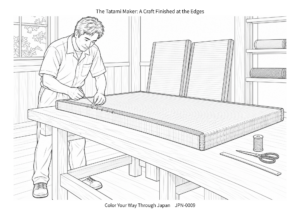
※ You can download the coloring page PDF for free.
A tatami mat presents a broad, orderly surface, but its narrow edges reveal another kind of work. Along the two long sides, strips of woven cloth meet the rush covering in a straight line. At the corners, the cloth folds into a compact finish. These small transitions are part of the tatami maker's craft: bringing different materials together so that a mat keeps its shape and fits its place in a room.
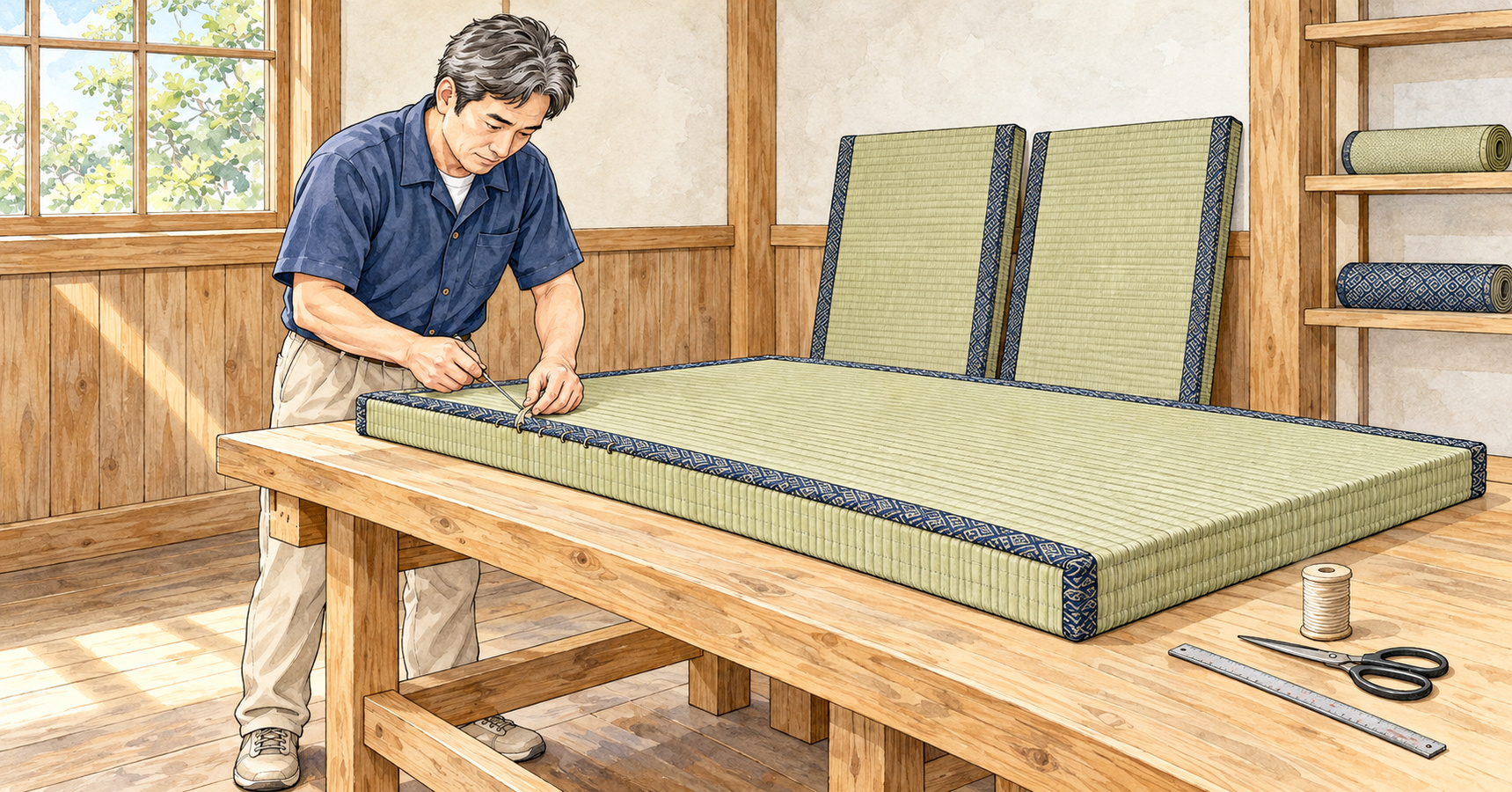
In a workshop, that finished floor becomes a movable object. A mat rests on a bench beside thread, needles, cutting tools and measuring equipment. The maker can reach its sides and underside, parts normally hidden after installation. Binding an edge is one stage in a wider occupation that includes measuring, assembling, repairing and fitting.
Layers Beneath the Woven Surface
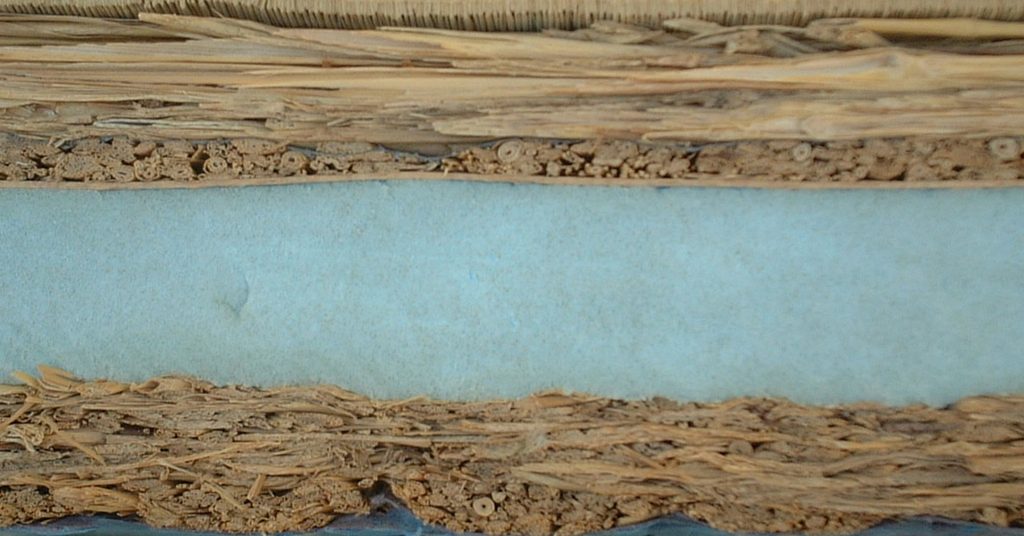
A conventional bordered tatami has three principal elements. The doko is the substantial core, the omote is the woven surface, and the heri is the fabric border. Each has a different job. The core provides the mat's body, the covering supplies the surface used in daily life, and the border finishes and reinforces the long edges.
Natural rush, known as igusa, is used for traditional tatami coverings. The core and covering are separate components, rather than a single thick piece of woven grass. Compressed rice straw is one core material; modern products also use materials such as fiberboard and insulating foam. A cut section can therefore look quite different from the familiar surface of a finished mat.
This layered construction explains the work at the edge. The covering has to sit securely over the core, and the fabric border has to meet it cleanly. The maker handles a combination of flexible cloth, woven plant material and a much thicker foundation. A needle and thread join these elements, while measuring and cutting establish the shape that the stitching will hold.
Two named operations are involved in attaching a conventional border. Hirazashi secures the border before it is folded over; kaeshinui closes the folded border against the side of the core. The sequence creates a finished edge rather than simply placing a decorative ribbon on top. The width of the visible strip and the way its corners are folded affect the final appearance.
At a hand-sewing bench, attention stays close to the point where needle, thread and material meet. One hand supports or positions the edge while the other works the stitch. The task combines a long, straight overall line with small local adjustments. A border can appear effortless once installed, although it has been formed through a series of separate movements.
From the Workbench Back to the Room
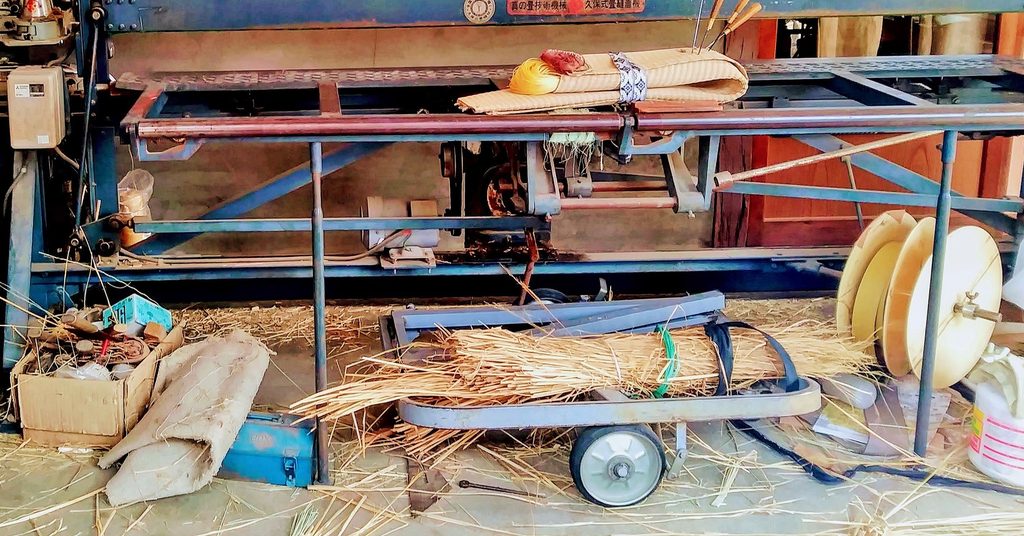
Hand stitching remains part of tatami making, but contemporary workshops also use specialized machinery. The Kyoto Tatami Cooperative describes the continuation of hand-sewn techniques alongside the wider spread of machine production. These are working methods within a living trade, rather than two periods separated by a clean historical boundary. Equipment and the amount of hand finishing vary between makers and projects.
The occupation also extends beyond making entirely new mats. In omotegae, the surface covering is replaced while a serviceable core is retained. Removing the old covering exposes the foundation, allowing the maker to assess its condition and make adjustments. The replacement surface and borders give familiar flooring a renewed finish without necessarily replacing every layer.
Measurements connect this workshop activity to a particular interior. Tatami makers check the existing fit, prepare the mats and return them to their positions. Final adjustments address differences in height and the meeting lines between neighboring pieces. The broad geometry of a room depends on these modest details at its edges.
For the people using the room, the workshop tools disappear from view. What remains is the repeated rhythm of woven surfaces and cloth borders. The tatami maker's work links a needle-sized point of contact to the larger shape of an everyday living space.