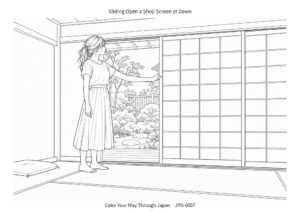
※ You can download the coloring page PDF for free.
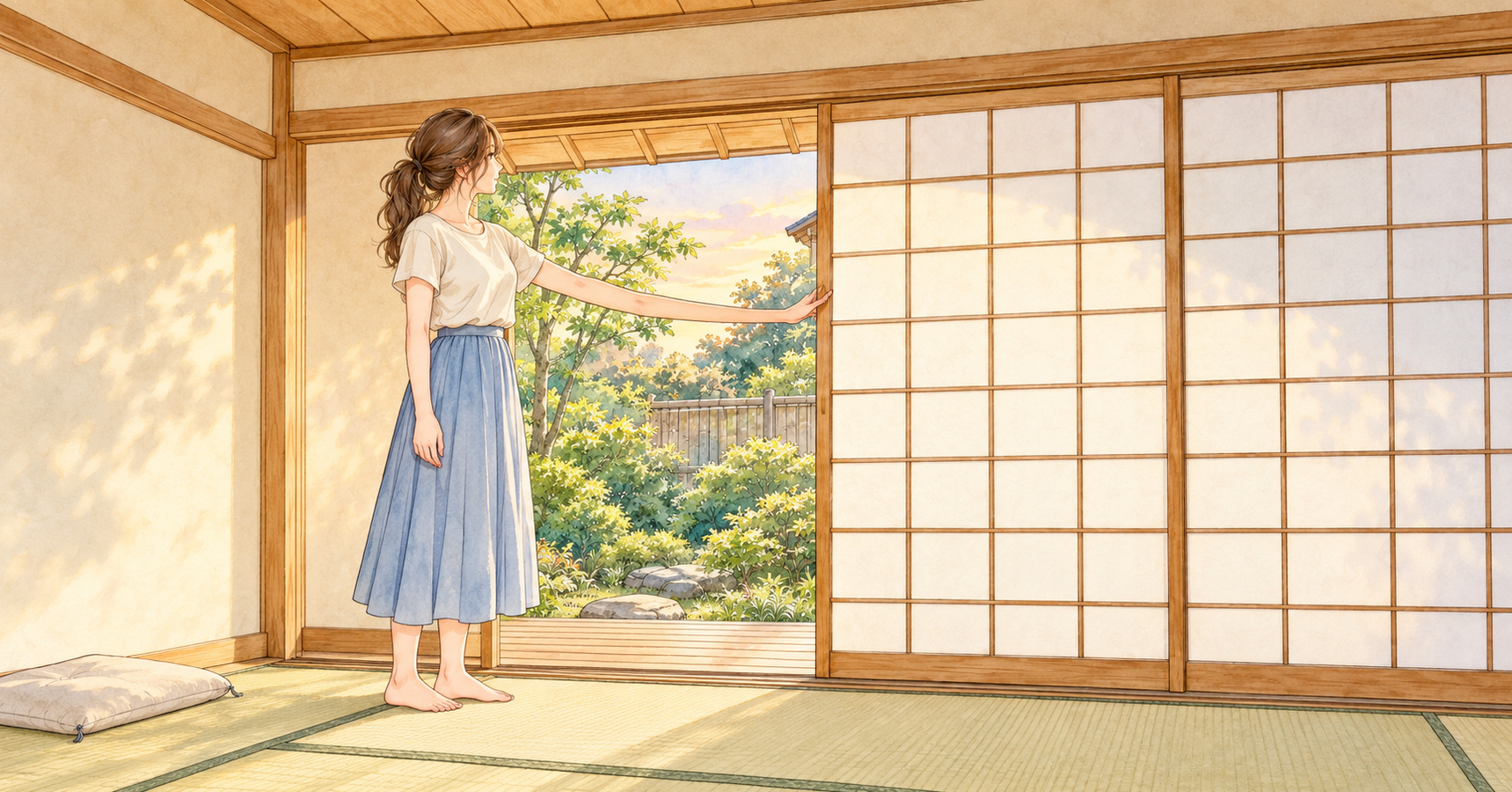
Morning reaches a Japanese-style room before its paper screen is opened. The pale surface brightens, while the wooden lattice remains visible as a pattern of narrow lines. When a hand moves the screen sideways, a strip of garden appears beside it. The change is small but immediate: a surface that softened the outside light becomes an opening onto the world beyond the room.
This is the setting for a shoji, a translucent screen associated with traditional Japanese architecture. It can belong to an older house or to a Japanese-style room within a contemporary home. Opening one at dawn is an imagined domestic moment here, rather than a ceremony or a routine shared by every household in Japan.
Paper, Wood, and a Sliding Frame
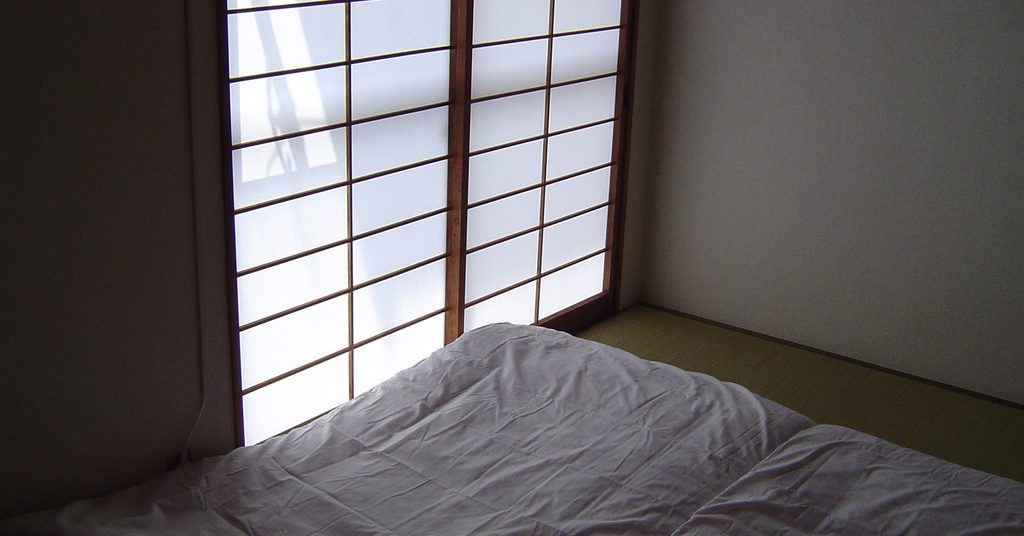
A familiar shoji consists of a wooden frame and slender lattice covered with light-transmitting paper. The lattice supports the paper and divides its broad surface into smaller shapes. Some arrangements are simple rectangles; others use more closely spaced strips. The pattern changes the appearance of the screen without changing its basic relationship between a solid framework and a translucent covering.
The paper is often described as washi, Japanese paper. Its importance in this setting is visible even before the panel moves: daylight passes through, but the garden does not appear as a clear view. The screen therefore combines enclosure with illumination. Its pale surface can become part of the room's light, rather than simply a barrier placed in front of it.
Ordinary horizontal sliding shoji run in grooves at the top and bottom of the opening. These tracks guide the panel along the wall instead of allowing it to swing into the room. In a paired arrangement, panels can pass alongside one another. The opening grows as one panel moves across, while the screen remains supported within the surrounding wooden frame.
In the illustration, the woman's hand meets the upright wooden edge of the moving panel. Her body stays inside the room, and the opening reveals a narrow veranda and garden. The paper lattice, supporting frame, and lower track remain distinct. Those relationships make the action understandable: the hand moves a piece of joinery along its track, while the delicate paper travels with it.
Shoji differ from fusuma, the opaque sliding panels also found in Japanese interiors. Fusuma close off a view without admitting light through their main surface. Shoji allow light to filter through. Although both can slide, their different coverings give them different effects within a room.
A Traditional Feature in Everyday Rooms
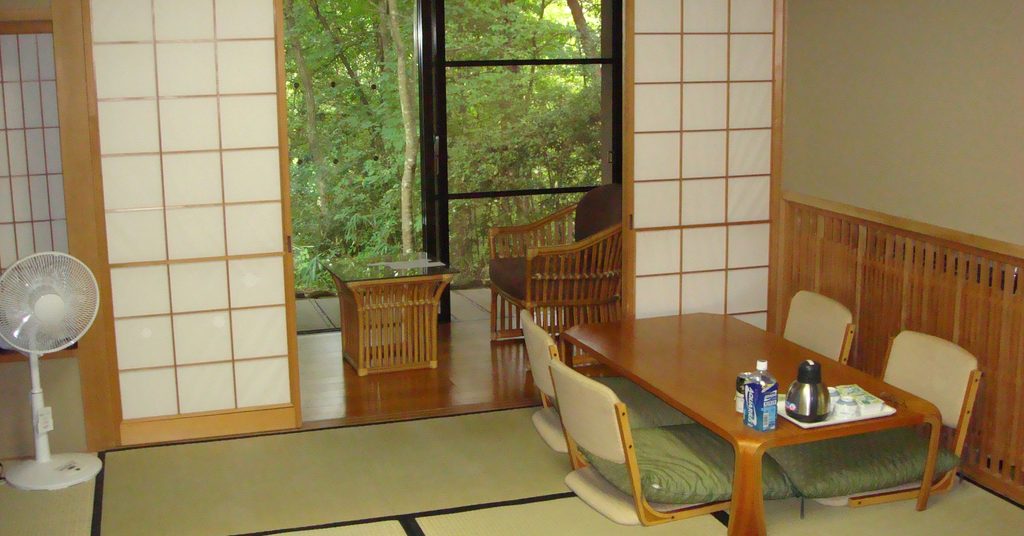
A Japanese-style room, often called a washitsu, brings shoji into a larger interior setting that may include tatami flooring and floor cushions. Such a room can exist alongside spaces furnished with tables, chairs, and beds. The presence of a paper screen does not mean the whole home follows one historical pattern of living.
The relationship with the outdoors also varies. A shoji may face a sheltered veranda, or it may sit inside a glazed window or door. Glass and paper then form separate layers. Moving the paper screen reveals the view through the glass; it does not necessarily open the room to outside air. This distinction matters when imagining what the simple sideways movement actually changes.
Some screens offer a smaller opening within the main panel. Yukimi shoji, commonly translated as snow-viewing screens, can have a lower section that slides upward to reveal glass. This allows an outward view while much of the paper surface remains in place. It is another way of adjusting the boundary between a room and its surroundings.
The dawn scene shows a woman dressed for the day, standing beside the screen in a quiet domestic setting. Its meaning comes from the light, the movement of the hand, and the gradually revealed garden. No special occasion is needed for the architecture to become noticeable. A practical household action briefly draws attention to the materials that shape the room.
With the screen partly open, filtered light and an unobstructed view occupy neighboring parts of the same wall. The morning scene rests on that simple combination: a movable wooden frame, a luminous paper surface, and enough open space for everyday life to continue around them.