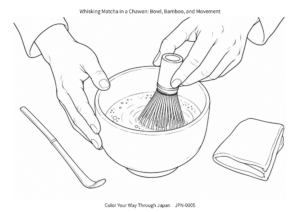
※ You can download the coloring page PDF for free.
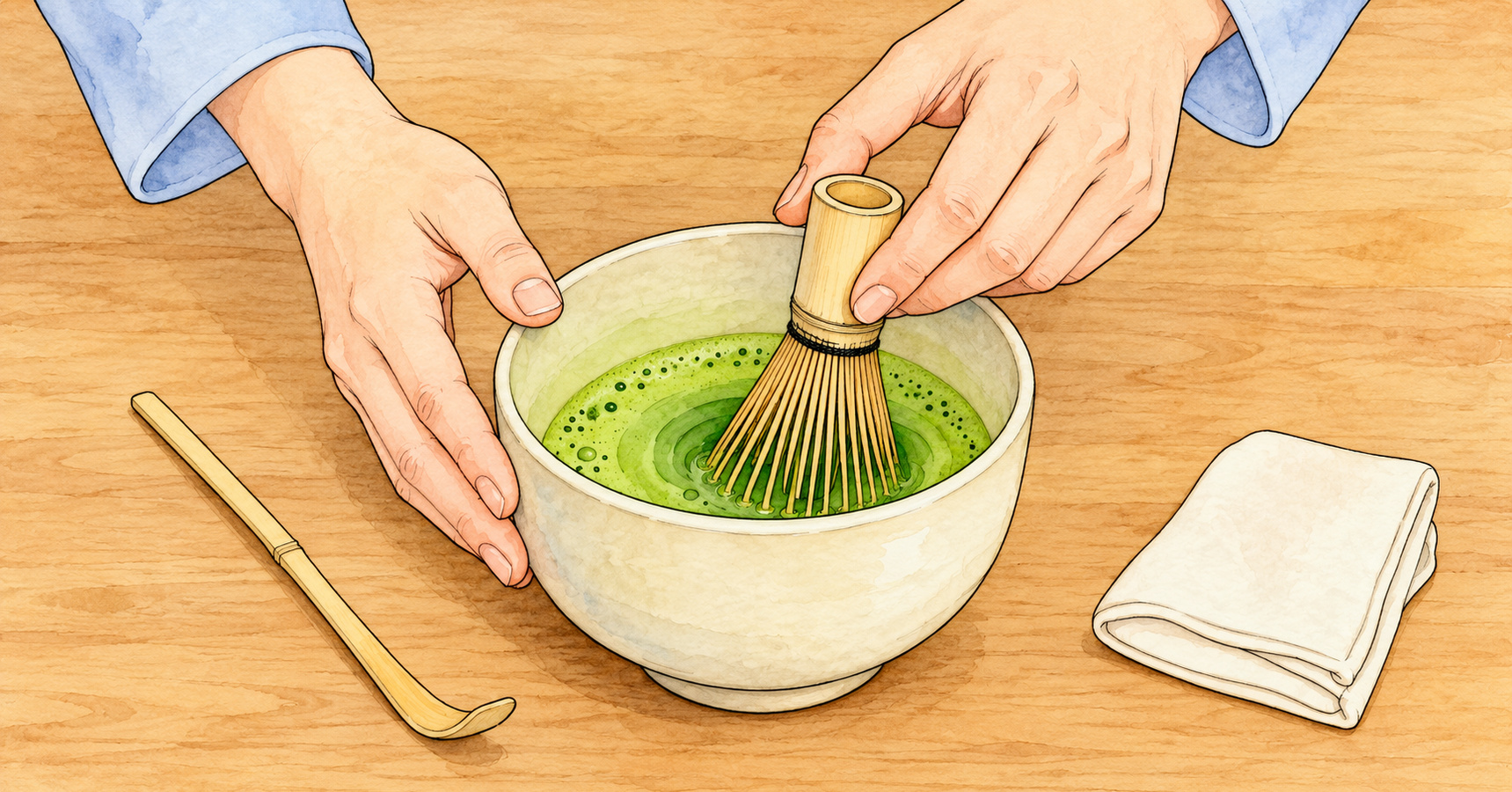
Fine bamboo tines move through green tea inside a ceramic bowl. One hand holds the whisk while the other steadies the vessel, and small bubbles gather across the surface. This compact arrangement brings together three familiar names in Japanese tea culture: matcha, the powdered tea; chawan, the tea bowl; and chasen, the bamboo whisk. Each has a different role, yet the finished drink depends on their interaction.
Matcha preparation is part of chanoyu, also called chado, the way of tea. It also belongs to less formal moments of drinking tea. A close view of the bowl reveals the physical work behind the drink, while a wider view of tea culture explains why such everyday objects receive careful attention.
The Tools and the Tea Taking Shape
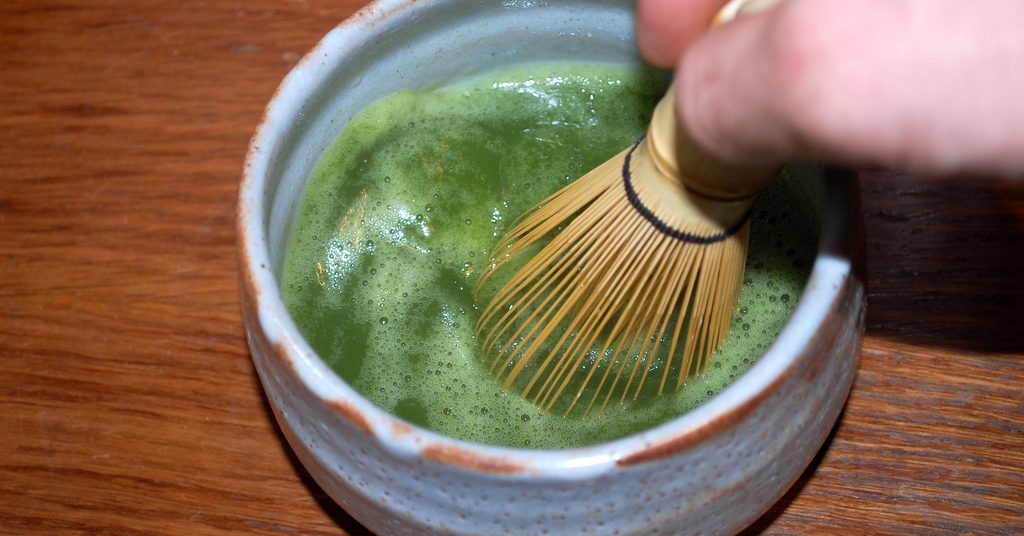
A chawan serves both as the vessel in which matcha is prepared and as the bowl from which it is drunk. Its open interior gives the whisk room to move. The rim, curved wall, and foot form a continuous ceramic structure, with the thickness of the edge especially apparent when seen from above. Glazed stoneware and porcelain offer different surfaces, weights, and visual effects, so a tea bowl need not have one fixed appearance.
The chasen has a short bamboo handle that divides into many fine tines. It is made from a single section of bamboo, with the working end split and shaped into a flexible cluster. These slender pieces move through the liquid together. Beside it, the chashaku is a narrow scoop, commonly made from bamboo, used to transfer powdered tea. Its small curved end contrasts with the broad working area of the whisk.
For usucha, or thin tea, sifted matcha is combined with hot water and whisked briskly. Ippodo's preparation method describes a rapid movement resembling the letter M. Sifting first breaks up clumps, while whisking distributes the powder through the water and produces a light surface foam. In the bowl, the transformation is visible as dry powder becomes a continuous green drink.
The amount of water and the movement of the whisk affect the result. Koicha, or thick tea, uses a higher proportion of matcha to water. It is mixed more slowly into a smooth, dense consistency rather than whipped into the same airy surface. The same basic tools therefore support two noticeably different preparations. A frothy bowl illustrates one familiar style of matcha, rather than defining every way it is served.
A Bowl Prepared for Another Person
Within chado, preparing tea is part of an exchange between host and guest. Urasenke describes this relationship as central to the practice: the host prepares a satisfying bowl, and the guest receives it with appreciation. Whisking is one visible action within that larger encounter, alongside the preparation of the setting and the handling of the utensils.
The surroundings contribute to the occasion. Seasonal flowers, the atmosphere of the room, and the choice of objects can shape a gathering without changing the basic ingredients in the bowl. In this context, a vessel is both useful and expressive. Its glaze or decoration may give it a recognizable front, while a quieter bowl may draw attention through its form and surface alone.
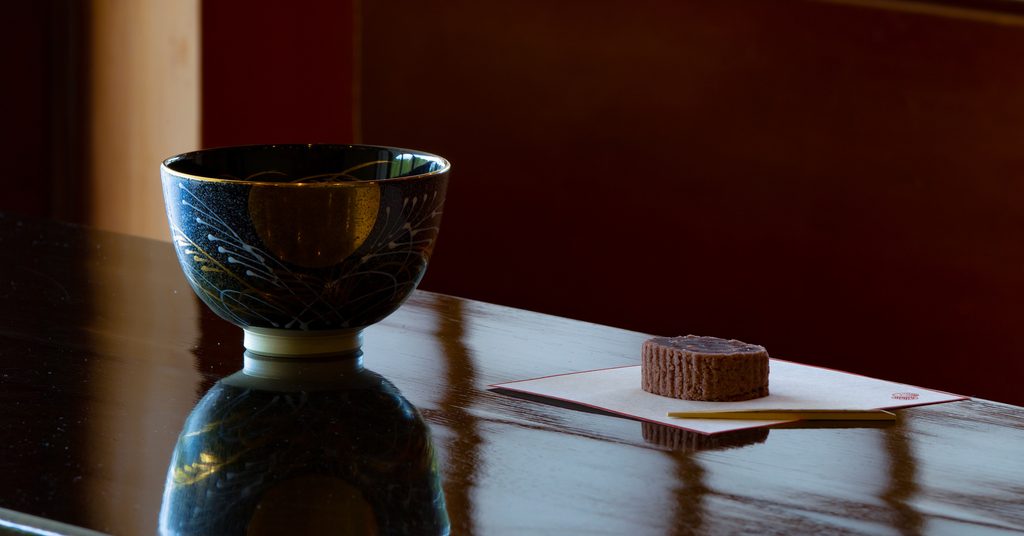
Tea bowls also carry contrasts that are easy to see at close range. A plain, pale interior makes the green tea stand out. A darker glaze changes that relationship, and a decorated exterior introduces another visual element. The bowl remains a working object throughout: it contains the movement of the whisk and then passes into the hands of the person drinking.
Beyond a formal gathering, matcha can accompany a simple pause with a confection. A bowl and a sweet offer a smaller setting for the same drink, without reproducing the full sequence of tea ceremony. This range of settings helps explain why the chawan and chasen remain recognizable even when the occasion, surroundings, and degree of formality change.
The moment of whisking is brief, but it brings material and action into focus. Bamboo moves within ceramic, powder meets water, and a bowl intended for drinking takes shape through the hands preparing it.