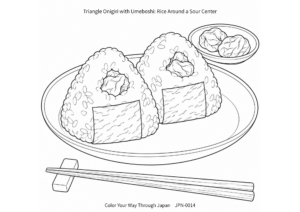
※ You can download the coloring page PDF for free.
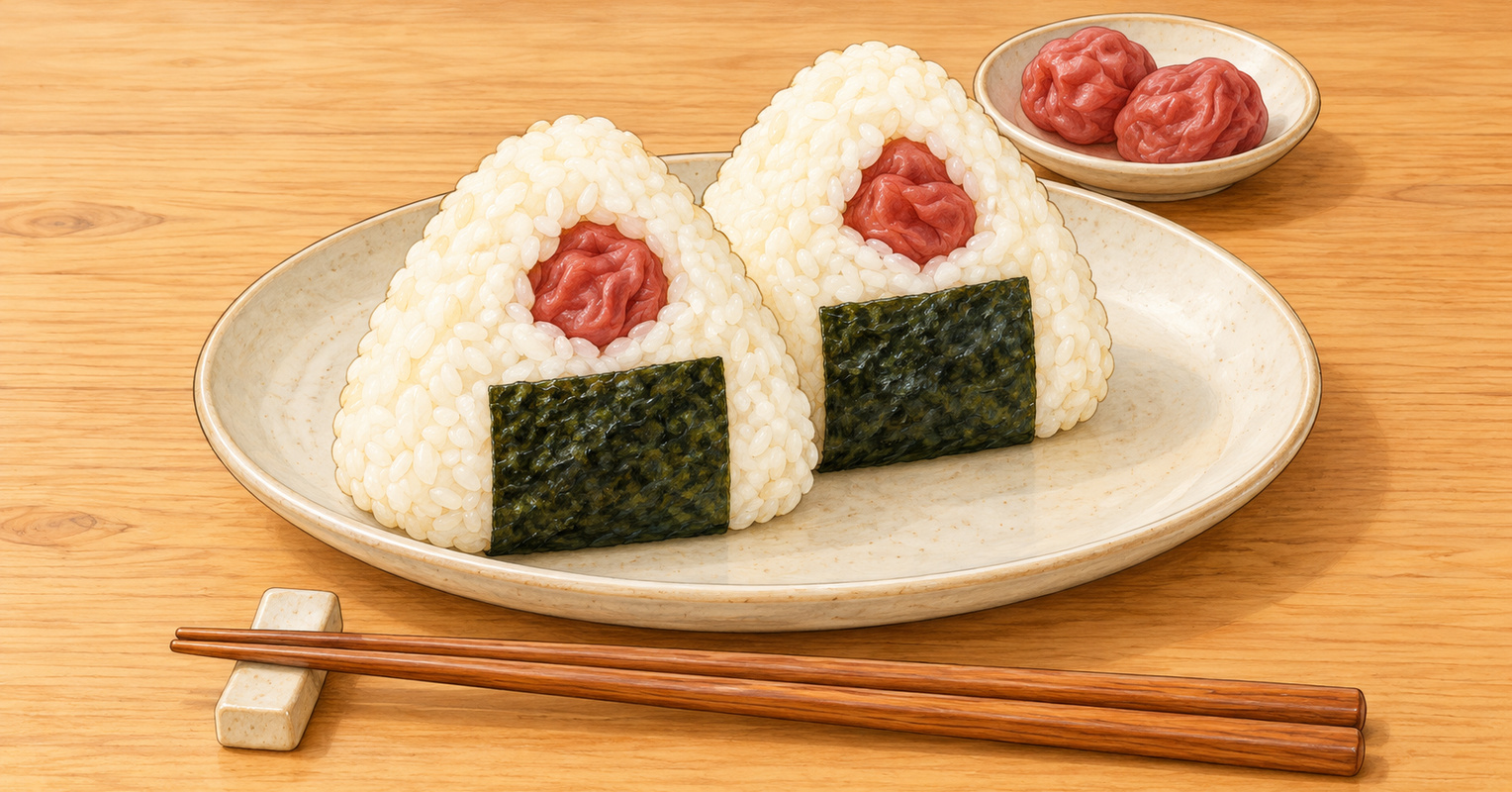
A triangle of white rice, a strip of nori, and a small portion of umeboshi make a compact contrast of textures. The rice is soft and gently sweet; the seaweed adds a savory edge; the preserved fruit supplies a concentrated salty sourness. An umeboshi onigiri needs only a few ingredients, yet each has a distinct role in the finished food.
Onigiri are shaped portions of cooked rice, familiar in Japanese homes, lunchboxes, convenience stores, and specialist shops. The triangular form is particularly recognizable, although rounded versions also belong to the same family. Umeboshi, often translated as pickled plum, is a traditional filling. It can disappear inside the rice or remain partly visible at the surface, where its wrinkled flesh identifies the flavor before the first bite.
How Rice Becomes a Triangle
The structure begins with cooked Japanese rice. Its plump grains cling together while retaining their individual outlines, allowing a handful to hold its shape without becoming a smooth paste. The short, rounded grains and their characteristic stickiness distinguish the texture from rice that separates easily into loose grains. Even in a firmly shaped onigiri, rice remains the main ingredient rather than a thin casing around a large filling.
In a typical preparation, a small hollow is made in the rice, pitted umeboshi is placed inside, and another portion of rice closes the opening. Gentle pressure forms the rounded corners and three sides. The aim is a rice ball that holds together while keeping a soft interior. A triangular outline therefore describes the overall form; its edges are usually softer and less exact than those of a geometric model.
The umeboshi stone is removed before the fruit becomes a filling. Its soft flesh may be used in pieces rather than as a complete fruit. A small exposed portion on top or at the front is one serving variation, while other onigiri conceal the filling completely. These arrangements change the appearance without changing the basic combination of rice and preserved ume.
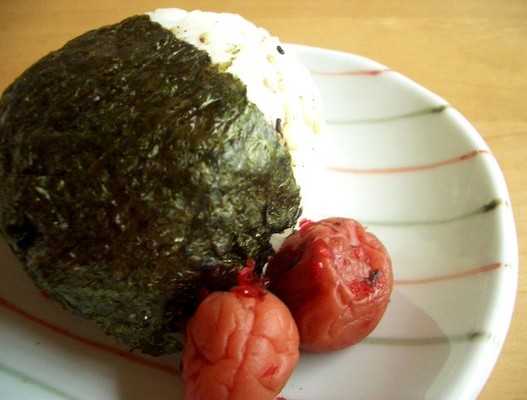
Nori is the dried seaweed sheet that often wraps the lower part of the triangle. Its thin surface has a different texture from both the rice grains and the folded fruit flesh. Some servings use a narrow band, while others cover much more of the rice. The accompanying photograph shows sesame rice with a broad nori covering and umeboshi served alongside, another way to bring these ingredients together.
Umeboshi, from Orchard to Everyday Food
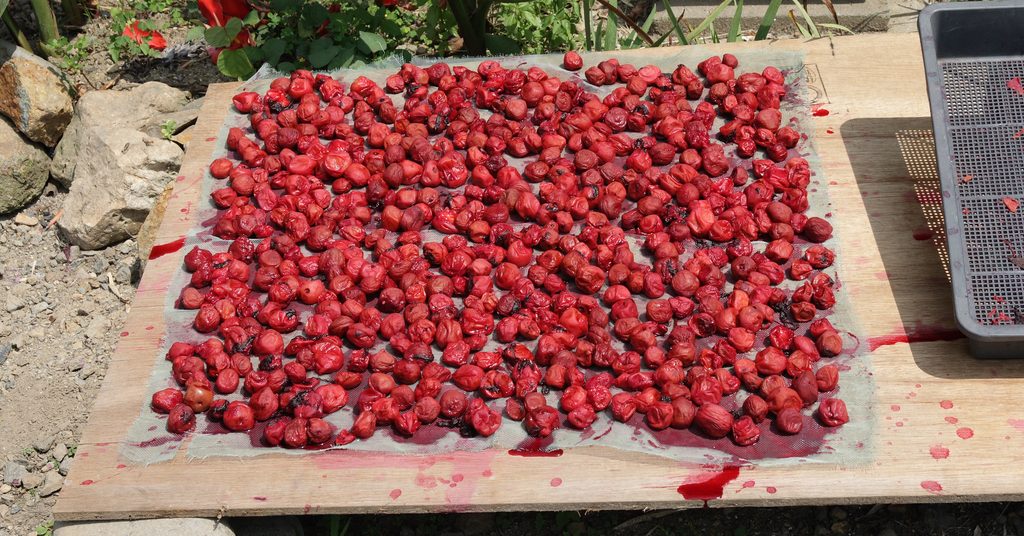
Umeboshi starts with ume fruit, commonly called Japanese plum. Salt and drying transform it into a concentrated accompaniment to rice. The finished fruit has a puckered skin and flesh that can be soft enough to separate readily from the stone. Its sharp flavor explains why a relatively small amount has a strong presence inside an onigiri.
A traditional method salts ripe fruit and leaves it under a weight while liquid collects around it. After the pickling stage, the fruit is dried in summer sunshine. Timing and methods differ between households and producers. Umeboshi is therefore a preserved ingredient with several stages of preparation, rather than simply fresh fruit added to cooked rice.
Wakayama Prefecture is closely associated with ume cultivation and umeboshi production, especially around Minabe and Tanabe. The region's well-known Nanko ume variety has generous, soft flesh. Its reputation connects a widely eaten food with a particular agricultural landscape, although umeboshi onigiri itself belongs to everyday food culture across Japan rather than to Wakayama alone.
Not every umeboshi tastes equally salty or sour. Producers also make seasoned versions, including those flavored with honey or shiso, an aromatic perilla leaf. Such differences affect the character of the filling, from an assertively salty fruit to a milder preparation with sweetness. Umeboshi also accompanies plain rice and appears in other dishes, so its place in Japanese cooking extends beyond rice balls.
Onigiri's small size makes it adaptable to a packed lunch, a brief snack, or a plate of several rice balls. The umeboshi version keeps that everyday practicality while concentrating its flavor in a small center. Its familiar shape brings three contrasting ingredients into one portion: cohesive grains, thin seaweed, and the yielding flesh of preserved fruit.