- Introduction
- What Is Gunkanjima? — A Floating Fortress of Nagasaki
- Planning the Journey — My Long-Awaited Summer in Nagasaki
- Choosing the “Super Premium” Tour — Worth Every Yen
- From Nagasaki Port to Gunkanjima — 45 Minutes Across the Sea
- First Glimpse — Circling the Island
- Landing on Gunkanjima — Walking Among the Ruins
- Gunkanjima Today — A UNESCO World Heritage Site in Peril
- Reflections — Do What You Dream
Introduction
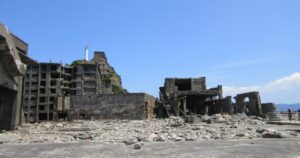
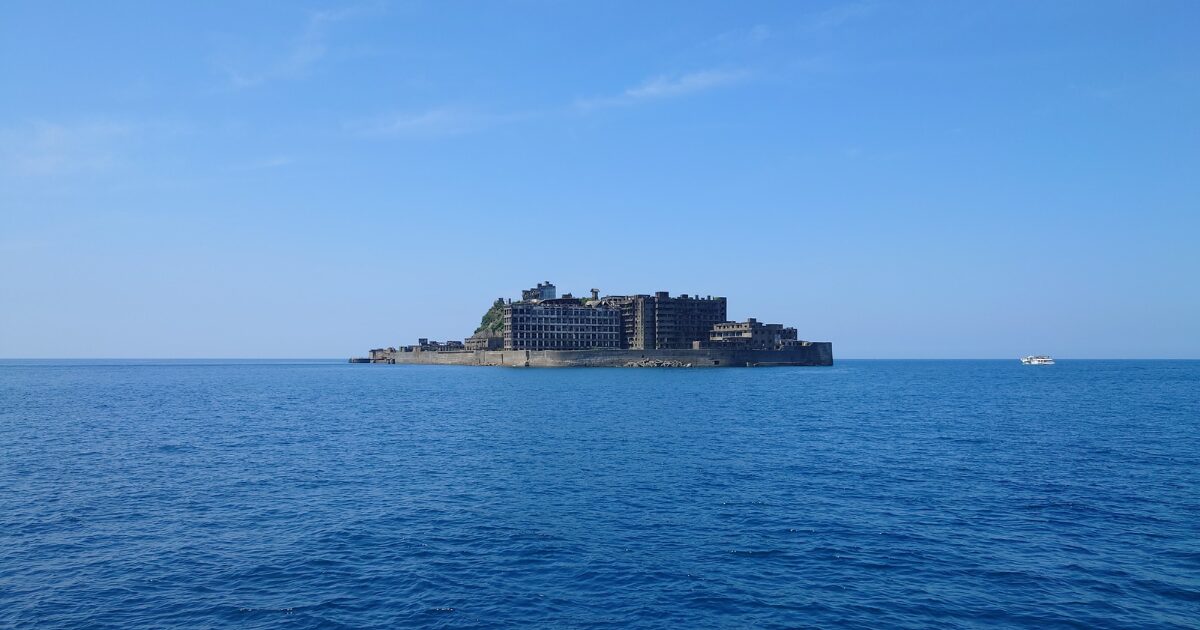
Off the coast of Nagasaki , a small island rises from the sea — Gunkanjima , known officially as Hashima Island.
Its nickname, “Battleship Island,” comes from the way its concrete buildings and shape resemble a warship floating in the ocean.
I first learned of Gunkanjima decades ago from a TV documentary, and ever since, I had dreamed of setting foot there.
In the summer of 2024, that dream came true. Standing on the island’s weathered concrete and hearing the waves crash against its walls, I finally understood why Gunkanjima continues to capture the world’s imagination.
What Is Gunkanjima? — A Floating Fortress of Nagasaki
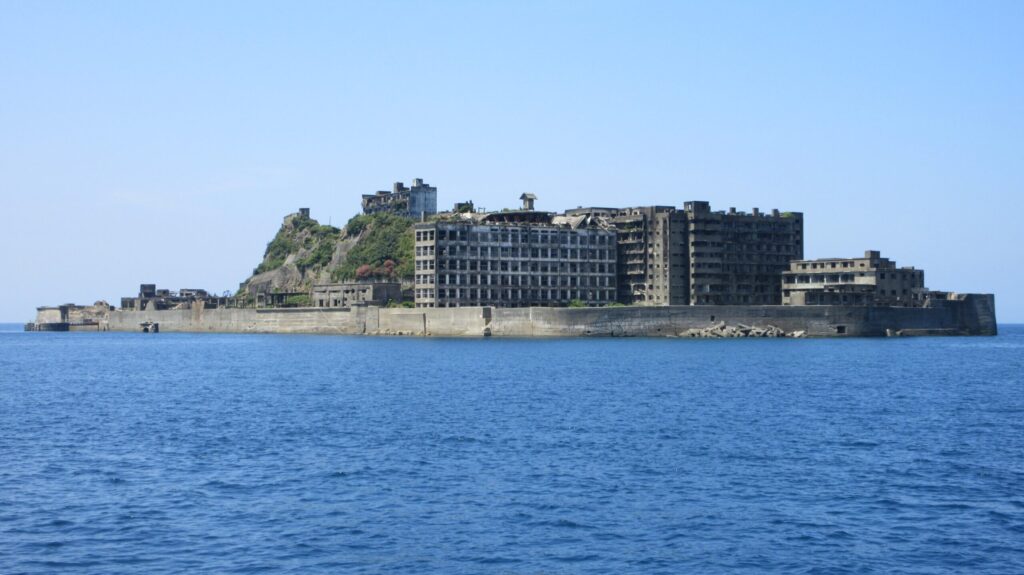
Gunkanjima (Hashima Island) lies about 18.5 kilometers southwest of Nagasaki Port.
The name “Gunkanjima” literally means “Battleship Island,” because its silhouette — gray concrete blocks rising from the sea — looks like a warship at anchor.
During Japan’s industrial era, Gunkanjima was one of the most productive coal-mining sites in the country.
At its peak in the 1960s, over 5,000 residents lived here, packed into one of the highest population densities ever recorded.
When the coal mine closed in 1974, the island was abandoned overnight, leaving behind a hauntingly beautiful city of ruins — a monument to Japan’s rapid modernization and its human cost.
Planning the Journey — My Long-Awaited Summer in Nagasaki
When I planned my summer trip to Kyushu, two places topped my list: Aso’s Kusasenri meadow and Gunkanjima.
I had visited Aso in high school and wanted to see it again, but Gunkanjima had lived in my mind much longer — mysterious, distant, unreachable.
Over twenty years had passed since I first saw it on TV.
In that time, the island’s buildings have continued to decay, and access is now restricted to preserve what remains.
Visitors can no longer freely explore the interiors, but setting foot on the island at all felt like a privilege — a rare chance to touch a piece of living history.
Choosing the “Super Premium” Tour — Worth Every Yen
Several companies offer boat tours to Gunkanjima, but I joined the Gunkanjima Concierge tour, run by Universal Workers Co., Ltd.
They offer several plans, and since I assumed this would be my first and last visit, I splurged on the Super Premium plan.
That decision turned out to be perfect.
Before boarding, premium participants were treated to a private session with a former island resident who shared personal memories and photos from daily life on Hashima.
The service throughout — from priority boarding and spacious seating to complimentary drinks and frozen Calpis on arrival — truly lived up to the “premium” name.
Every moment felt smooth, cared for, and comfortable — even luxurious.
From Nagasaki Port to Gunkanjima — 45 Minutes Across the Sea

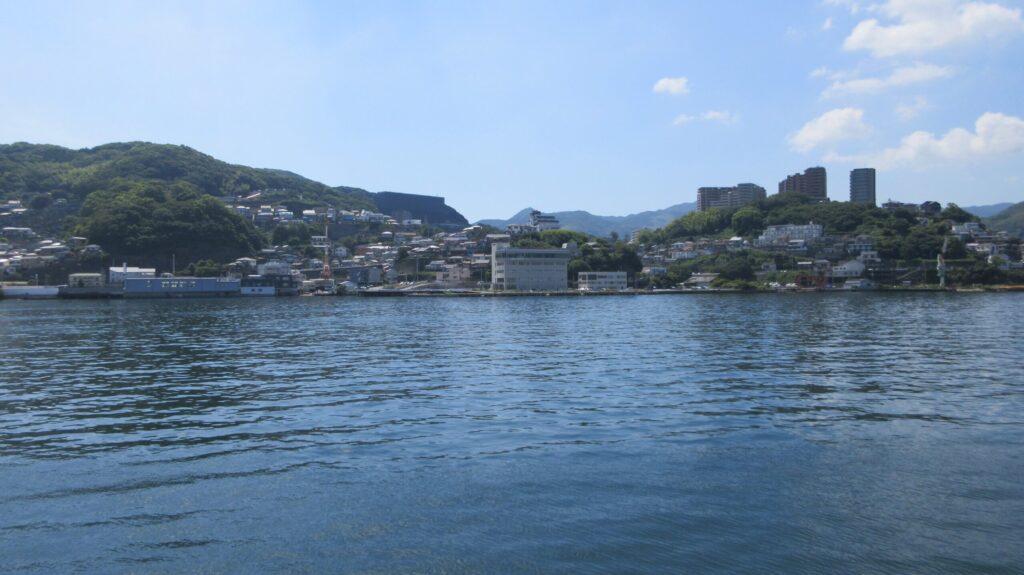
The tour departs from the company’s museum near Nagasaki Port, where visitors learn about the island’s history through exhibits and stories told by those who once lived there.
Then, the adventure begins — a 45-minute cruise across the open sea.
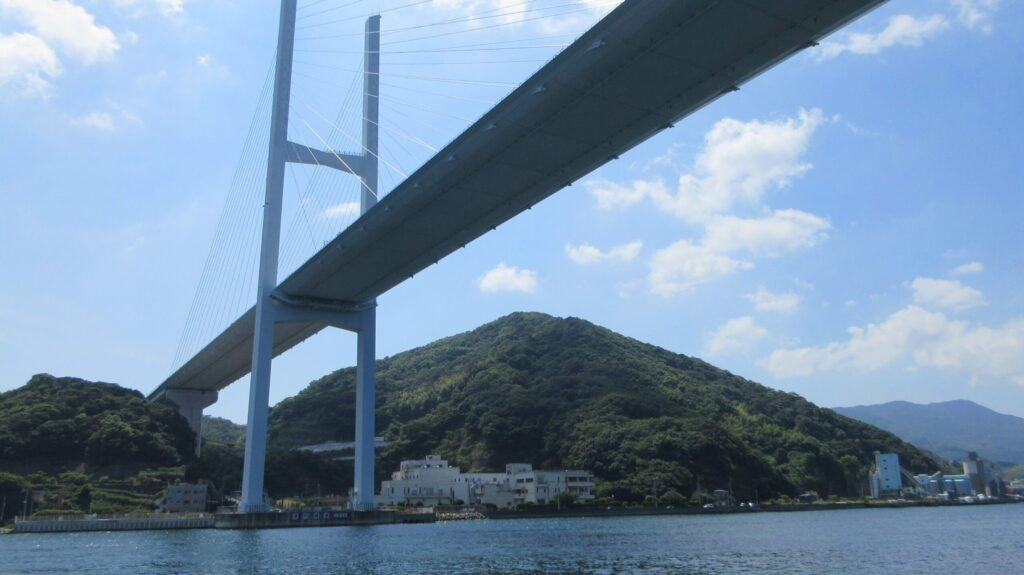
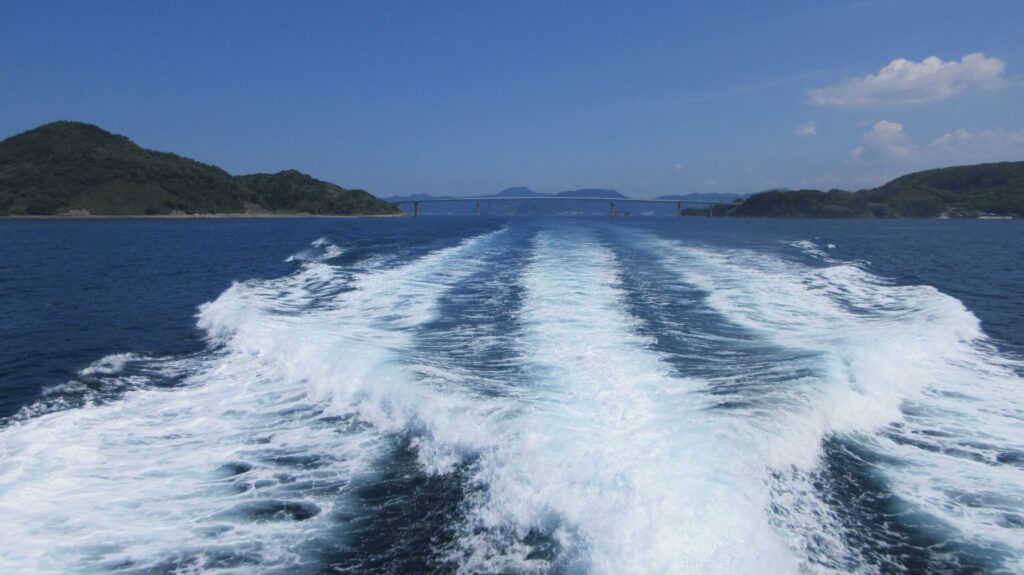
As we left the harbor, the guide’s commentary played through the speakers, pointing out bridges, small islands, and bits of history along the way.
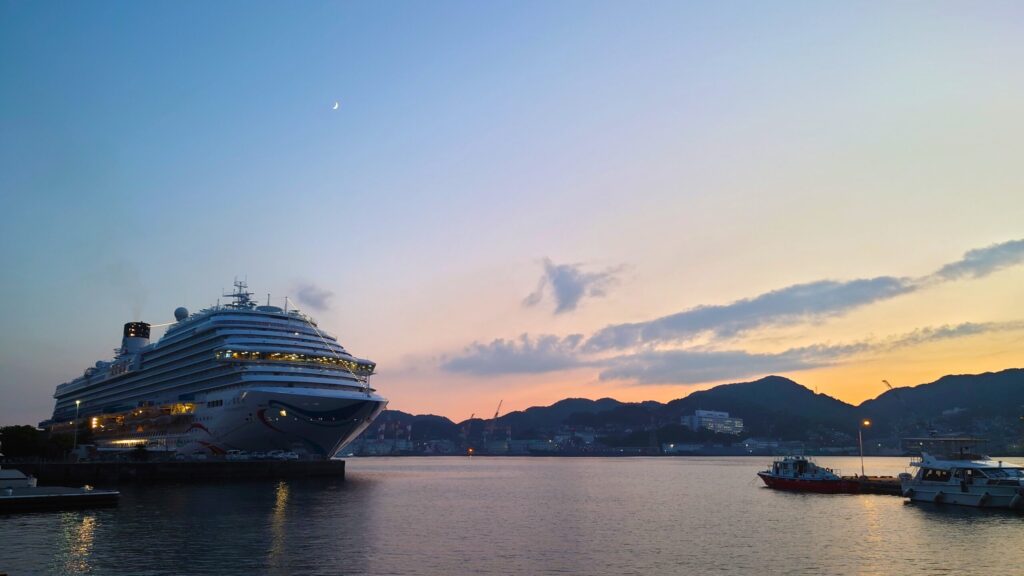
Inside the air-conditioned cabin, premium guests enjoyed drinks and snacks, while the more adventurous stepped out onto the deck to feel the sea breeze.
I moved between the two — snapping photo after photo, thrilled like a child at every wave and shimmer of sunlight on the water.
First Glimpse — Circling the Island
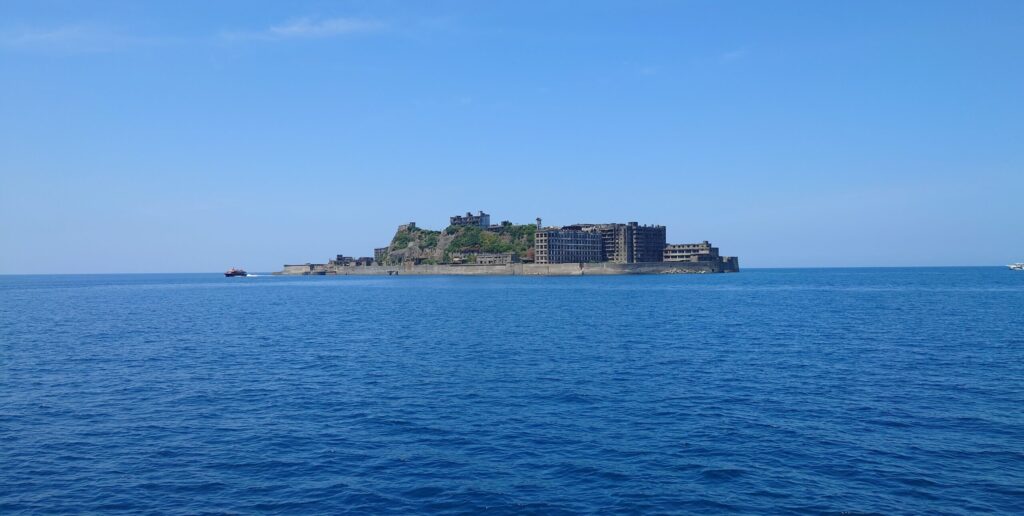
Soon, a gray silhouette appeared on the horizon: Gunkanjima.
Even from afar, it looked like something from another world — a ghostly fortress adrift in the blue.
Before landing, the boat made a slow circuit around the island, allowing passengers to admire it from every angle.
From the front deck, where premium guests were guided, the view was simply breathtaking.
The crumbling concrete towers, the endless blue sky, and the deep, glittering sea combined into a scene that felt almost cinematic.
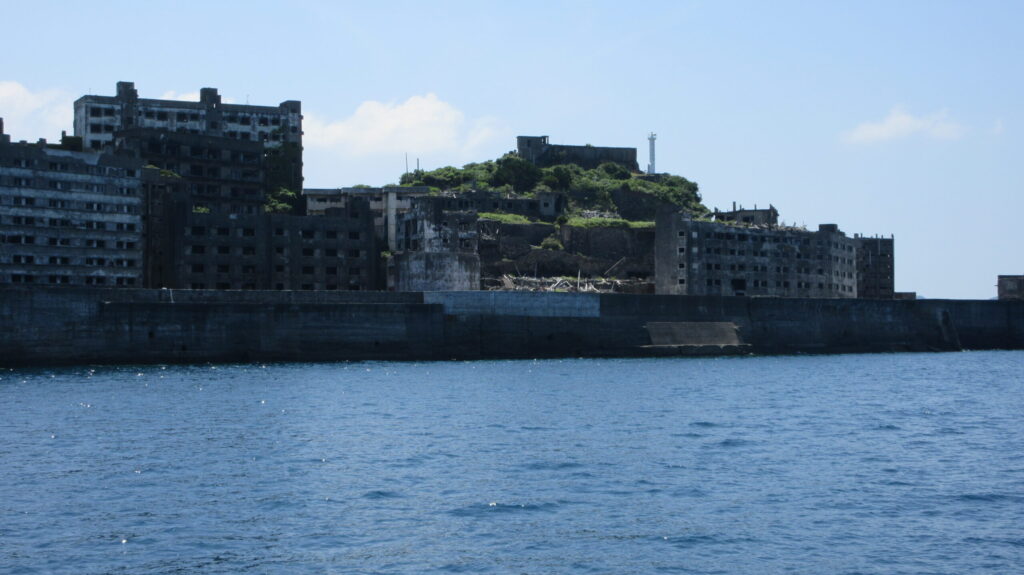
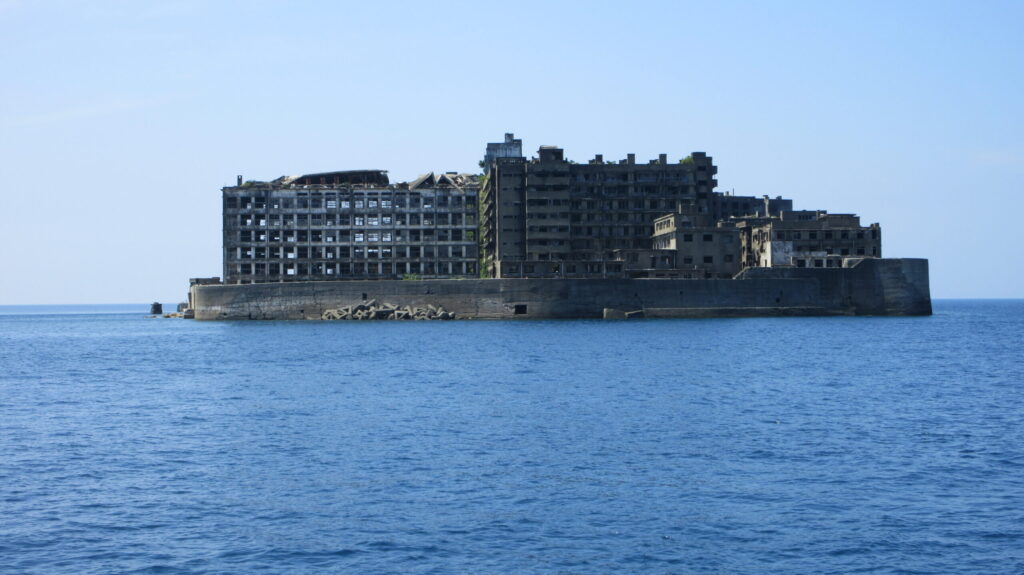
I must have taken fifty identical photos, but I couldn’t stop.
It was impossible to look away.
Landing on Gunkanjima — Walking Among the Ruins


Landing on Gunkanjima isn’t guaranteed.
Even when the boat reaches the island, strong waves or high winds can make docking impossible.
That day, though, the weather was perfect — calm seas, blue skies, and just enough breeze to cool the heat of summer.
When the captain finally announced, “We’re docking,” a quiet cheer rippled through the passengers.
We disembarked first, guided by our tour staff.
Frozen drinks were handed out to help with the heat — another thoughtful touch from the Super Premium plan.
Once on the island, we followed a marked path while listening to the guide’s explanations.
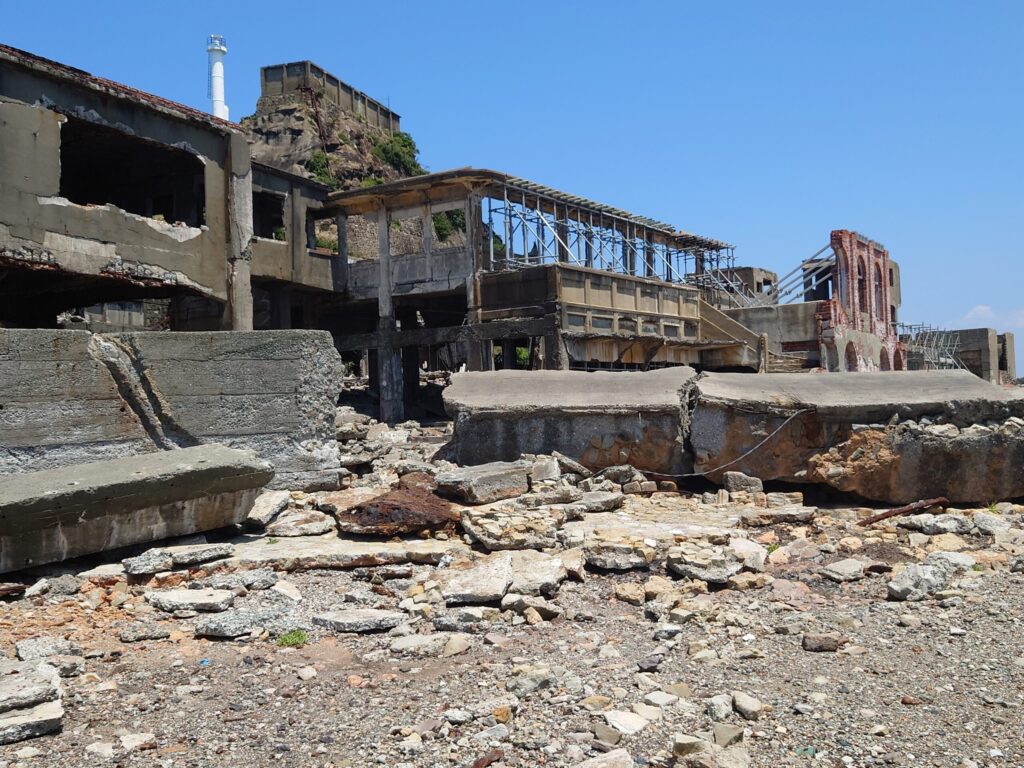
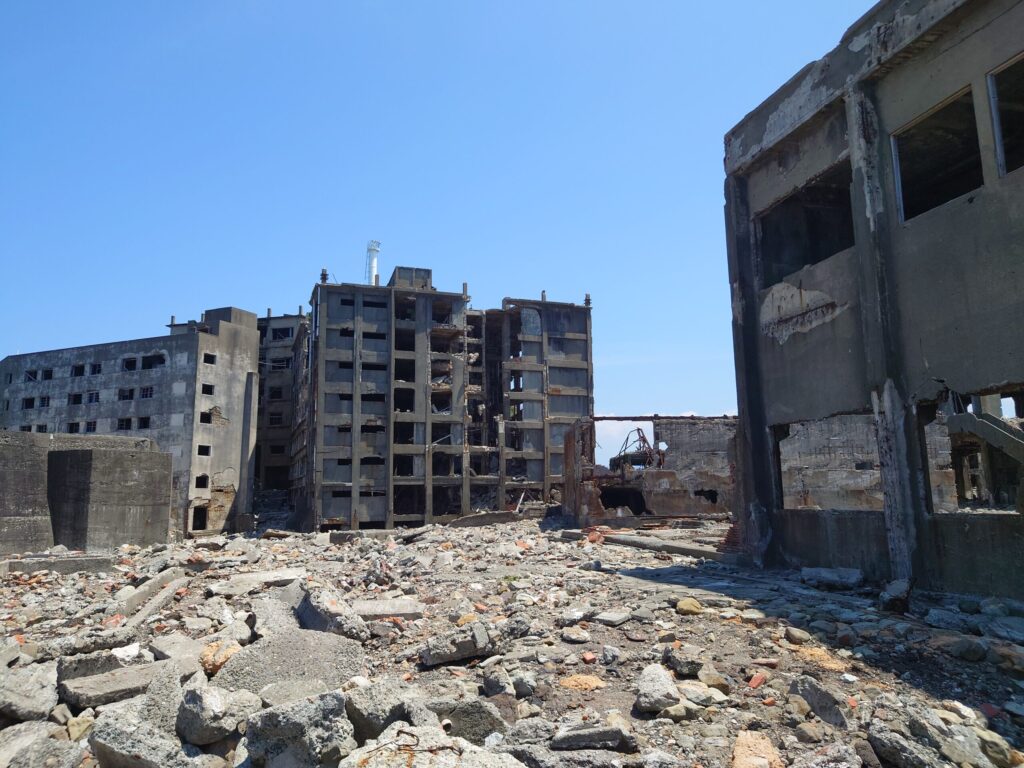

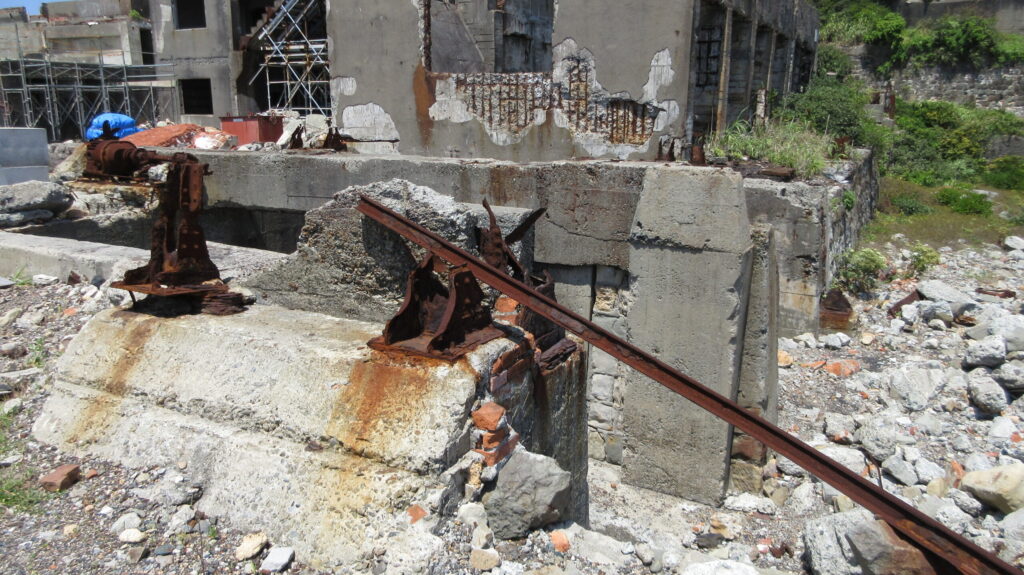
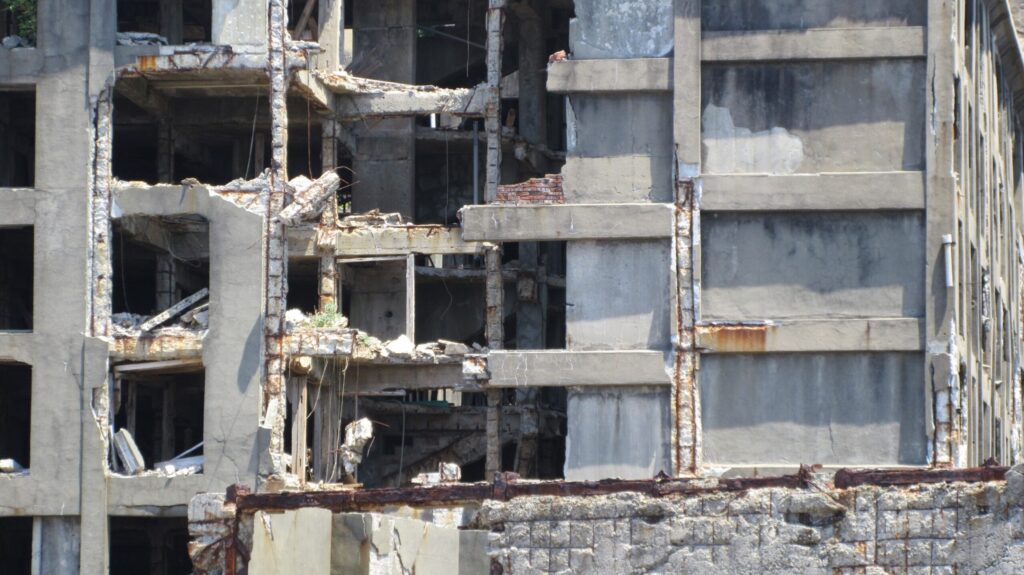
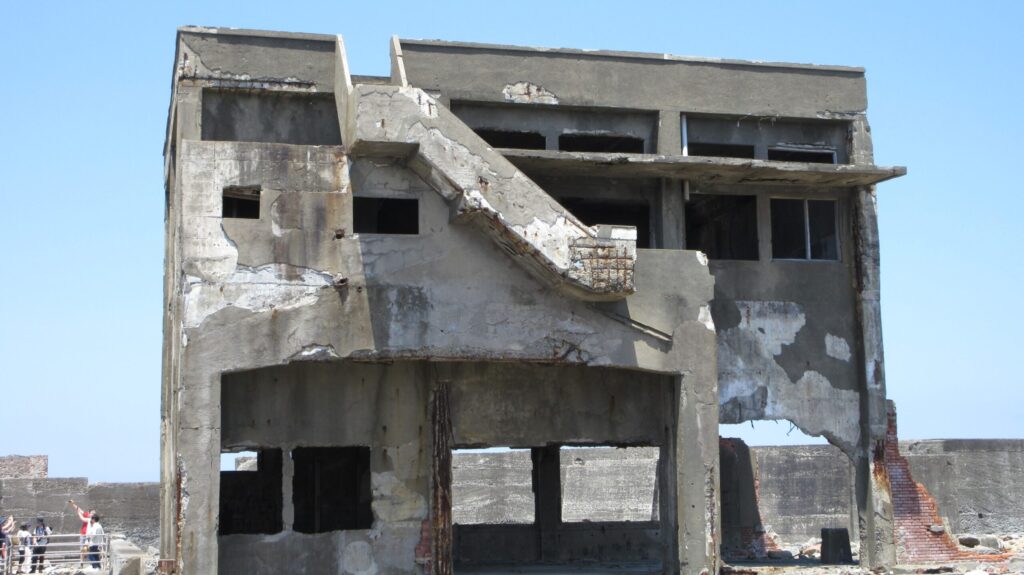
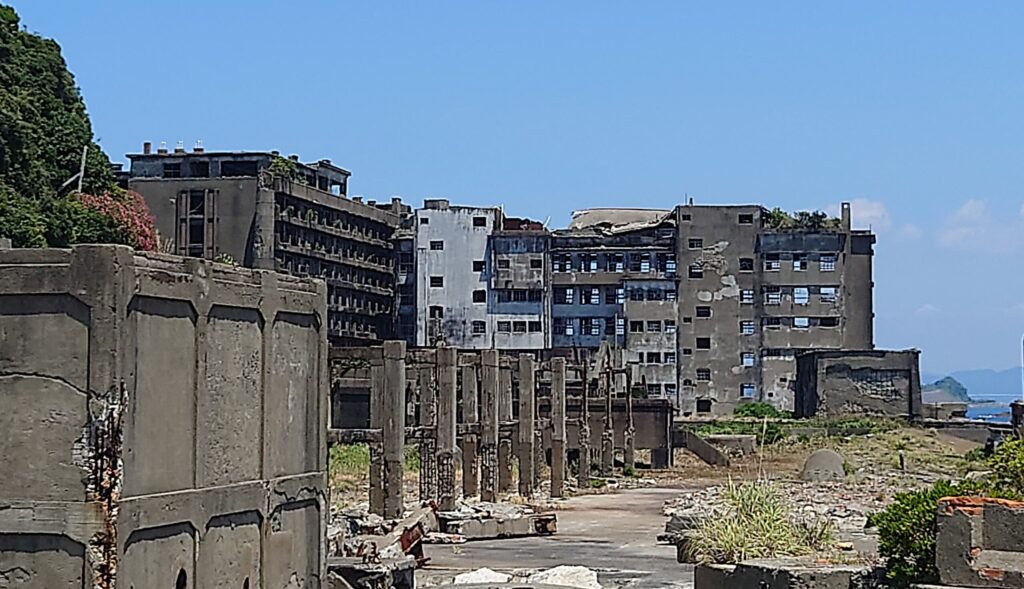
The buildings, though decaying, still stood with solemn dignity: schools, apartment blocks, and a communal bath — all reminders of a once-thriving community.
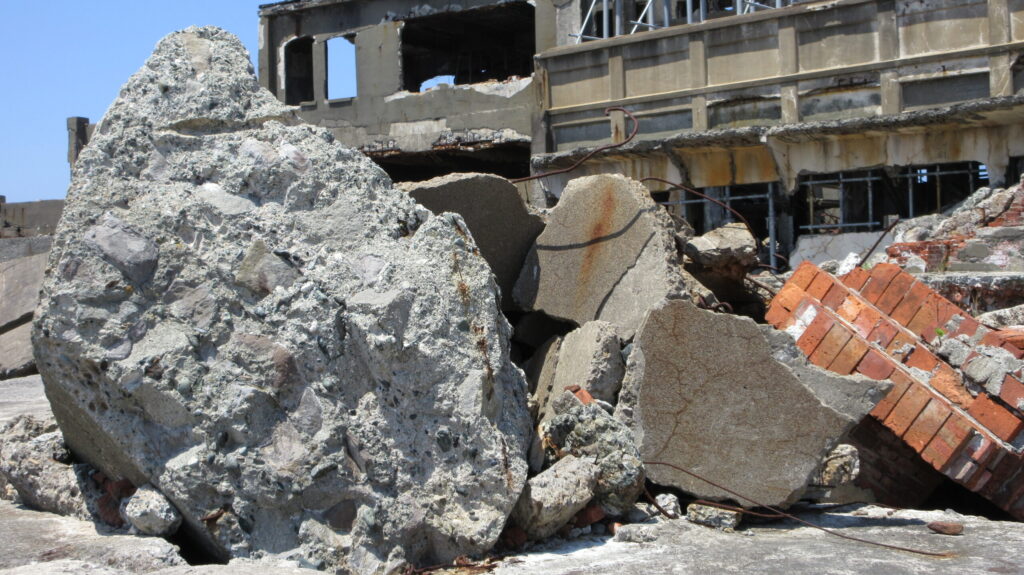
Rusting rebar jutted from broken walls, and every gust of wind carried the echo of lives once lived here.
It was both haunting and strangely peaceful.
Gunkanjima Today — A UNESCO World Heritage Site in Peril
Public landings on Gunkanjima began in 2009, and in 2015, the island was inscribed as part of Japan’s UNESCO World Heritage Site “Sites of Japan’s Meiji Industrial Revolution.”
Before that, the island was completely off-limits — a forbidden place visible only from sightseeing boats or television screens.
When I first saw Gunkanjima on TV, general access wasn’t even possible.
It existed for me as a legend — mysterious, unreachable, powerful. To walk there in person after all these years felt surreal.
But Gunkanjima is fragile.
Concrete continues to crumble; walls collapse with each passing season.What stands today may not survive the next decade.
That is why, if you ever dream of visiting, go soon.
See it while the shape of the island — and its stories — still remain.
Reflections — Do What You Dream
Setting foot on Gunkanjima was more than sightseeing; it was the realization of a long-held dream.
Time and decay have transformed the island into a monument of silence, but it still whispers of human resilience and ambition.
Standing there, I felt the weight of history — the rise and fall of an era, preserved in concrete and sea salt.
It reminded me of something simple yet powerful: do what you dream.
If you’ve ever thought, “I’d like to see Gunkanjima someday,” don’t wait.
Visit Nagasaki, book your spot, and witness this extraordinary island while it still stands — a fading giant in the sea, holding the memories of thousands who once called it home.
The Japanese version of this article is here.↓↓↓