Introduction
The Gunkanjima preservation plan has entered a new phase. For the first time in 55 years, a new building will be constructed on Hashima Island—better known as Gunkanjima — in Nagasaki, Japan.
The project aims to protect the crumbling ruins of this World Heritage Site while providing a safe base for research and emergency shelter for visitors.
This effort marks a critical step in balancing preservation and accessibility for one of Japan’s most iconic industrial landmarks.
Gunkanjima — A Fortress of the Sea
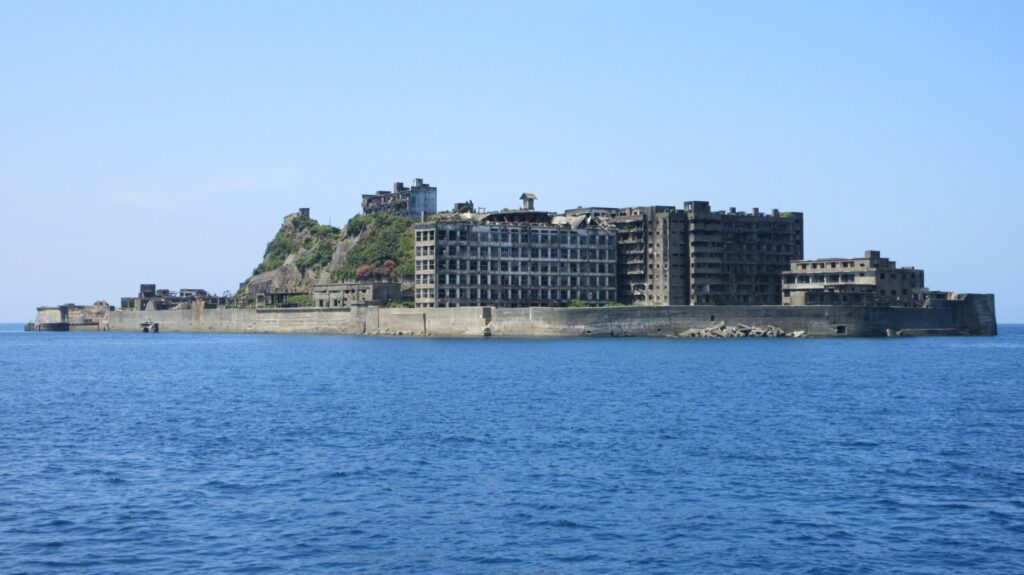
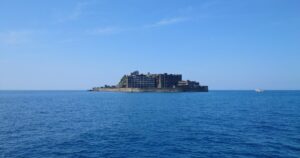
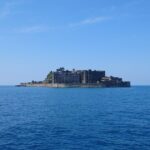
Gunkanjima, whose nickname means “Battleship Island” due to its warship-like silhouette, lies 18.5 kilometers off Nagasaki Port.
From the late 19th to the mid-20th century, it thrived as one of Japan’s most productive undersea coal mines.
At its peak, about 5,000 residents lived in tightly packed high-rises, creating one of the most densely populated communities in the world.
When the mine closed in 1974, the island was abandoned, its concrete towers left to the wind and waves. In 2015, it became part of the UNESCO World Heritage Site “Sites of Japan’s Meiji Industrial Revolution.”
Since then, controlled landing tours have allowed visitors a glimpse into Japan’s industrial past—and the eerie beauty of decay.
New Building Construction under the Gunkanjima Preservation Plan
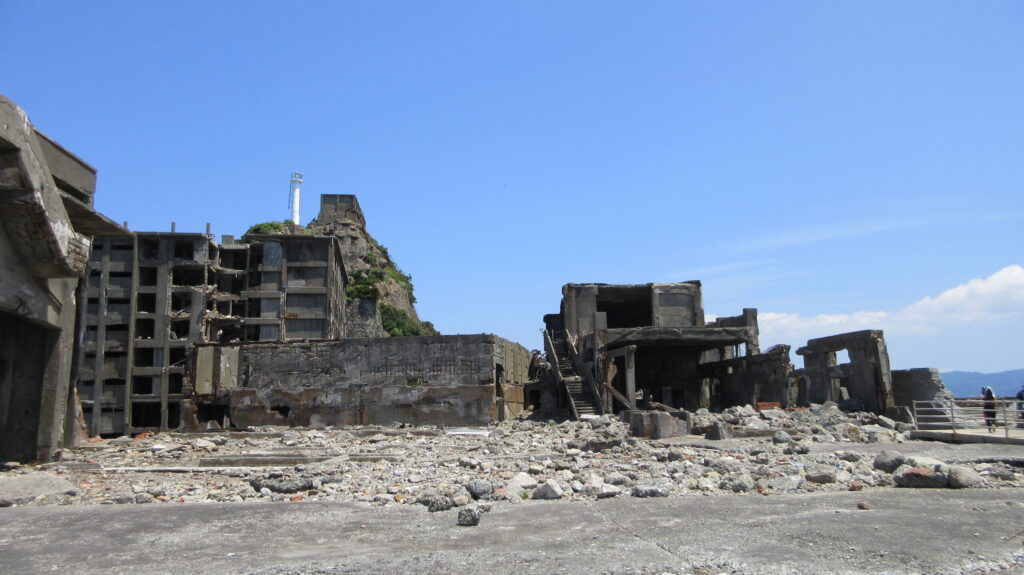
Nagasaki City has announced plans to construct a small, carefully designed building on the island by the end of fiscal 2025. The facility will serve two main purposes:
- Preservation work base — to support structural monitoring, restoration, and research.
- Emergency shelter — to provide safety for tourists and workers during rough weather or unexpected incidents.
The design will blend into the existing landscape to avoid disturbing the island’s historical atmosphere. The city is consulting with Japan’s Agency for Cultural Affairs to ensure the project respects UNESCO conservation standards.
Battling Time — Saving the Crumbling Concrete City
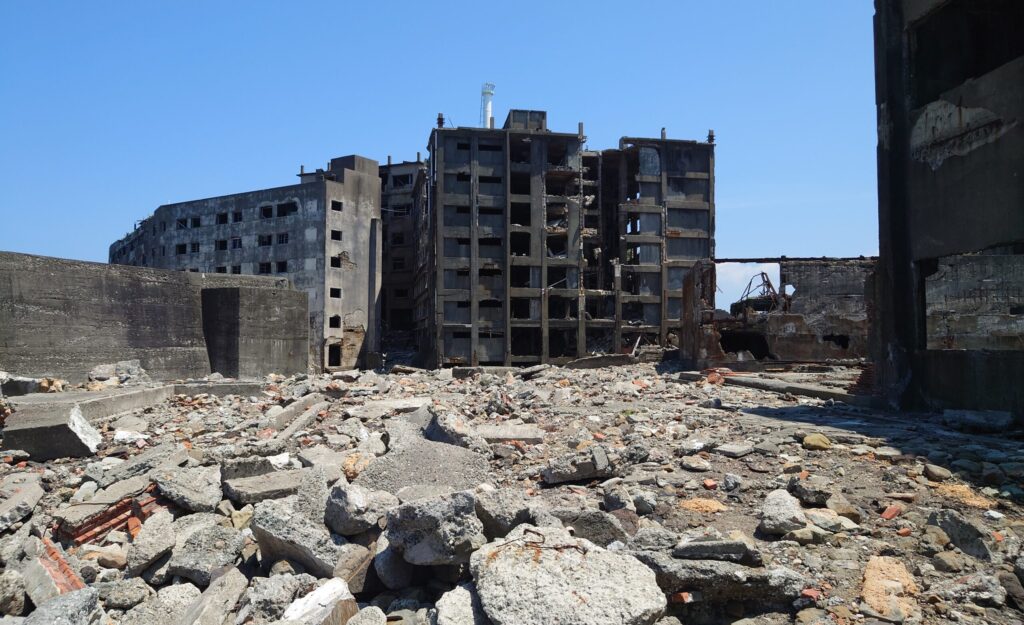
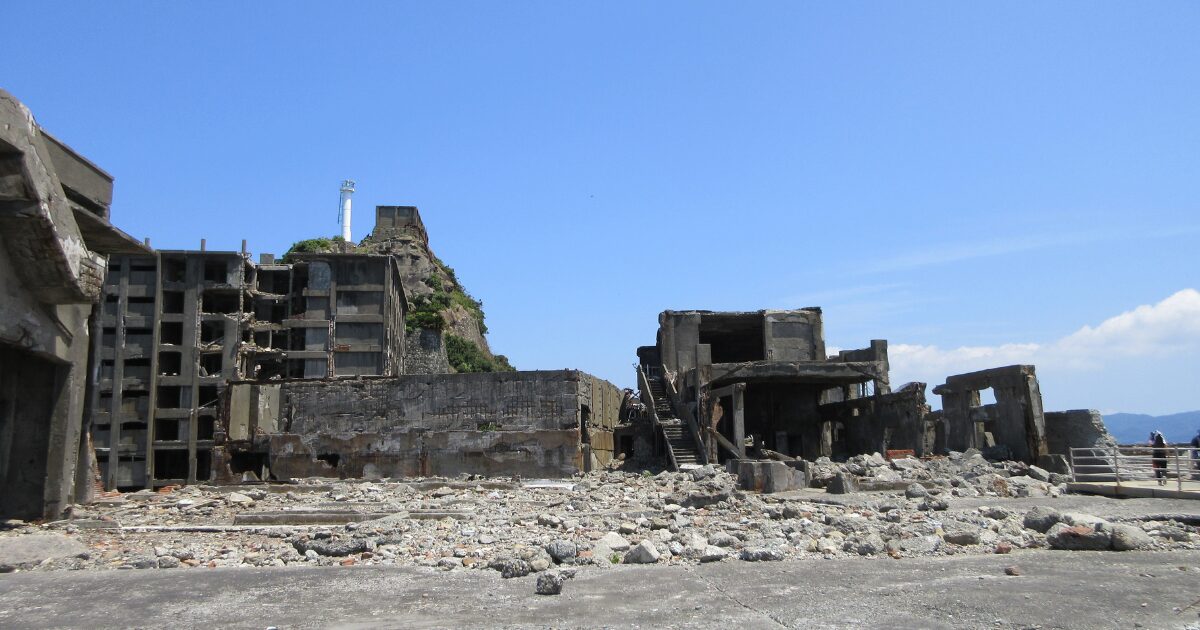
Gunkanjima’s concrete buildings, built in the early 1900s, were among Japan’s first reinforced concrete structures.
Decades of exposure to salt-laden winds and typhoons, however, have caused severe deterioration.
Collapses have already occurred in key residential blocks, forcing authorities to restrict access to parts of the island.
Recent years have seen the use of drones, 3D mapping, and digital modeling to document and analyze the structures.
The new building will act as a hub for these efforts, supporting engineers and historians as they fight to record—and where possible, stabilize—the island’s fragile remains.
Preserving Memory, Not Just Ruins
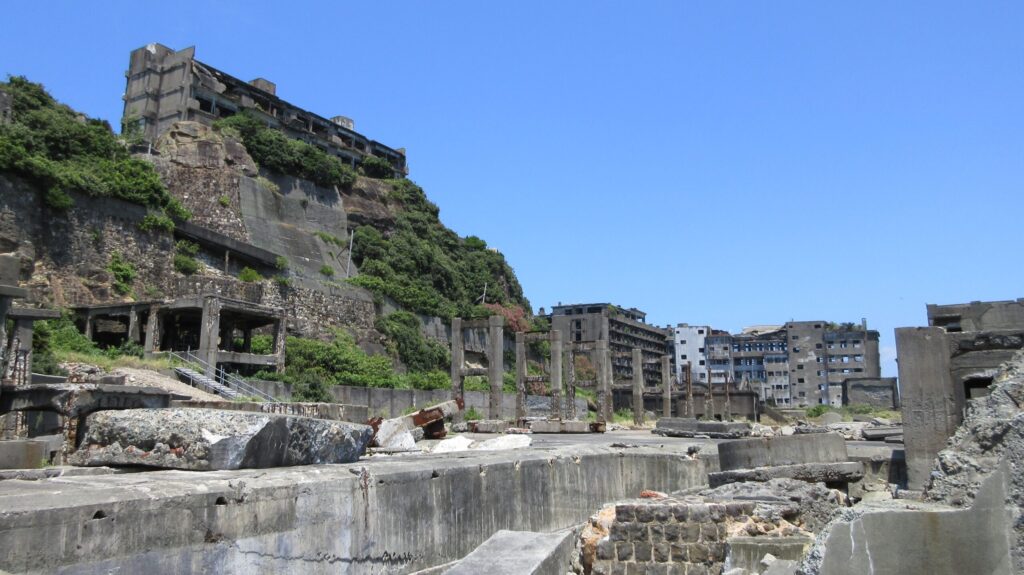
The project represents more than physical preservation. It reflects Japan’s broader commitment to safeguarding the complex history of its industrial revolution. Gunkanjima is both a symbol of human achievement and a reminder of the environmental and social costs of modernization.
By improving safety and research conditions, the city hopes to keep the site accessible to visitors and scholars for years to come. In the long term, Nagasaki aims to digitize the island through virtual archives and expand educational programs linking Gunkanjima’s story to global industrial heritage.
Conclusion
Gunkanjima stands as a monument to ambition, endurance, and decay. The new construction—the island’s first in over half a century—is a practical and symbolic gesture: to protect what remains and pass its story forward. As Japan works to preserve this haunting fortress of the sea, Gunkanjima continues to challenge how we define heritage in the face of time and ruin.
The Japanese version of this article is here.↓↓↓