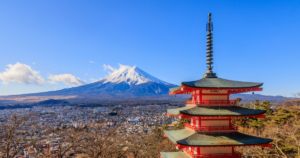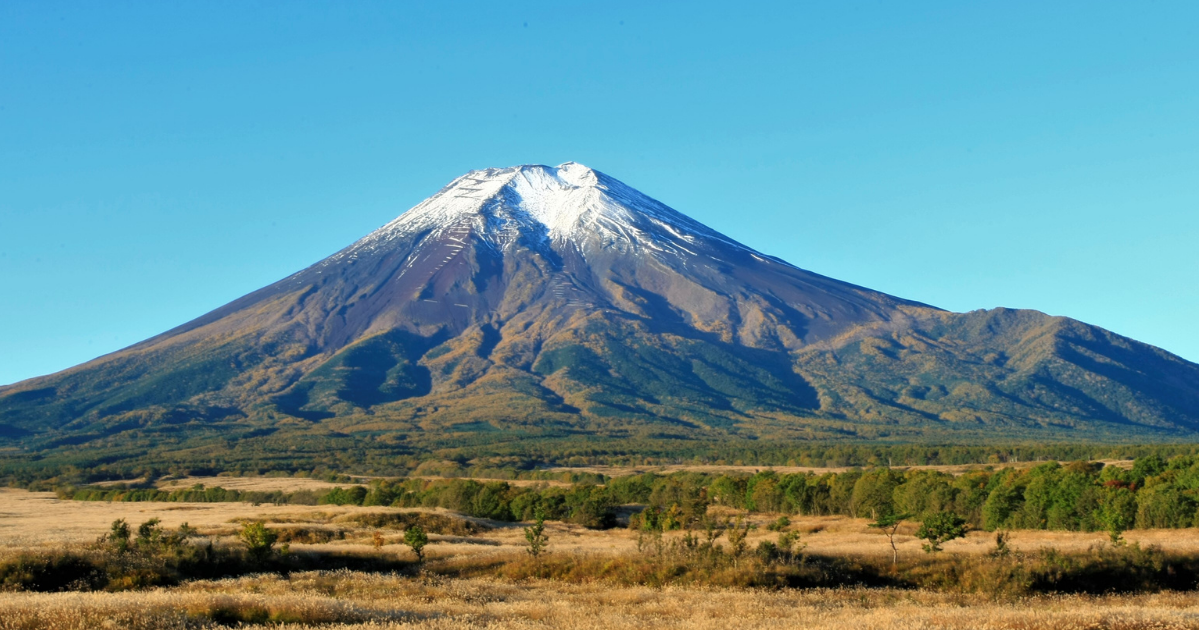
Seen from a distance, Mount Fuji appears calm, beautifully balanced, and almost perfect.
Yet once we set foot beyond the fifth station, we encounter rock and volcanic gravel, fierce winds, thinner air, and long lines of climbers.
While researching this essay, I was struck by how wide the gap can be between the Fuji we know from a distance and the Fuji we meet with our own bodies on the mountain.
Beginning with these two contrasting faces, the essay traces the path from sacred pilgrimage to modern tourism, the crowds before sunrise, the unseen work that protects the mountain's environment, and the new climbing regulations introduced in 2026.
To love Mount Fuji is not simply to admire its beauty.
Whether we climb it or look towards it from afar, we all share a relationship with the mountain.
I hope you will join me in considering what that relationship should look like in the years ahead.
The Fuji That Looks Like a Perfect Picture
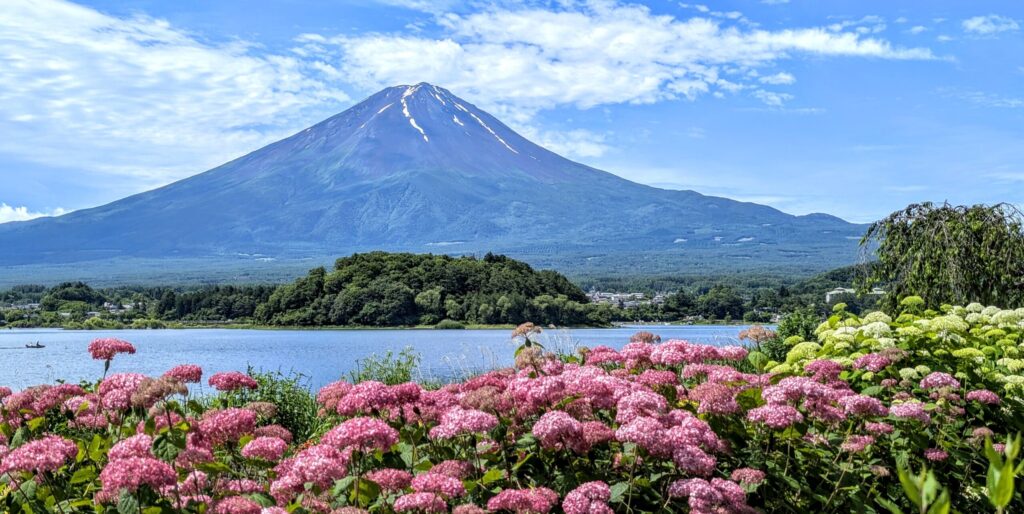
On a clear winter morning, Mount Fuji can appear beyond a town as if it had been carefully placed inside a picture. Snow caps the summit, long slopes fall away on either side, and the mountain stands apart against the sky. Whether we see it from a lakeshore, the coast, a Shinkansen window, or the observation floor of a city tower, its outline is instantly recognisable. Mount Fuji is a landmark that does not require us to approach it. It may even be at its most characteristically Fuji-like when viewed from far away.
In photographs and paintings, the mountain is silent. We cannot hear the wind, feel the angle of the slope, or sense loose volcanic gravel beneath our feet. Even when people appear in the scene, they often look like small decorative figures that emphasise the mountain's scale and balance. Since the woodblock prints of Hokusai and Hiroshige, Fuji has repeatedly been presented as an enduring presence behind ordinary life. Modern travel posters and social-media photographs continue that tradition: blue sky, white snow, a reflection on a lake, cherry blossom, or autumn leaves. The Fuji most of us carry in our minds is a beautifully framed mountain made for looking.
Once we begin to climb, however, that perfect shape disappears. Fuji's base is so broad that we cannot stand close to it and take in the entire mountain at once. At the fifth station, what fills the view is an upward slope, cloud, dark volcanic ground, and a line of hikers. The summit may appear near, yet the path keeps revealing another climb beyond the next bend. A ridgeline that looked like one smooth stroke from a distance becomes a sequence of rocks, steps, and sand underfoot.
The contrast suggests that Mount Fuji has two faces. From afar, it represents balance, stillness, and permanence. Underfoot, it reveals instability, severity, and the smallness of the individual. There is no need to decide which is the real Fuji; both belong to the same mountain. Yet our familiarity with the first image can make us forget the second. A mountain we have seen all our lives in calendars and advertisements begins to feel as accessible as an ordinary tourist attraction, even though the experience above the fifth station tells a very different story.
Beyond the Fifth Station, the Mountain Changes
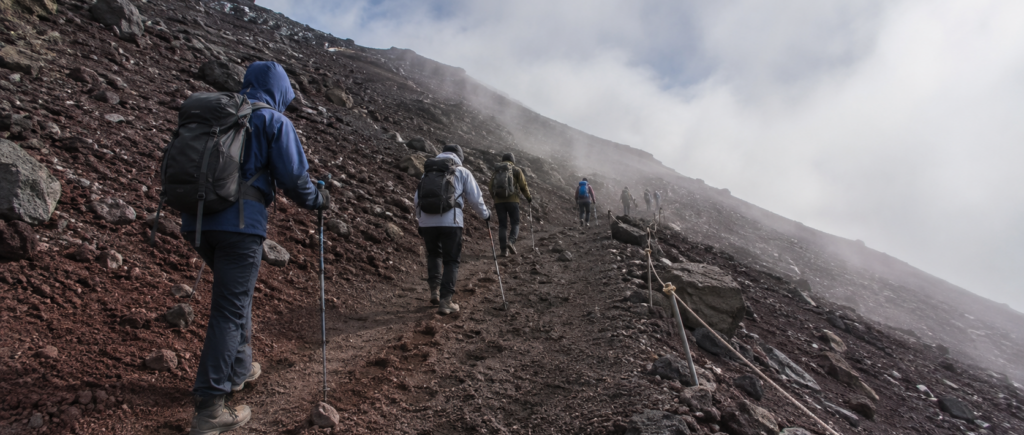
There are four principal routes up Mount Fuji: the Yoshida Trail on the Yamanashi side, and the Fujinomiya, Gotemba, and Subashiri trails on the Shizuoka side. Buses and roads now carry visitors to trailheads roughly 1,400 to 2,400 metres above sea level. Compared with pilgrims who once approached on foot from the foothills, a modern climber begins astonishingly close to the summit. Transport has shortened the journey, however; it has not made the mountain lower. The body is moved rapidly to high altitude and must then climb to the highest point in Japan.
During the official summer season, marked trails can be walked with normal mountaineering equipment and do not demand advanced rock-climbing technique. Fuji is therefore often described as a mountain that beginners can climb. That description is not necessarily wrong, but it does not mean that an unprepared climb is safe. The official climbing guidance stresses that every route becomes steep and rocky above 3,000 metres, where weather is unpredictable and proper equipment, training, information, and an unhurried plan are essential. A lack of technical difficulty is not the same as a lack of danger.
Even when the lowlands are in midsummer heat, temperatures near the summit can fall sharply, and strong wind strips warmth from the body. Rain may drive sideways, cloud can reduce visibility, and thinner air can bring headache, nausea, and severe fatigue. Climbers who set off immediately after arriving at the fifth station give their bodies little time to adjust. Those who continue through the night without sufficient rest add cold and exhaustion to the effects of altitude. The mountain does not change, but its difficulty varies greatly with weather, health, timing, and crowding.
The dangers of descent are also easy to overlook from a scenic viewpoint. After the relief of reaching the summit, a long slope of rock and gravel remains. Tired legs catch on small steps, feet slide in sand, and a simple fall can become a serious injury. Leaving the marked route can dislodge stones and expose people below to rockfall. Reaching the top is only half of the journey; the climb ends when the person returns safely under their own power. Fuji's simple outline and the compelling phrase 'once in a lifetime' can make that ordinary truth strangely difficult to see.
The Fuji we look at allows us to imagine that we understand the mountain in a single glance. The Fuji we climb permits progress only one step at a time and refuses to rearrange its conditions around our itinerary. A still image becomes a place of wind, cold, short breath, and footsteps. That change in perception may be one of the most important reasons to enter the mountain at all.
From a Pilgrimage Route to a Mountain Open to the World
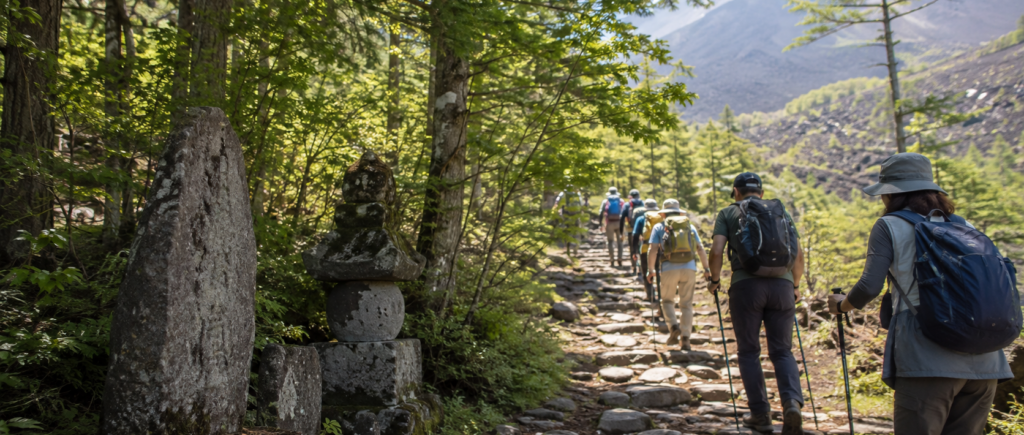
Today's four routes are maintained for safety and access, but they also connect with the history of Fuji worship. Earlier pilgrims prayed at shrines near the base, purified themselves in water, and moved through forest and then across the scorched, plantless upper slopes towards the sacred summit. Arrival was not the only point. The passage from the human world to a holy place gave meaning to the whole route. This is why Fuji's World Heritage property includes more than summit remains: trails, Sengen shrines, oshi lodging houses, lakes, springs, and other sites form one cultural landscape.
From the modern period onwards, increasing numbers of people climbed for reasons other than formal worship. Transport links and mountain huts improved, and the ascent became available to a much wider public. Today visitors come not only from across Japan but from around the world. The fact that people of different religions, nationalities, and levels of experience can aim for the same summit is one of modern Fuji's great attractions. Opening a route once travelled by a more limited group should not in itself be treated as a loss.
Yet when the climb becomes one item in a short travel schedule, the meaning of the route can be compressed into the summit. A traveller with limited time may want two clear achievements: standing at Japan's highest point and watching the sunrise from the top. That pressure encourages so-called bullet climbing - setting off late, avoiding a mountain-hut stay, and walking through the night with too little rest. The problem is more than haste. Moving upwards without adequate acclimatisation, while exposed to cold darkness, increases the risk of altitude sickness and hypothermia.
Sunrise is a defining image of a Fuji ascent, but the sun does not rise only for those standing at the summit. It can be watched above a sea of cloud from a mountain hut or from points along the trail. Even so, the belief that the summit is the only proper viewpoint sends large numbers of people towards the same narrow section before dawn. Here an individual challenge becomes visibly collective. Everyone shares the path. Walking exactly to one's own schedule and allowing the whole group to move safely are not always compatible aims.
It would be too simple to say that old pilgrims possessed respect and modern tourists have lost it. Earlier worshippers had varied motives, while many present-day climbers bring profound respect and private hopes to the mountain. What has changed is not merely attitude but scale, speed, transport, and the way images circulate. The answer is not to recreate the past. It is to recover an understanding of the route's history and the mountain's limits within the convenient conditions of the present.
The Pressure Comes from Concentration, Not Numbers Alone
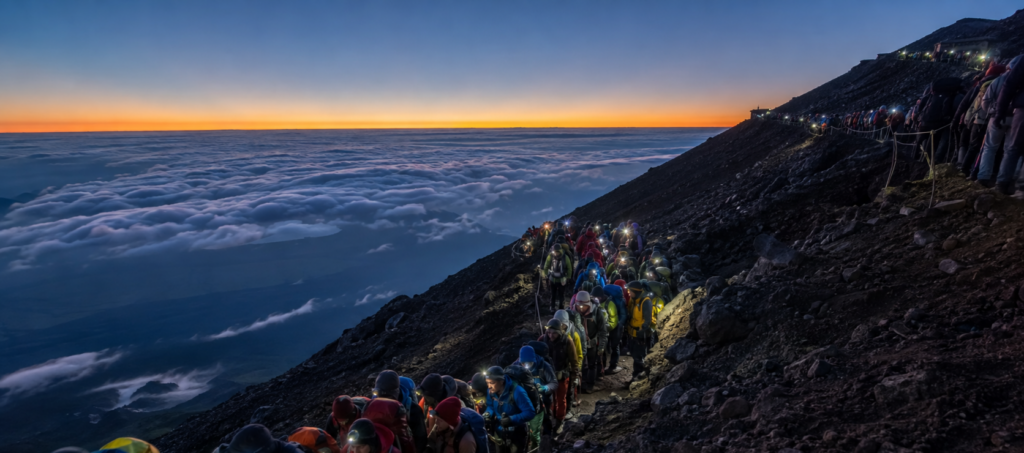
According to Japan's Ministry of the Environment, approximately 205,000 climbers passed counters near the eighth stations of the four trails during the 2025 season. That was below the roughly 236,000 recorded in 2019. The current challenge therefore cannot be explained simply as an endlessly rising annual total. Congestion remains intense because visitors are not distributed evenly among four routes or across the day. Use concentrates on the popular Yoshida Trail, on weekends and fair-weather days, and immediately below the summit before sunrise. For safety and for the quality of the experience, where and when people gather can matter more than the yearly total.
When a queue stops on a narrow high-altitude trail, climbers remain exposed to cold longer than expected. A person who leaves the path to overtake may increase the risk of falling or sending rocks downwards. Rescue posts, mountain huts, toilets, guides, and staff all face pressure at the same time. Much of upper Fuji has no ordinary water, sewage, or electricity network. Services that seem unremarkable in a town require exceptional labour in this environment. Behind a climbing fee or toilet contribution are people transporting materials, maintaining equipment, giving directions, and responding to illness and injury.
Environmental protection is also more complex than telling each visitor not to drop litter. Toilet waste above the fifth station was once a major problem because it could not be treated adequately. With support from the Ministry of the Environment, Yamanashi and Shizuoka prefectures, and others, environmentally sensitive systems had been installed at all 42 privately operated mountain huts by the end of fiscal 2006. This is a concrete reminder that Fuji did not become cleaner by itself. Present conditions are the result of long investment and continuous work that normally remains outside the photograph.
World Heritage inscription was not only a promotional label. It also clarified a duty to manage visitors while protecting the meaning of the property. When Fuji was inscribed, the World Heritage Committee asked Japan to study the carrying capacity of the upper trails and develop a visitor-management strategy. Access and recreation can pull against the need to preserve sacredness and scenic beauty. If a place is to remain open to everyone in the long term, it may require rules that prevent everyone from using it without limit at the same moment. That is one of the central difficulties of caring for a globally famous destination.
The phrase 'overtourism' can sound as if tourists themselves are the nuisance. The real issue is a mismatch between what a place can absorb and how it is visited. Choosing a less crowded time, booking a hut, allowing an extra day, or turning back when conditions deteriorate are not only personal safety decisions. They reduce pressure on other climbers and on the mountain. Responsible access begins by recognising that an individual itinerary is part of a shared system.
What Gates and Fees Ask of Us
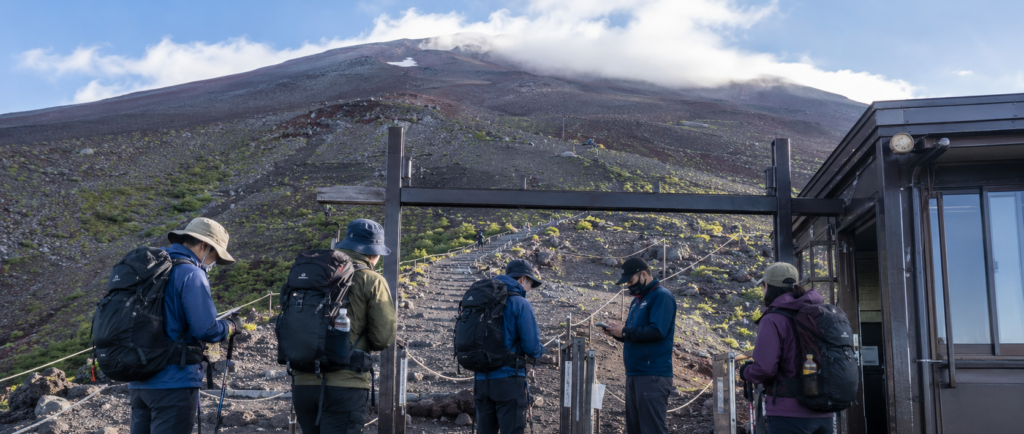
During the 2026 season, the Yoshida Trail in Yamanashi requires a fee of 4,000 yen per person per climb. Except for registered mountain-hut guests, its fifth-station gate closes from 2 p.m. until 3 a.m., and the daily limit is 4,000 climbers. On the Shizuoka side, the Fujinomiya, Gotemba, and Subashiri trails also charge 4,000 yen per climb and require visitors to complete advance learning about safety, rules, and conservation. Entry between 2 p.m. and 3 a.m. requires a mountain-hut booking. Across all four routes, safety and environmental protection are no longer left solely to voluntary goodwill.
Fees and gates naturally raise questions. Who owns a mountain? Do restrictions narrow a freedom that should be widely shared? A substantial charge will make the climb harder for some people to afford. Authorities therefore have a responsibility to explain how revenue is used and to keep testing whether regulation works. At the same time, freedom of access does not remove danger or maintenance costs. Rescue and first aid, trail repairs, low-impact toilets, staff, and multilingual information all require real labour and money.
As I researched the new system, I began to see a gate not only as something that closes Fuji, but as a boundary at which a visitor is asked to pause. Earlier pilgrims prepared at shrines and water sites before moving from ordinary space towards the sacred mountain. A present-day registration is not a religious rite, yet it can still create a moment to check equipment, health, timing, and rules. It marks a change of mind: this is not the entrance to a convenient attraction, but the entrance to a high mountain whose conditions cannot be negotiated.
Preserving Fuji does not require a return to a mountain reserved for a special class of people, nor does it require rejecting tourism. Those who look can be invited to imagine the ecology and communities outside the frame. Those who climb can accept responsibility for the path and time they share. Those who manage the mountain can keep improving restrictions as tools for safety, conservation, and cultural continuity rather than treating regulation as an end in itself. Only when these relationships are kept in balance can Fuji remain genuinely open.
The beauty of Mount Fuji from a distance does not contradict the severity of the trail. Walking among rock and wind, and learning how the mountain is sustained, reveals that the serene view depends on a great deal of largely invisible care. The Fuji we see gives us aspiration; the Fuji we climb teaches restraint. Holding the two faces together is a first step towards passing Japan's highest mountain to the next generation instead of merely consuming it as an image or achievement.
Final Thoughts
When we read about restrictions on climbing Mount Fuji, it is easy to focus on fees and gates, and to ask whether they are fair.
Yet the deeper question may be less about keeping people out than about how a mountain open to so many can remain open for generations to come.
Behind Fuji's quiet outline, people repair trails, maintain toilets, provide first aid, and guide visitors safely.
Each climber's choice of time, pace, and equipment - and the decision to turn back when necessary - can also help protect the mountain.
The Fuji we see awakens a longing to climb; the Fuji we climb teaches restraint and respect for nature.
When we understand both, Mount Fuji becomes more than a symbol framed in a photograph.
It becomes a place we are responsible for passing on.
The next time you look at its beautiful outline, I hope you will also spare a thought for the many unseen efforts that make that view possible.
The Japanese version of this article is here.↓↓↓