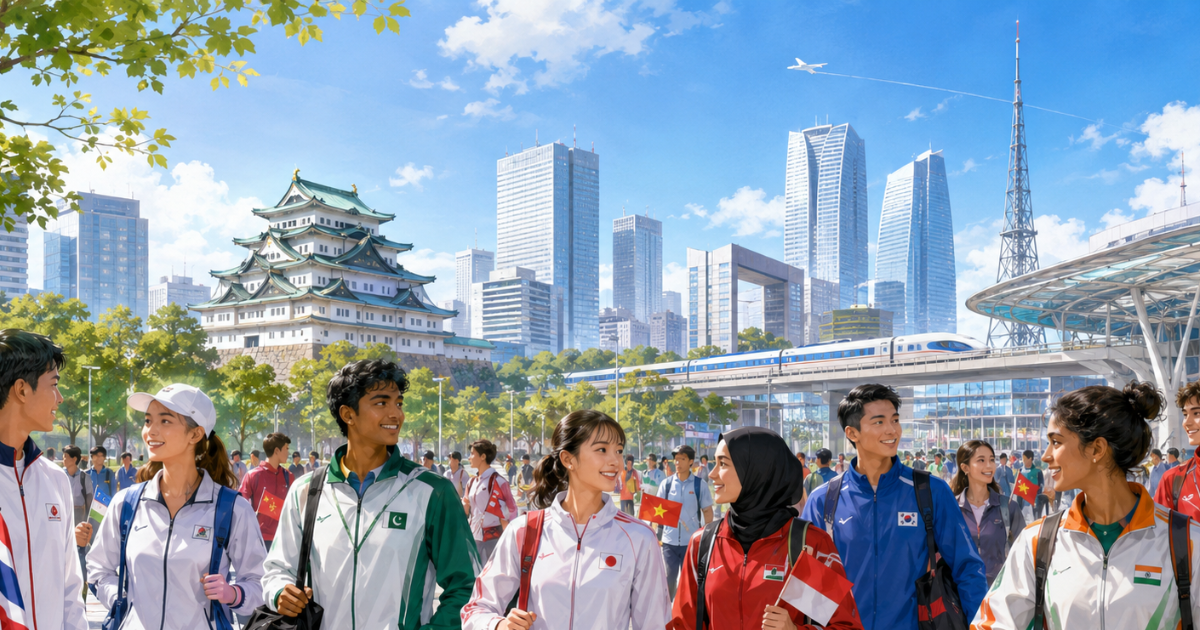
In September 2026, Japan will host the Asian Games for the first time in 32 years. The event will be centered on Aichi Prefecture and the city of Nagoya, running for 16 days from September 19 to October 4. Athletes and team officials from 45 countries and regions across Asia will gather to compete in 43 sports. It will be only the third Asian Games held in Japan, following Tokyo in 1958 and Hiroshima in 1994.
As the opening approaches, attention naturally turns to medals and the athletes representing Japan. Yet the more I looked into Aichi-Nagoya 2026, the clearer it became that the Games cannot be understood through results alone. They will affect how people move through the city, how local businesses welcome visitors, how schools and municipalities engage with other parts of Asia, how accessible public spaces become, and what remains after the crowds have gone home. The event is also an opportunity to ask how a Japanese region can build a more lasting relationship with Asia.
The slogan is "IMAGINE ONE ASIA." It expresses a hopeful vision: people divided by language, religion, customs, and nationality sharing the same time and place through sport. Whether that vision becomes meaningful, however, will not be decided by the spectacle of the opening ceremony. It will be decided by the changes that begin before the Games and continue long after them.
Why Aichi and Nagoya?
Aichi and Nagoya occupy a central position in Japan and have an exceptionally strong industrial base, particularly in manufacturing. Chubu Centrair International Airport, the Tokaido Shinkansen, and an extensive expressway network connect the region with the rest of Japan and the world. Nagoya Castle and Atsuta Jingu may be its best-known historic landmarks, but the wider prefecture offers many different experiences: the ceramic traditions of Seto and Tokoname, the coastal scenery of Mikawa Bay, the castle town of Inuyama, and industrial tourism around Toyota, among others. If visitors are encouraged to travel beyond central Nagoya, the Games could become an introduction to communities throughout Aichi.
This will not be a compact event built around a single cluster of newly constructed venues. The organizers have made existing facilities the starting point, and more than 50 competition venues are spread across Japan. Some events will take place outside Aichi; swimming and equestrian competition, for example, are scheduled to use existing venues in Tokyo. Reusing and upgrading facilities can reduce the risk of leaving behind expensive buildings with little purpose after the event.
A dispersed Games also creates logistical challenges. Athletes, officials, and spectators must be moved safely between many venues, while ordinary commuting, school travel, and freight continue. Rail services, buses, signage, digital information, and multilingual support have to work together. Temporary fixes may get the region through the 16 days, but the better question is whether preparations will leave transportation easier to understand for first-time foreign visitors, older residents, and people with disabilities. That is one of the clearest tests of a host region's real capacity.
Forty-Three Sports and Many Different Visions of Asia
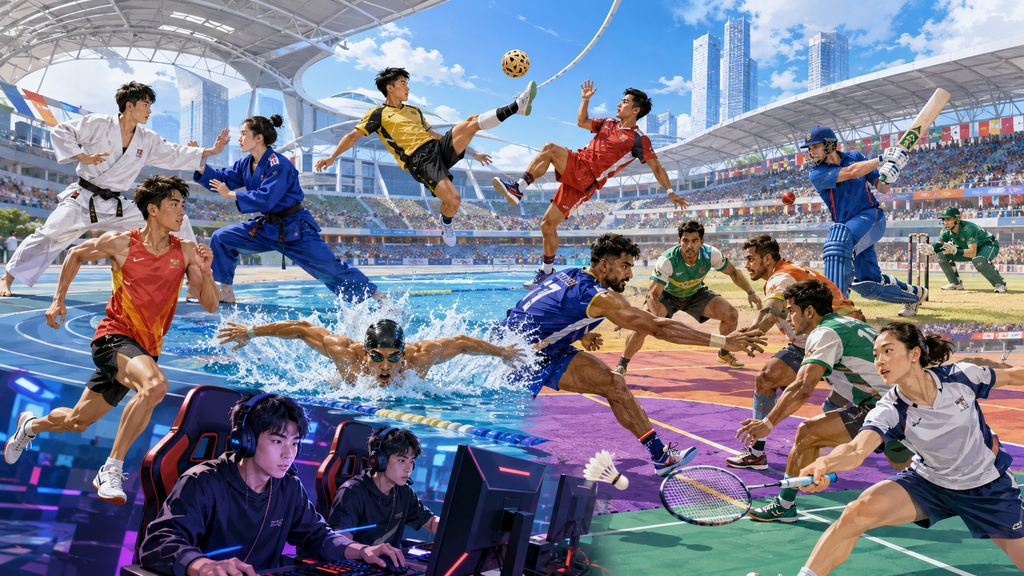
The appeal of the Asian Games lies not only in globally familiar sports such as athletics, swimming, football, and judo. The program also includes sports closely tied to particular Asian histories and cultures, including kabaddi, sepak takraw, wushu, and kurash. Esports, cricket, padel, teqball, and mixed martial arts broaden the program further and may attract audiences who do not usually follow a traditional multi-sport event. Seeing these sports side by side reveals how much diversity is hidden inside the convenient but overly simple word "Asia."
Unfamiliar sports can seem difficult at first because the rules are unknown. Yet learning the rules can become the beginning of cultural curiosity. Why is this sport popular in a particular country? How did it develop? What do its athletes and supporters take pride in? When spectators look beyond the score and ask about context, watching a competition becomes a small journey into another society.
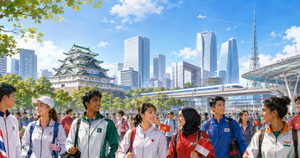
Aichi-Nagoya 2026 offers the chance to combine the excitement of supporting one's own team with curiosity about unfamiliar countries and traditions. People can cheer for Japanese athletes while also recognizing the dedication of their opponents. National flags do not have to function only as boundaries between rivals; they can also show how people from very different backgrounds meet under shared rules. That emotional experience can bring the idea of international exchange down from formal ceremonies and into ordinary human feeling.
When Visitors Walk Through the City, the Regional Economy Begins to Move
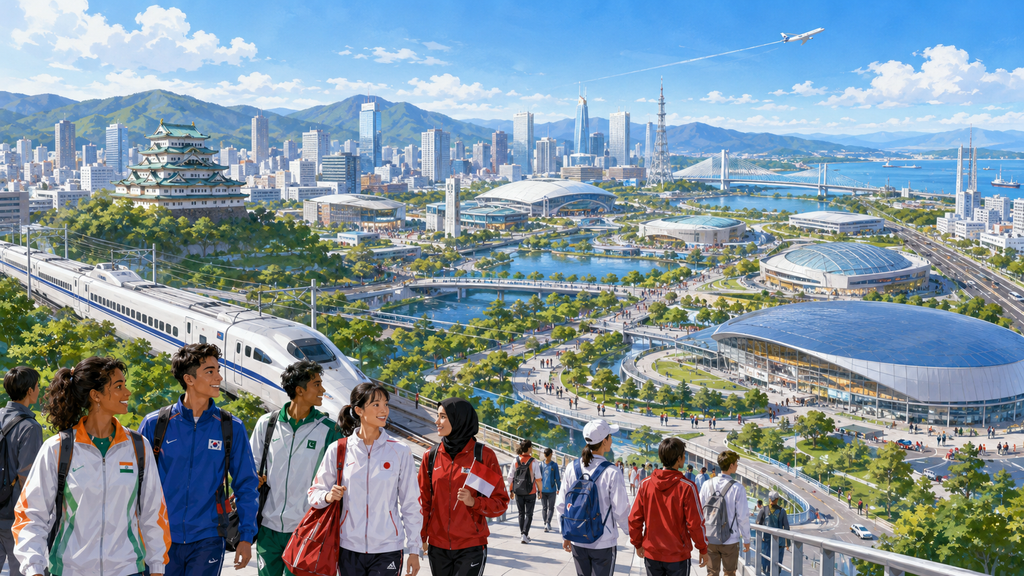
The most visible local impact of an international event is the movement and spending of people. Athletes, officials, and spectators stay in hotels, use trains and buses, eat in restaurants, buy souvenirs, and visit attractions. Aichi Prefecture has also planned sightseeing bus tours during and around the Games for athletes, officials, and the general public. If links between venues and destinations work well, benefits could extend beyond the immediate surroundings of stadiums into Owari, western Mikawa, eastern Mikawa, and other parts of the prefecture.
In December 2025, Aichi Prefecture and Nagoya City published an estimate combining the Asian Games and Asian Para Games. It projected an induced production value of 1.8177 trillion yen within Aichi and 3.6831 trillion yen nationwide. Those impressive figures require careful reading. They do not represent sales generated only during the event. The analysis covers the period from 2016, when the bid was accepted, through 2036, ten years after the Games. It includes assumed legacy effects from venue development, sports participation, tourism, industrial policy, and environmental programs. The official report also states that possible negative economic effects were not included in the estimate.
For that reason, the headline number cannot by itself prove that hosting the Games will make the region more prosperous. As of December 2025, the combined budget for the Asian Games and Asian Para Games was reported at 298 billion yen. Costs rose as prices and labor expenses increased and operating requirements became more specific. Organizers also pursued savings by abandoning plans for a purpose-built athletes' village, relying more heavily on hotels and existing venues, and revising venue arrangements. Because public money and public assets are involved, costs, outcomes, congestion, and disruption to local businesses should all be explained and assessed openly.
For the region, the deeper opportunity is not simply a short burst of full hotels and higher sales. It is the chance to create experiences that make people want to return: a visitor navigates without confusion because information is multilingual; a restaurant explains options for different dietary or religious needs; a resident offers help; a town visited between competitions becomes the most memorable part of the trip. If such experiences accumulate, Aichi and Nagoya may be remembered not only as an industrial center or a place people pass through, but as a destination where culture and daily life are worth exploring.
International Exchange with a Human Face
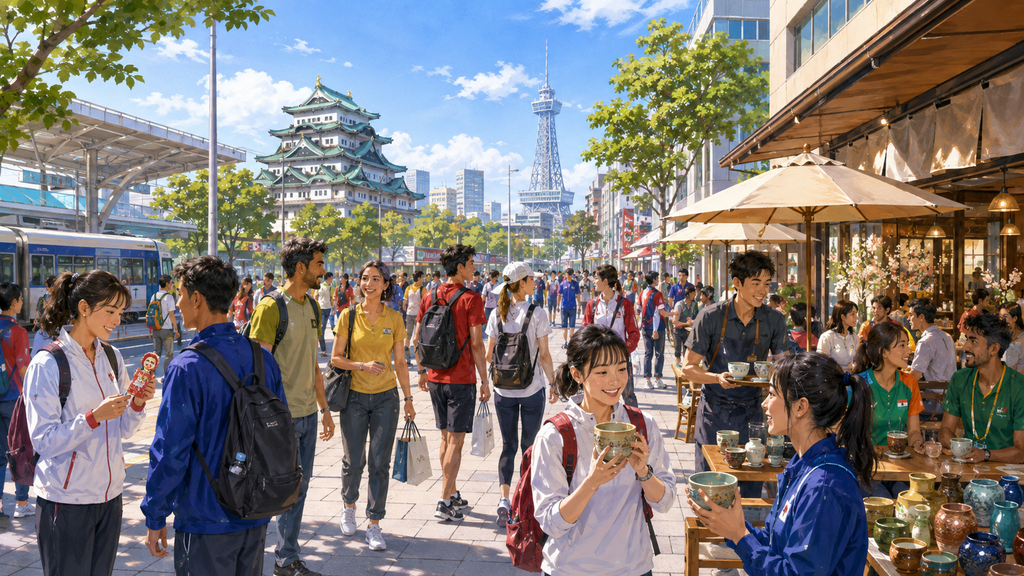
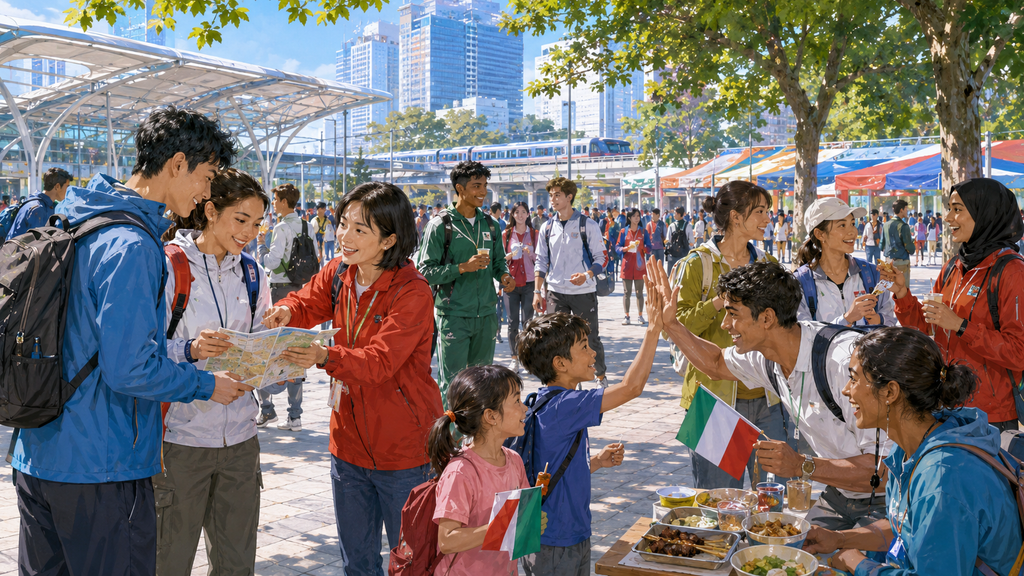
The phrase "international exchange" often brings to mind official receptions and visiting delegations. Much of the exchange created by a major event, however, happens in smaller, more ordinary moments: someone asks for directions at a station; a volunteer bridges a language gap; a restaurant adapts to unfamiliar dietary customs; a child learns about a country for the first time and begins cheering for one of its athletes. A brief conversation or helpful gesture can replace an abstract image of a nation with a memory of an individual person.
The volunteer plan prepared by the organizing committee, Aichi Prefecture, and Nagoya City anticipated about 40,000 volunteers across the Asian Games and Asian Para Games. Roles include competition support, spectator guidance, language assistance, help for athletes, and tourism and transportation guidance around major stations and venue access points. The experience of assisting people with different cultural backgrounds and physical needs could later strengthen tourism, welfare, disaster preparedness, and community activities. That potential will be realized only if volunteers are treated not as free labor filling operational gaps, but as participants who take new skills and relationships back into their communities.
Aichi Prefecture has also supported municipalities and private schools that organize international exchange and international understanding projects through its Asia Friendship Promotion Program. Municipalities interested in receiving pre-Games training camps have been identified, creating opportunities for athletes and residents to meet even before competition begins. Nagoya's own Games vision emphasizes learning materials for children, interaction with athletes, cooperation with Asian cities, and a more inclusive multicultural community. These initiatives bring the Games out of television coverage and into classrooms and neighborhood life.
During the Games, the official fan zone, ONE ASIA WORLD, is scheduled to open in Hisaya-odori Park in central Nagoya. Designed as an open space for people with or without competition tickets, it is expected to offer public viewing, medalist celebrations, Asian food, music and culture, and interactive corporate exhibits. People sitting near one another in a stadium do not necessarily speak, but food and music give them natural reasons to stop, react, and exchange a few words. The fan zone could translate the intensity of sport into cultural exchange in the heart of the city.
Exchange, however, should not end with a single day of displaying "foreign cultures." Aichi and Nagoya are already home to residents, students, and workers with connections across Asia and beyond. Rather than treating multiculturalism as something arriving from outside for a festival, organizers and communities can invite these residents to shape the program as local partners. When the relationship is no longer fixed between host and guest, and people meet as fellow participants in regional life, the phrase "IMAGINE ONE ASIA" begins to acquire a more tangible meaning.
Success Will Be Decided After the Closing Ceremony
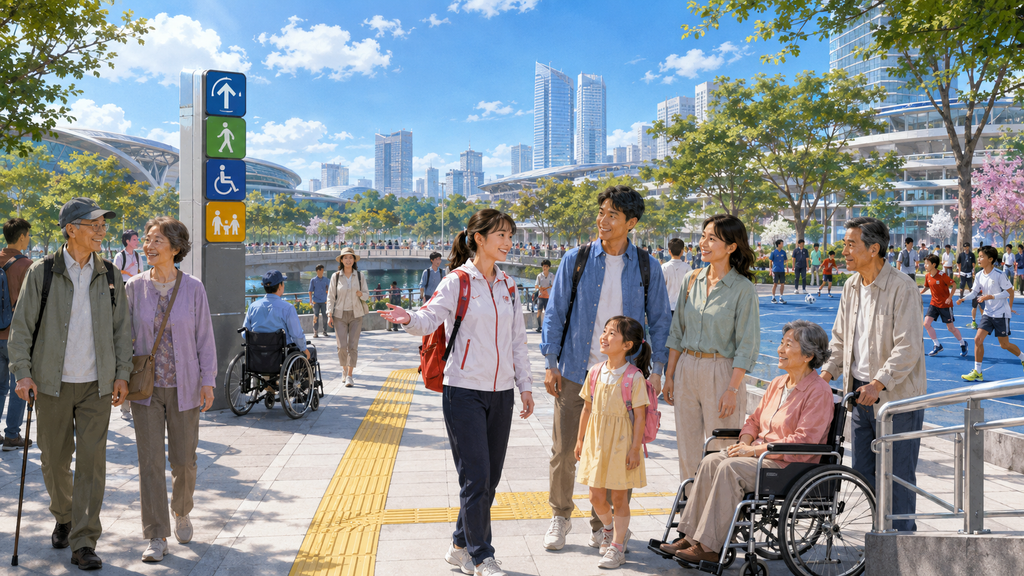
Large sporting events often measure success through visitor numbers, television audiences, and completed facilities. Yet the most valuable legacy may be less visible: more residents able to help in another language; streets reconsidered from the perspective of people with disabilities; Asia-focused lessons that remain in schools; small businesses confident about welcoming overseas customers; or a child who discovers an unfamiliar sport and continues playing it. These outcomes are difficult to place on a medal table or balance sheet, but they can change everyday regional life for years.
That is why post-Games evaluation should be designed before the event ends. Who will measure the outcomes, when, and by what standards? Are renovated facilities genuinely useful to residents? Will multilingual information and accessibility improvements be maintained? Will exchange projects receive support in the following year? Did visitors travel beyond Nagoya? Can experienced volunteers find routes into continuing community work? Publishing answers to such questions, alongside economic data, would help turn a temporary festival into a form of public learning.
Sport has the power to make people with very different backgrounds cheer at the same moment. It is not magic that erases political conflict or painful history. It can, however, become an opening through which people stop seeing one another only from a distance. In the autumn of 2026, visitors will come to Aichi and Nagoya not only to compete and watch, but also to walk, eat, ask questions, and encounter local lives. If those small exchanges happen again and again, the meaning of the Games will extend far beyond the medal table.
What will make Japan's first Asian Games in 32 years truly worthwhile? Not only the number of records broken, and not only whether the seats are full. Its value will depend on whether the region continues to nurture the encounters, skills, and improvements created by the event after the closing ceremony. Aichi-Nagoya 2026 is a chance to welcome Asia. It is also a chance for the region itself to open its mind to Asia once again.
The Japanese version of this article is here.↓↓↓