When people think of Aichi Prefecture as a travel destination, Nagoya is usually the first place that comes to mind.
Nagoya Castle, Atsuta Jingu Shrine, the lively streets of Osu, and the city’s famous local food are obvious attractions. Venture a little farther, and Ghibli Park has become another major reason to visit in recent years. Aichi is easy to reach, convenient to travel around, and filled with things to see. Yet when we hear the words “a trip to Aichi,” many of us still imagine staying mainly in Nagoya and visiting a few nearby attractions rather than exploring the prefecture as a whole.
Open a map of Aichi, however, and that image begins to change.
There are islands in Mikawa Bay that can only be reached by boat. In the mountainous east, rice terraces climb the slopes beneath deep forests. Even within Nagoya itself, there are neighborhoods where traces of the old Tokaido road and the atmosphere of the Edo period remain. Near Chubu Centrair International Airport, the pottery town of Tokoname preserves the memory of its industry in sloping lanes, brick chimneys, kilns, and walls built from old ceramic pipes.
While researching Aichi’s lesser-known attractions, I began to realize that a “hidden gem” does not necessarily have to be somewhere that nobody knows about.
Sakushima Island, Arimatsu, and Tokoname are all established sightseeing destinations. They appear in official travel guides and already attract visitors. Yet they sit slightly outside the standard itinerary chosen by many first-time travelers to Aichi. That distance from the usual route is precisely what makes them interesting. When you visit without filling every hour of your schedule, they offer a chance to notice the layers of time that have shaped the places themselves.
There is nothing wrong with efficiently visiting famous landmarks. Seeing a place you have long wanted to see can be one of the great pleasures of travel.
But sometimes it is worth choosing somewhere that makes you think not, “Where should I go next?” but rather, “Perhaps I’ll walk a little farther here.”
With that kind of journey in mind, I would like to introduce Sakushima Island, the Yotsuya Rice Terraces and Atera Seven Falls in the Okumikawa region, the historic town of Arimatsu, and Tokoname’s Pottery Footpath.
Step Just Beyond “Aichi Means Nagoya”
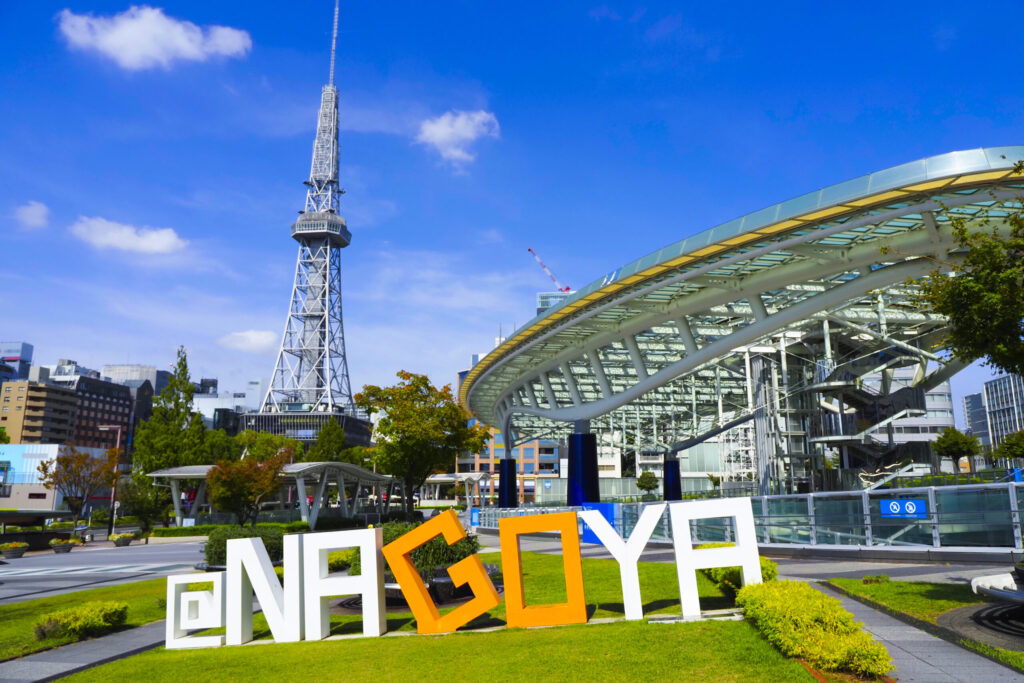
Aichi is one of those Japanese prefectures where cities, industry, history, mountains, and the sea all exist within a relatively compact area.
Nagoya, a major metropolis, dominates the western part of the prefecture, surrounded by towns that preserve the history and culture of the old Owari region. Travel east and the landscape gradually changes into the hills of Mikawa and the mountains of Okumikawa. To the south lie the Chita and Atsumi peninsulas, with Mikawa Bay stretching between them.
Once you begin to think about this geography, it seems a little unfortunate to judge Aichi only by what can be found in Nagoya.
When choosing places to visit, we naturally look for recognizable landmarks. We are drawn to places we have seen in photographs, places that appear near the top of travel rankings, and places that allow us to feel that we have truly “been there” even during a short stay.
There is nothing wrong with that. When visiting somewhere for the first time, beginning with its best-known attractions makes perfect sense.
And yet, when we move just one step away from those familiar landmarks, a destination can suddenly gain another dimension.
Many people associate Aichi with the automobile industry. But within the same prefecture there are small island communities that can only be reached by ferry. Not so far from Nagoya’s modern towers, there is an old post town where the legacy of the Tokaido road and traditional tie-dyeing still shape the streetscape. Farther northeast, rice terraces spread across mountain slopes, while deep in a forest a nationally designated scenic waterfall descends through a rocky valley.
Perhaps that is what makes a place a hidden gem.
It is not simply a matter of having fewer visitors.
It may be a place that shifts our familiar image of Aichi slightly to one side. A place without huge attractions or spectacular entertainment, where slowing our pace reveals something more interesting. A place whose scenery was not created solely for tourists but grew out of everyday life, work, industry, and people’s relationship with nature.
Seen in that way, Aichi has many places that are intriguing not so much as “destinations” but as places to walk.
Sakushima:An Island Life Beyond the Art
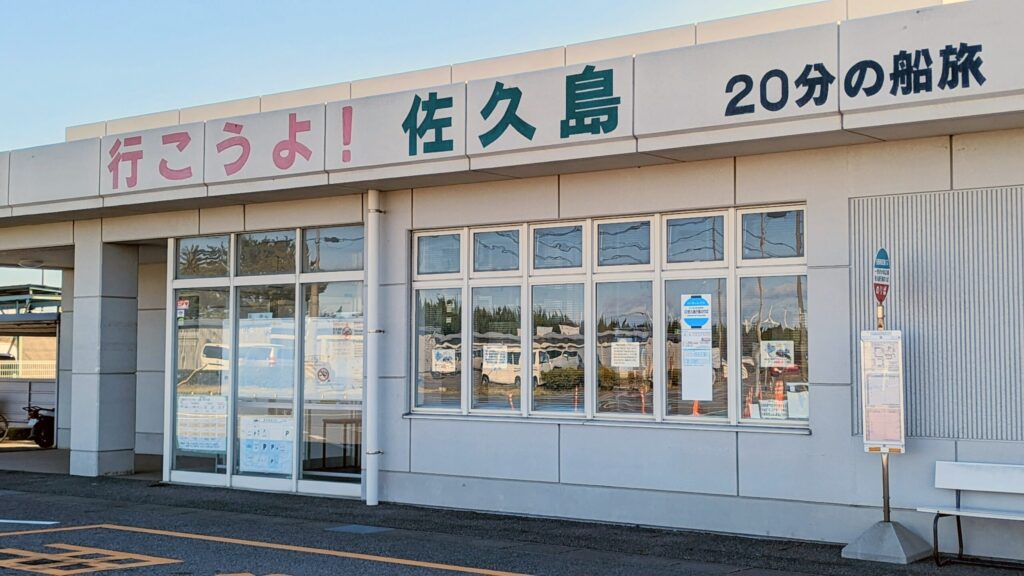
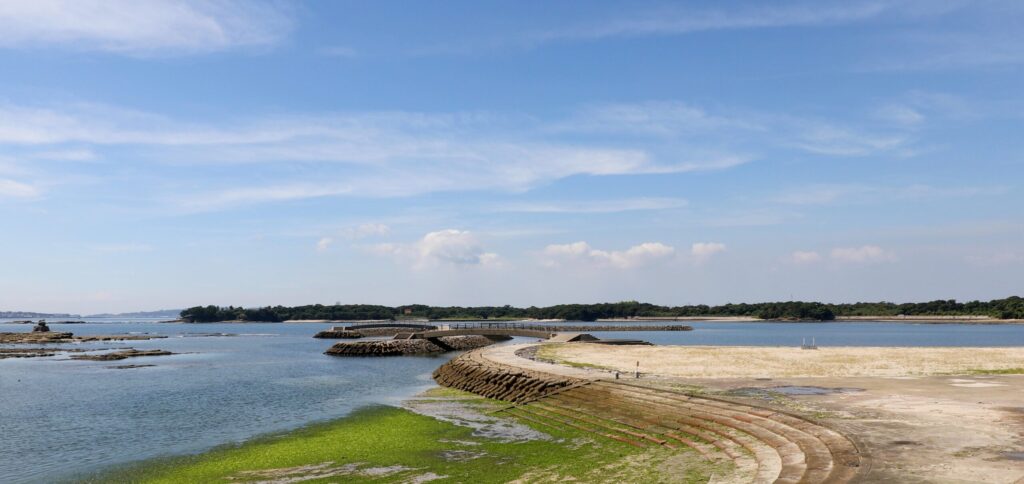
Sakushima is a small island in Mikawa Bay, administratively part of Nishio City. Visitors board a municipal ferry at Isshiki Port and cross the water to reach it.
Today, Sakushima is widely known as an “art island.” Contemporary artworks are scattered around the island, and walking or cycling between them has become a popular way to explore. Some readers may already have seen photographs of the white, box-like East House or the black structure known as Ohirune House.
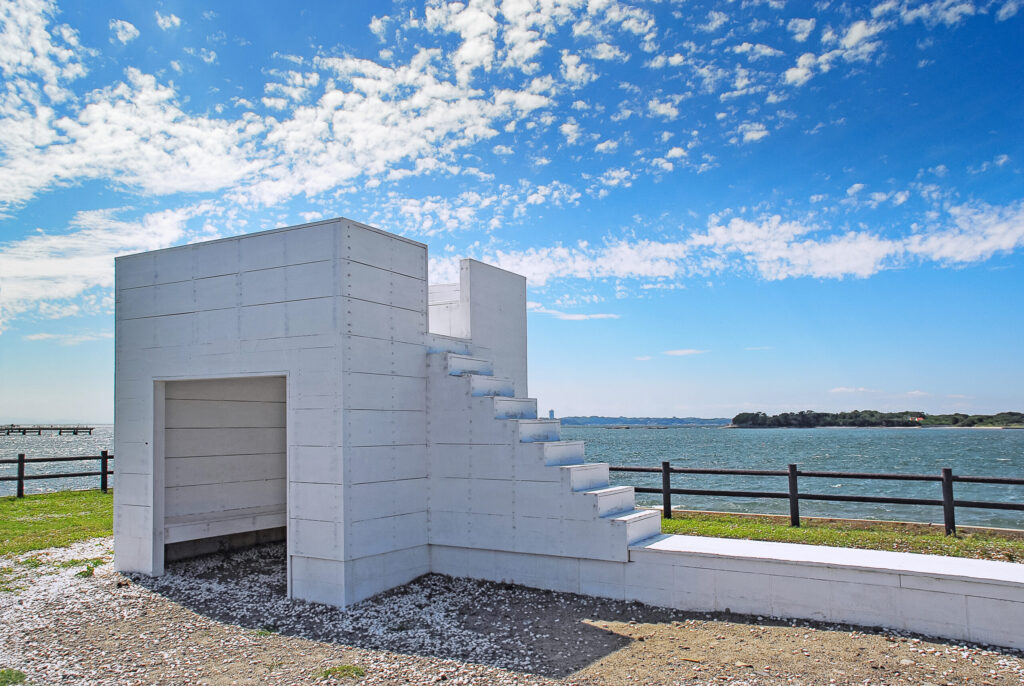
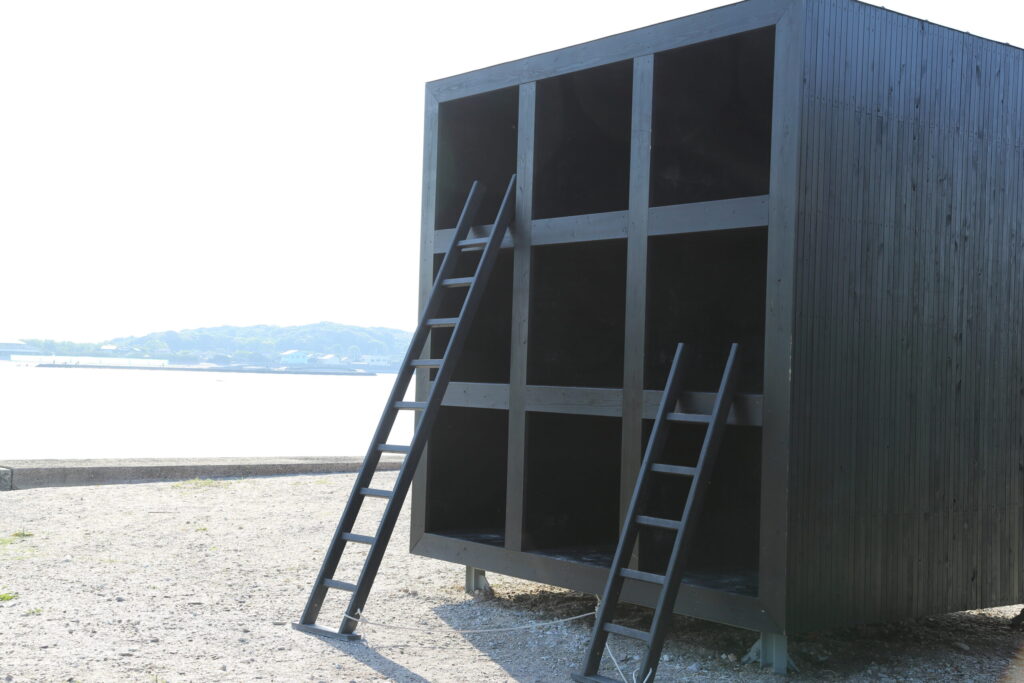
But the more I read about Sakushima, the more I felt that visiting only for the artworks would mean missing much of what makes the island special.
Official tourism information for Aichi introduces not only Sakushima’s art but also its calm beaches, varied coastline, walking trails through hills filled with seasonal plants, and traditional settlements lined with houses clad in black wooden boards.
In other words, the paths between the artworks are themselves part of the island’s attraction.
Walking on an island has a different rhythm from sightseeing on the mainland. You need to remain aware of the ferry timetable, but once you arrive, most movement takes place on foot or by bicycle.
You turn into a narrow lane. The sea suddenly appears between buildings, so you stop for a moment. You notice an artwork and make an unplanned detour. Distances that seem short on a map become richer when traveled slowly because you begin to notice every small change in the landscape.
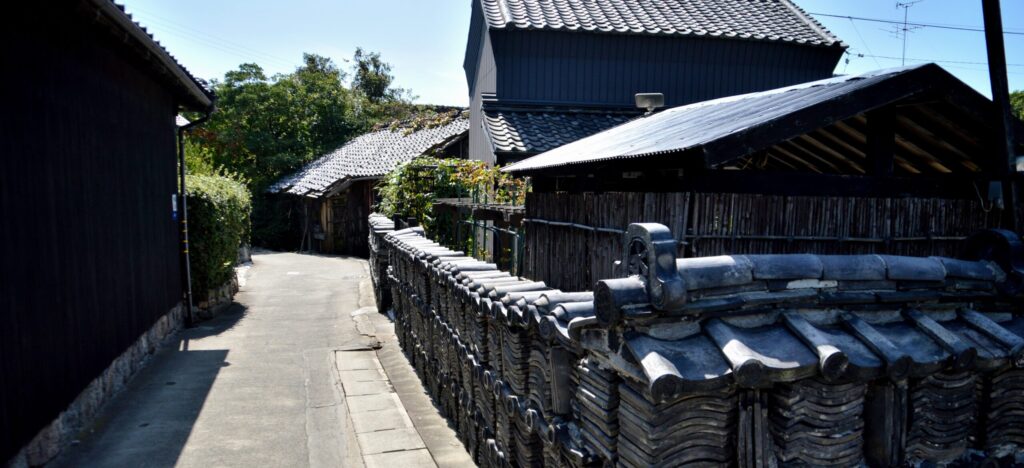
The black-walled village streets are one of Sakushima’s most distinctive sights.
Rows of dark wooden houses create an atmosphere completely different from the island’s contemporary installations. New works of art exist within the same walking route as homes and streets that have supported island life for generations.
That combination is what prevents Sakushima from feeling like a simple outdoor art gallery.
Nishio City has used art as part of its efforts to revitalize the island while drawing on Sakushima’s distinctive natural environment, climate, history, and local industries. Behind the artworks that visitors photograph lies a broader question: how can the island’s environment and way of life be carried into the future?
Perhaps that is why there is no need to measure a day on Sakushima by how many artworks you managed to see.
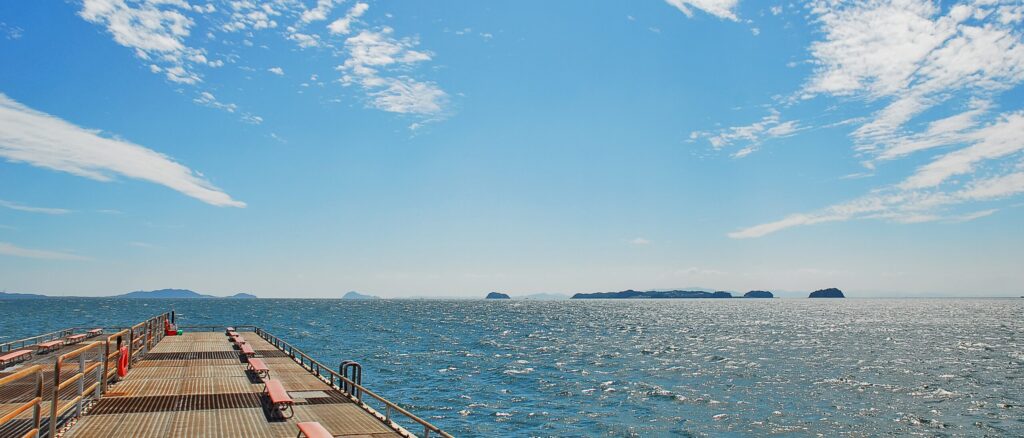
Listen to the wind beside the sea. Walk slowly through the settlement. Eat locally caught seafood at a small restaurant. Watch the ferry that brought you to the island disappear across the water.
Those seemingly ordinary moments are also part of the reason for crossing the sea.
Sakushima is close enough to Nagoya for a day trip, yet reaching it requires the extra step of boarding a boat. Crossing that small boundary is enough to change the pace of the journey.
It is the kind of place I would choose on a day when I wanted to give up a little convenience and travel more slowly.
Into Okumikawa:Yotsuya Rice Terraces and Atera Seven Falls
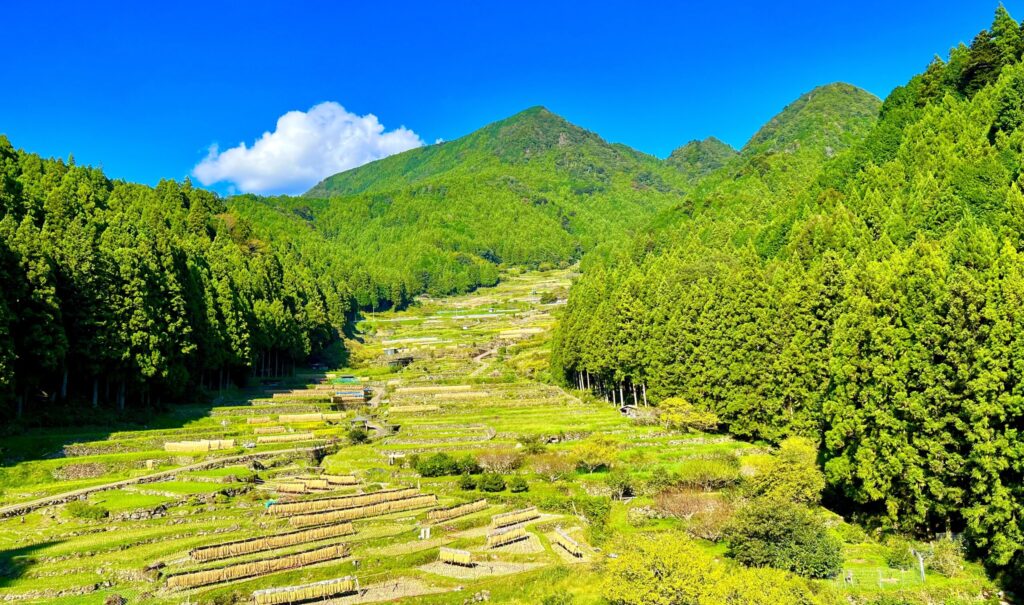
Anyone looking for a side of Aichi that feels unexpected should consider traveling into Okumikawa.
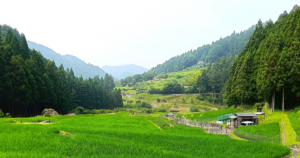
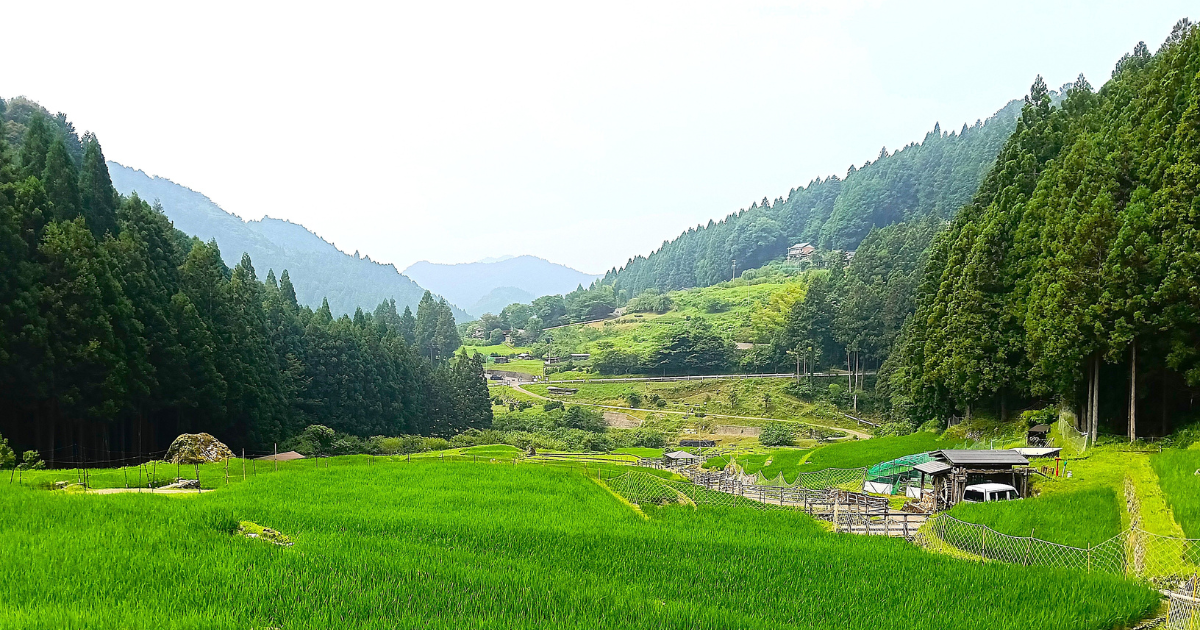
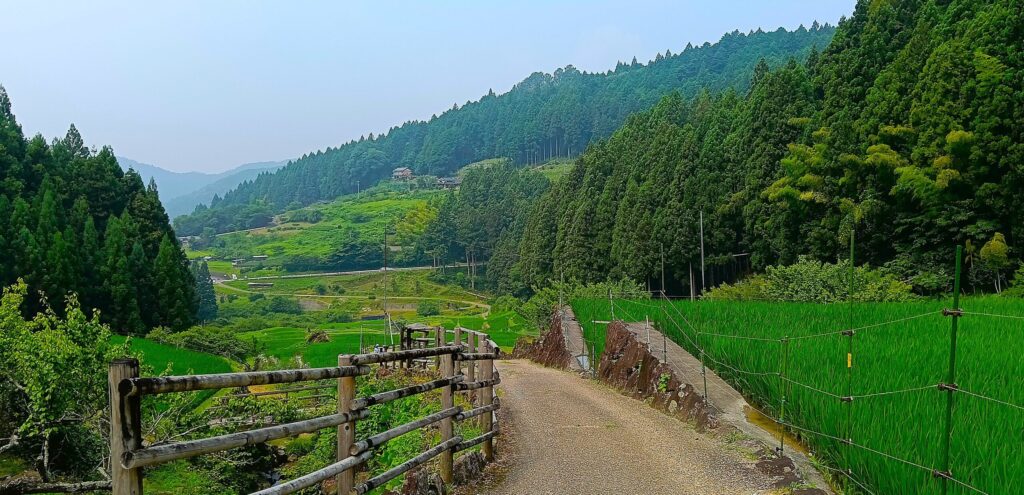
The Yotsuya Rice Terraces lie in the mountains of Shinshiro, spreading across the slopes at the foot of Mount Kurakake. Their appearance changes dramatically with the seasons. In one period the paddies reflect the sky after being filled with water. Later they become intensely green as the rice grows, before turning golden as harvest approaches.
Terraced rice fields in Japan are often described as part of the country’s nostalgic rural landscape.
There is certainly something deeply evocative about small paddies following the contours of a mountainside. But once I began reading about the history of Yotsuya, I realized that this is not simply a beautiful landscape.
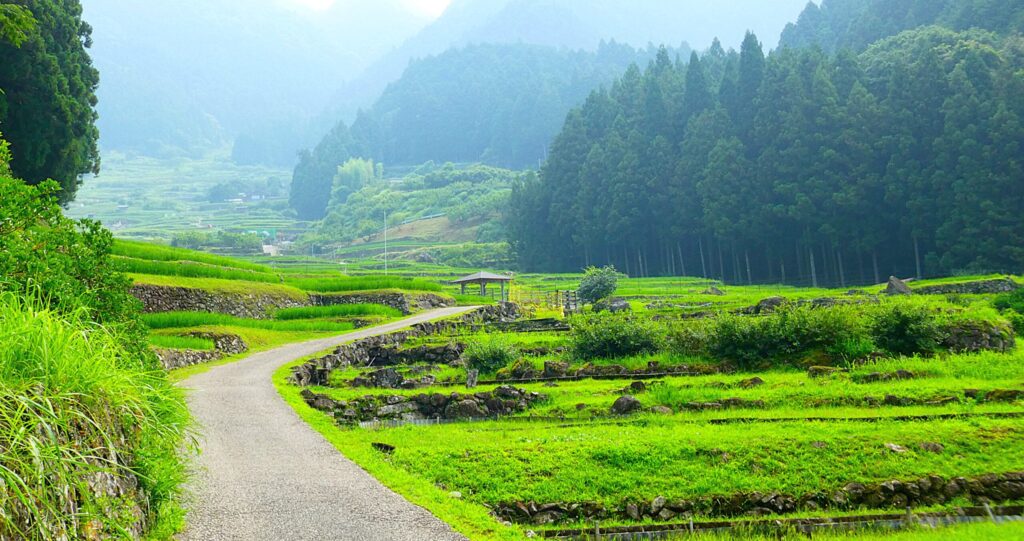
According to Shinshiro City, prolonged rain and a typhoon caused a major landslide in July 1904, destroying rice terraces along the valley.
With support from neighboring communities, local residents began the difficult work of rebuilding them. Within roughly five years, the stone-walled terraces had been restored.
The landscape we see today, then, was not created accidentally by nature. It is the result of people confronting the land, cultivating it, repairing it after disaster, and continuing to protect it.
Once you know that history, even the individual stone walls begin to look different.
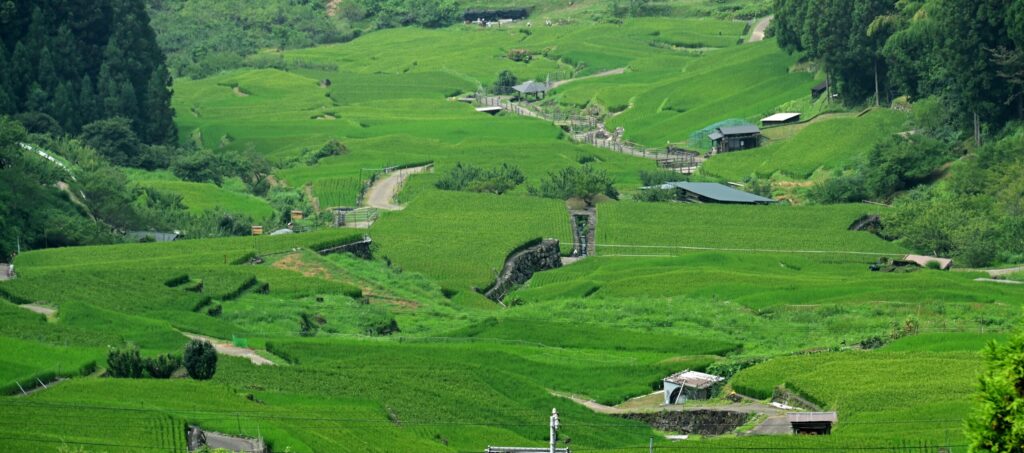
The terraces are not merely a viewpoint created for visitors. They are working farmland. The paddies belong to people, and agricultural work continues there.
Those of us who come as tourists therefore have a basic responsibility: not to enter fields or farm roads without permission, not to interfere with agricultural work, and to appreciate the scenery from appropriate places.
Travel becomes more meaningful when we do more than think, “I have come to see somewhere beautiful.” We can also imagine the people whose work keeps that landscape alive.
If you would like to experience another side of Okumikawa’s natural environment, Atera Seven Falls, also in Shinshiro, is equally memorable.
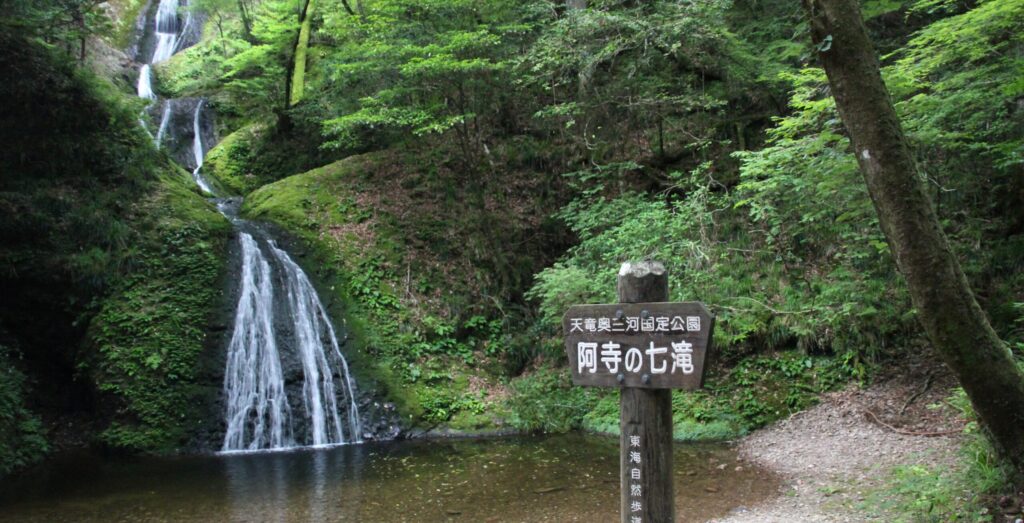
As the name suggests, the water of the Atera River descends in seven stages over a cliff of conglomerate rock. The falls have a total drop of approximately 62 meters. The waterfall and surrounding area are nationally designated as a Place of Scenic Beauty and Natural Monument, and the falls are also included among Japan’s celebrated “100 Waterfalls.”
The landscape includes large potholes and other geological features created by the long interaction between water and rock.
This is not a place to visit in search of flashy tourist facilities.
You walk through the forest. The sound of water gradually becomes louder. Then, beyond the trees, the waterfall comes into view.
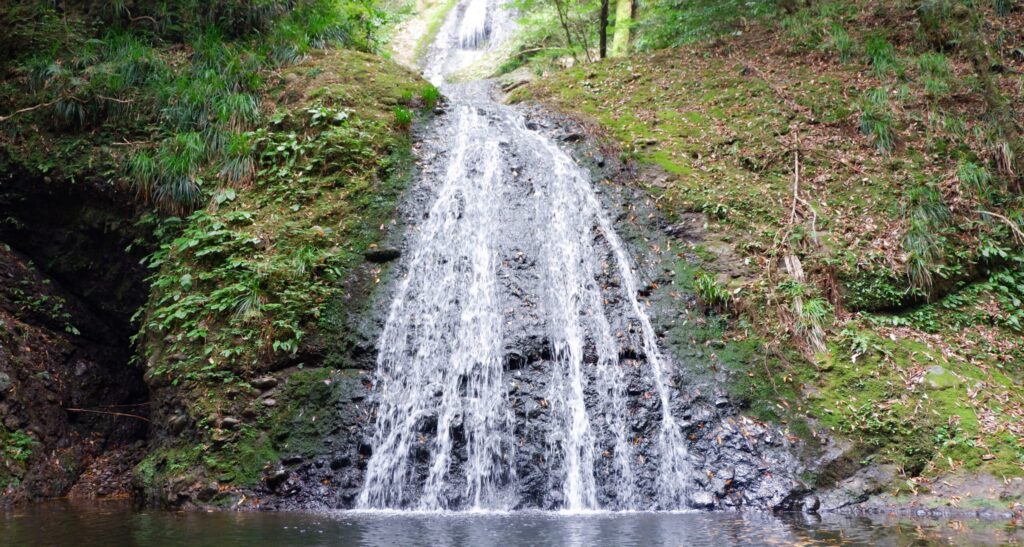
The approach is part of the experience.
When leaving a city for somewhere surrounded by nature, we sometimes describe the destination by saying, “There’s nothing there.”
But is there really nothing?
The temperature of the wind. Wet stone. The sound of the river. The changing colors of the trees through the seasons.
When artificial stimulation becomes quieter, things that normally escape our attention move to the foreground.
Together, the Yotsuya Rice Terraces and Atera Seven Falls quietly remind us that Aichi cannot be understood only through its large cities and industrial reputation.
Arimatsu and Tokoname:Walking Through the Town Itself
Historic towns and traces of old industries offer a different kind of hidden attraction.
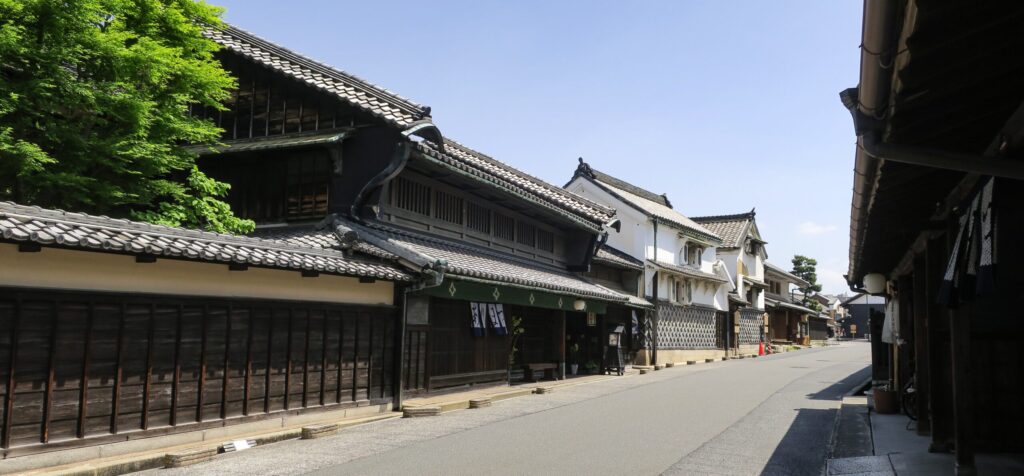
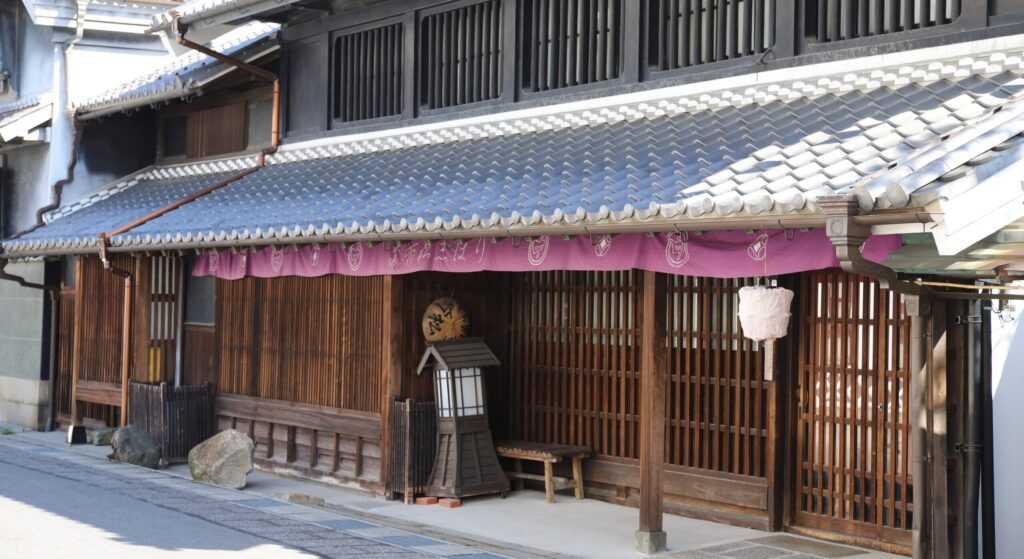
Arimatsu, in Nagoya’s Midori Ward, is a historic district along the former Tokaido highway.
The town is best known for Arimatsu-Narumi shibori, a traditional form of resist-dyeing that developed here during the Edo period. Houses once owned by prosperous textile merchants and other traditional buildings still line parts of the old road.
In 2016, Arimatsu was designated an Important Preservation District for Groups of Traditional Buildings. In 2019, its story as a historic shibori-producing town was recognized as part of Japan Heritage.
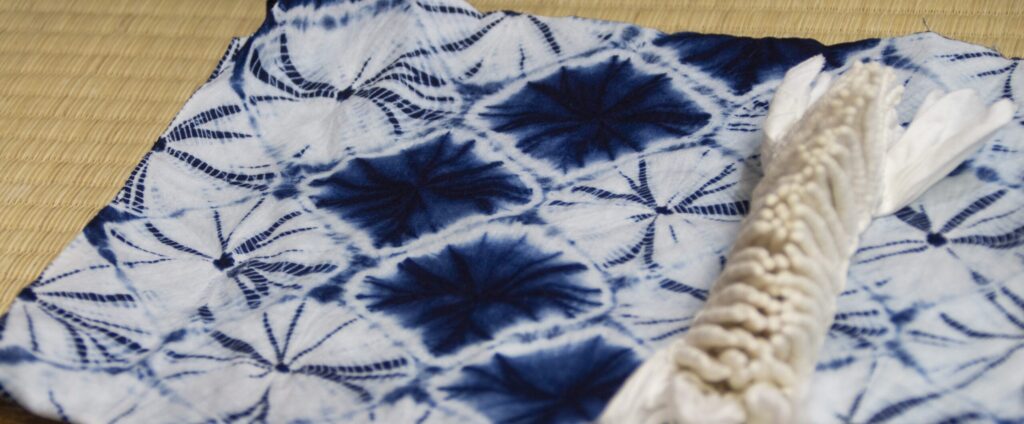
One of the pleasures of Arimatsu is that history has not been preserved in a single isolated building. Instead, visitors can experience an entire streetscape arranged along the old highway.
Tiled roofs, plastered facades, traditional latticework, raised firewalls, and distinctive upper-story windows create a rhythm very different from that of a modern residential neighborhood, even if you know little about Japanese architecture.
More importantly, Arimatsu is not a historical stage set.
Traditional craft shops still operate here. People live here. The town continues to exist in the present.
Whenever I research historic districts, I often find myself wondering about something beyond the buildings themselves:
Why did this particular landscape survive?
Old streets do not remain simply because they are old.
They survive because people repair buildings, establish preservation systems, continue using them, and share an understanding of their value. In Arimatsu, protection of the streetscape overlaps with the continuing culture of shibori dyeing.
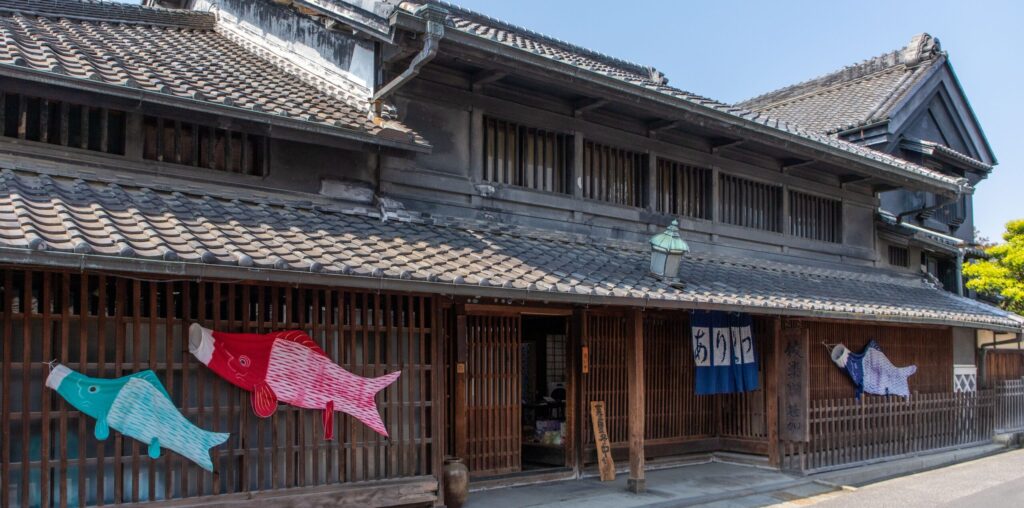
As visitors, perhaps we should remember that we are being allowed to glimpse, for only a short time, the results of a much longer local effort.
Another place I would like to walk is Tokoname.
Tokoname is one of Japan’s best-known pottery-producing towns.
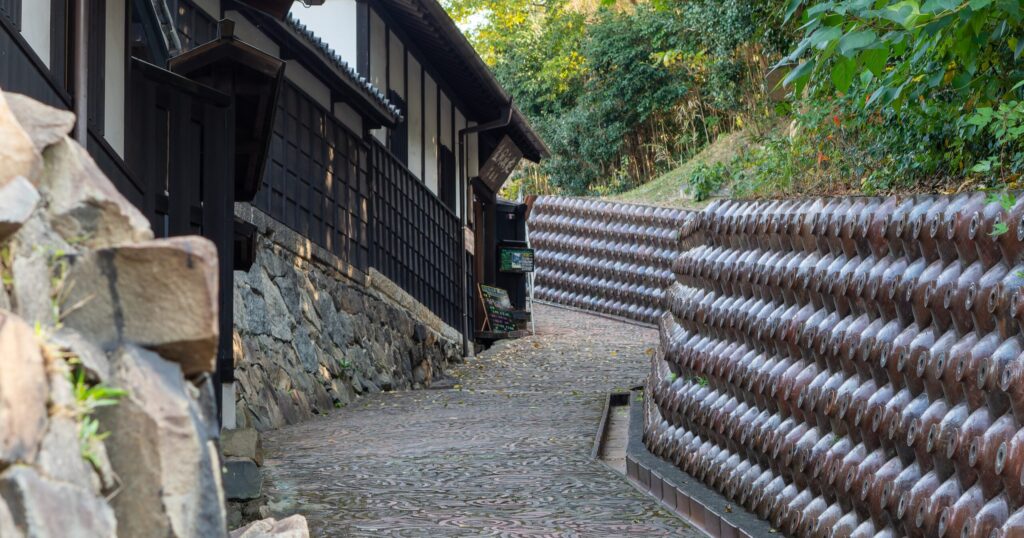
On a low hill near the center of the city lies the Yakimono Sanpomichi, or Pottery Footpath, where visitors can wander through a maze of slopes and lanes shaped by generations of ceramic production.
Brick chimneys rise above workshops. Dark walls border narrow streets. Old ceramic pipes and jars have been reused in walls and paths, creating a landscape found almost nowhere else.
One of the best-known locations is Dokanzaka, or “Clay Pipe Hill.”
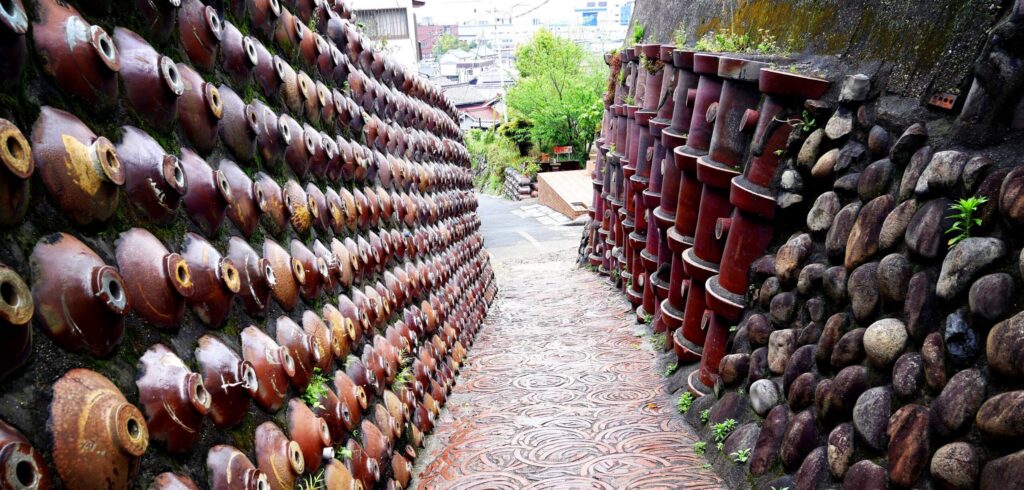
Its retaining walls incorporate ceramic pipes dating from the Meiji era and old shochu bottles from the early Showa period. The walking surface itself contains discarded materials once used during firing.
Today the slope naturally attracts photographers. Yet what now looks picturesque began as a practical solution in a pottery town, where available ceramic materials were reused rather than discarded.
An old climbing kiln also survives along the walking route. Built around 1887, it continued operating until 1974.
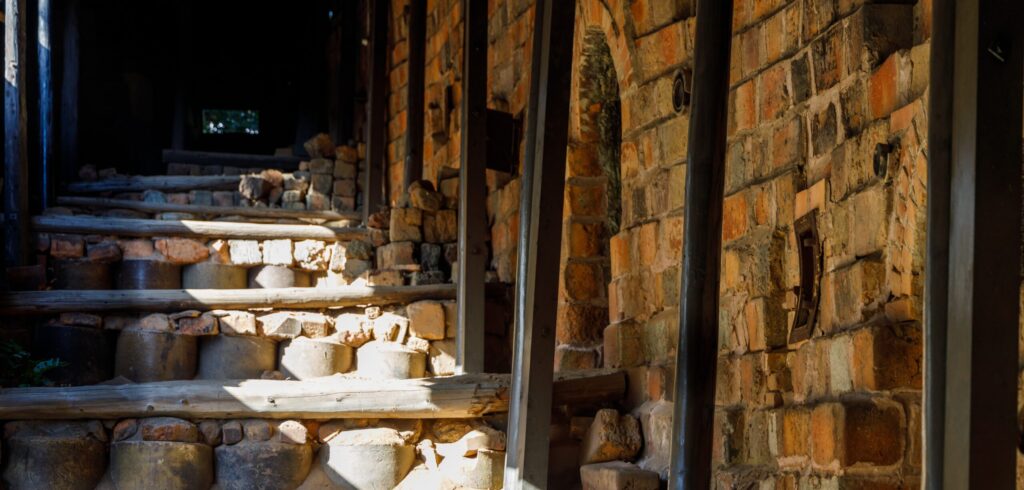
Looking at the kiln and the remaining chimneys makes it easier to imagine everything that existed before a finished piece of pottery appeared in a shop: clay, fire, technique, physical labor, and accumulated experience.
What Arimatsu and Tokoname have in common is that their history is not confined to exhibition rooms.
You find it while walking through the streets.
When traveling, we often search for the particular building we are “supposed” to see. But in towns like these, the spaces between the landmarks can be just as interesting.
The angle of a slope. The width of a lane. The surface of a wall. An old chimney. Tools outside a shop.
When there is no need to hurry toward the next destination, the entire town begins to feel like a small museum.
The Aichi You Notice Away from the Famous Sights
When I first began researching “hidden gems in Aichi,” I expected the idea to be quite simple.
I thought I would look for scenic places with relatively few people.
But after reading about Sakushima, the Yotsuya Rice Terraces, Atera Seven Falls, Arimatsu, and Tokoname, my idea of a hidden gem began to change.
Every one of these places has a name, a history, and people who care for it. They appear in tourism information, and many visitors already know them.
They are certainly not secret places that nobody has discovered.
And yet, they reveal a very different Aichi from the familiar itinerary of Nagoya Castle and Atsuta Jingu Shrine.
You cross the sea by boat and walk through island lanes.
You look across fields built by human hands on a mountain slope.
Deep in a forest, you listen to water falling in several stages over rock.
On the old Tokaido road, you discover the history of shibori dyeing.
In a pottery town, you walk beneath chimneys that once carried smoke from kilns.
Each place contains a different kind of time within the same prefecture.
There is an obvious pleasure in visiting famous landmarks. The moment when you finally stand somewhere you have long wanted to see can become one of the strongest memories of a journey.
But sometimes the place we remember later is not the destination that had the biggest circle around it on our itinerary.
It is somewhere along the way where we happened to stop.
Perhaps one of the pleasures of visiting less obvious destinations is that they leave more room for those moments.
On Sakushima, do not look only at the artworks; notice the paths between them.
At Yotsuya, do not see only a spectacular landscape; think about the generations who rebuilt and maintained it.
In Arimatsu, do not simply admire the historic buildings; imagine how shibori shaped the town around them.
And after taking a photograph on Tokoname’s Clay Pipe Hill, perhaps ask why those pipes are there in the first place.
Moving only a little from “seeing” toward “understanding” can make a journey much deeper.
Aichi has more than enough to enjoy within Nagoya alone. That may be exactly why, on a second trip—or whenever you have a little more time—it is worth going beyond the city.
Toward the sea.
Into the mountains.
Along an old highway.
Through a pottery town.
Instead of choosing the largest star on the map, try selecting one of the smaller dots beside it.
You may find yourself thinking, “I had no idea this side of Aichi existed.”
And perhaps that moment of discovery is one of the greatest pleasures of walking through a place we do not yet know.
The Japanese version of this article is here.↓↓↓