- Introduction
- History and Origins of Inuyama Castle
- Architectural Features — Compact but Highly Functional
- Visitor Information (as of 2025)
- Access
- Highlights of Inuyama Castle
- Inuyama Castle Through the Seasons
- Suggested Itineraries
- Visitor Impressions
- Hidden Highlights for Castle Enthusiasts
- Practical Tips
- Conclusion
Introduction
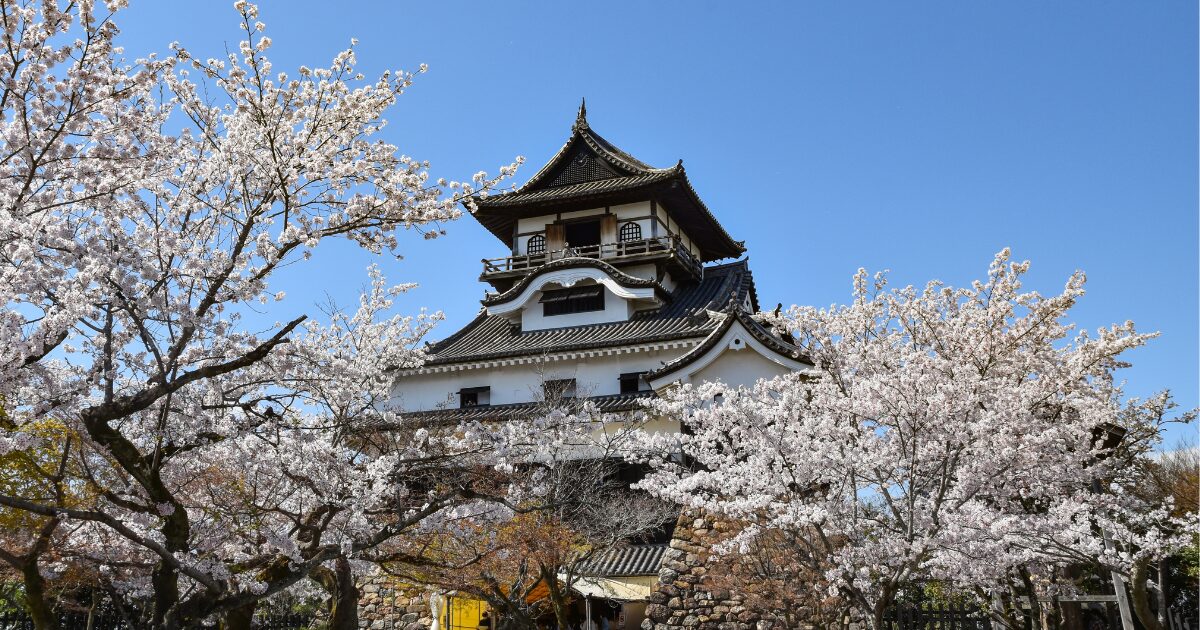
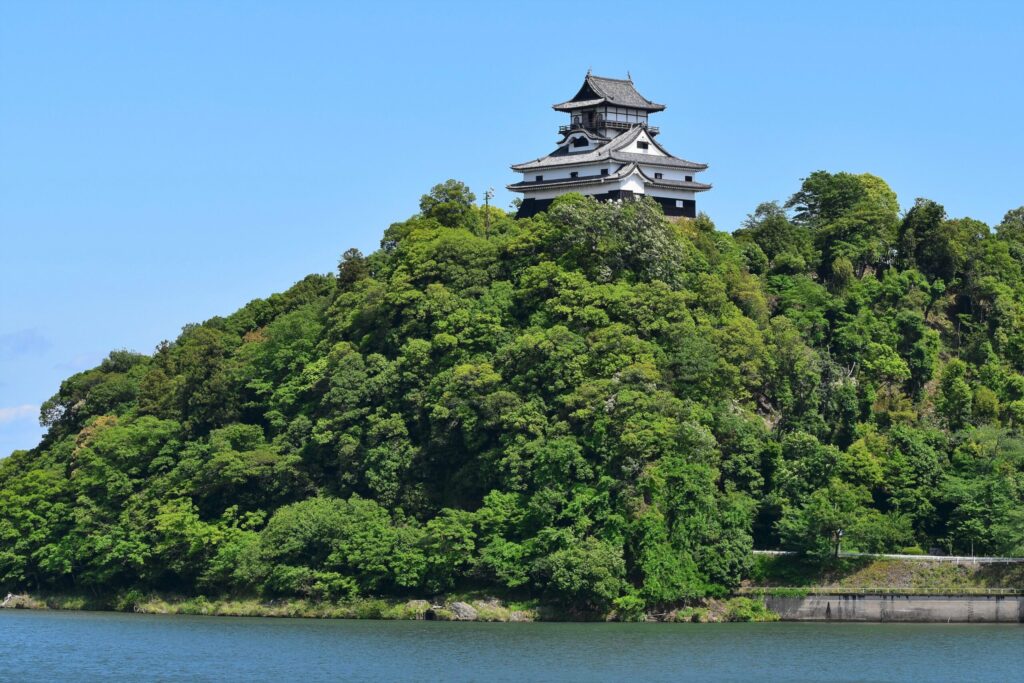
Standing boldly on a cliff overlooking the Kiso River at the northern tip of Aichi Prefecture, Inuyama Castle is one of Japan’s twelve surviving original castles and holds one of the nation’s oldest existing keeps — officially designated as a National Treasure .
It was originally built in 1537 by Oda Nobuyasu, uncle of the famous warlord Oda Nobunaga. During the Edo period, the castle came under the rule of the Naruse family, retainers of the Owari branch of the Tokugawa clan.
Remarkably, Inuyama Castle escaped demolition during the Meiji Restoration and survived both the 1891 Nōbi Earthquake and wartime damage, preserving its authentic wooden structure to this day.
Now managed by a public foundation, it welcomes countless visitors from Japan and abroad. This guide explores the castle’s history, architecture, seasonal beauty, main attractions, and practical travel information, including model itineraries.
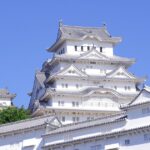
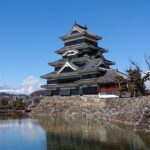
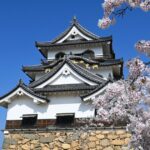
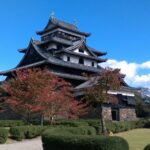
As of 2025, the following five castles in Japan are officially designated as National Treasures and remain standing in their original form:
- Himeji Castle (Himeji City, Hyōgo Prefecture) — also a UNESCO World Heritage Site
- Matsumoto Castle (Matsumoto City, Nagano Prefecture)
- Inuyama Castle (Inuyama City, Aichi Prefecture)
- Matsue Castle (Matsue City, Shimane Prefecture)
- Hikone Castle (Hikone City, Shiga Prefecture)
The Meaning of “National Treasure”
A National Treasure is a special title given to cultural properties of exceptional value in Japan.
It applies not only to castles, but also to temples, shrines, paintings, and statues of the Buddha.
In the case of castles, specific buildings such as the tenshu (main keep), yagura (turrets), gates, or walls are designated as National Treasures.
In other words, it is not the entire castle complex that is designated, but certain structures that possess outstanding historical and architectural value.
How Are They Chosen?
Only castles that meet the following three conditions are recognized as National Treasures:
- Historical Importance
The castle must have significant connections to major periods or events in Japanese history. - Architectural Excellence
The design, structure, and construction techniques must represent the highest level of craftsmanship of their time. - State of Preservation
Even after restorations, much of the original material and form must remain intact.
What Is a “Genzon Tenshu” (Original Keep)?
A genzon tenshu refers to a castle keep built centuries ago that has survived fires, wars, and natural disasters without being destroyed.
Although Japan once had over a hundred castles, only twelve still have their original keeps today.
All five National Treasure castles are among these twelve.
That means you can still see, with your own eyes, wooden beams, nails, and white plaster walls that were crafted hundreds of years ago.
Why Only Five?
In the Meiji period, the Japanese government issued the Castle Abolition Ordinance (Haijōrei), leading to the demolition of many castles.
Later, wars, fires, and earthquakes destroyed even more.
Amid these losses, only five castles managed to survive almost exactly as they were built.
Through repeated repairs and careful preservation, these five have been protected as true “Treasures of Japan.”
National Treasure castles are not merely tourist attractions.
They are living cultural properties—testimonies to Japan’s history, architecture, and the enduring dedication of the people who preserved them.
Each castle carries its own story, standing as a bridge between the past and the present.
If you ever have the chance, visit them and feel the centuries of history that still live within their walls.
History and Origins of Inuyama Castle
Construction and Early Lords
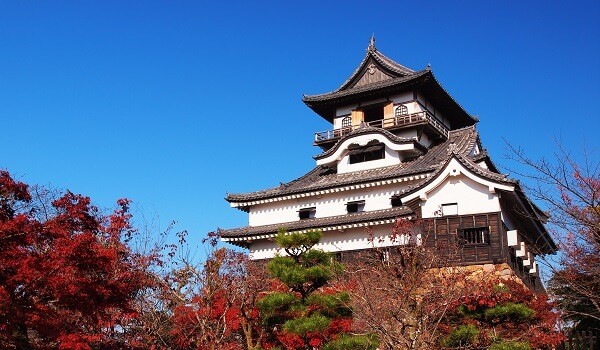
Inuyama Castle was built in 1537 (Tenbun 6) to command the strategic northern frontier of Owari Province. Its location — a natural fortress atop a cliff with the Kiso River as a moat — made it a stronghold for both defense and surveillance during the turbulent Warring States period.
As Oda influence expanded, control of the castle changed hands several times. During the Toyotomi regime, the Ishikawa clan renovated the structure, shaping the keep into a form close to what we see today.
After the Battle of Sekigahara (1600), the castle was entrusted to Naruse Masanari, a senior retainer of the Owari Tokugawa family. The Naruse clan ruled continuously through the Edo period, maintaining the castle’s form into the Meiji era.
Preservation and Private Ownership
When the Meiji Restoration brought the nationwide abolition of feudal domains, most Japanese castles were demolished. Inuyama Castle, however, was spared.
Though the 1891 Nōbi Earthquake caused significant damage, the government returned ownership to the Naruse family on the condition that they repair it — a rare case of continued private ownership of a Japanese castle.
A dismantling and reconstruction survey in the 1960s revealed that the keep retained much of its original timber, confirming it as one of Japan’s oldest surviving wooden castle towers. The long-debated “relocation theory” — that it had been moved from another site — was disproven.
In 2004, ownership was transferred to a public foundation to ensure systematic preservation, restoration, and open access as a National Treasure.
Significance of National Treasure Designation
Inuyama Castle stands alongside Himeji, Matsumoto, Hikone, and Matsue Castles as one of Japan’s “Five National Treasure Castles.”
A “surviving keep” (genzon tenshu) is defined as one built before the Edo period that has never been reconstructed after fire, war, or disaster.
Inuyama’s keep represents the earliest phase of Japanese castle architecture, preserving building techniques from the late 16th to early 17th centuries.
Architectural Features — Compact but Highly Functional
The Bōrō-Style Keep
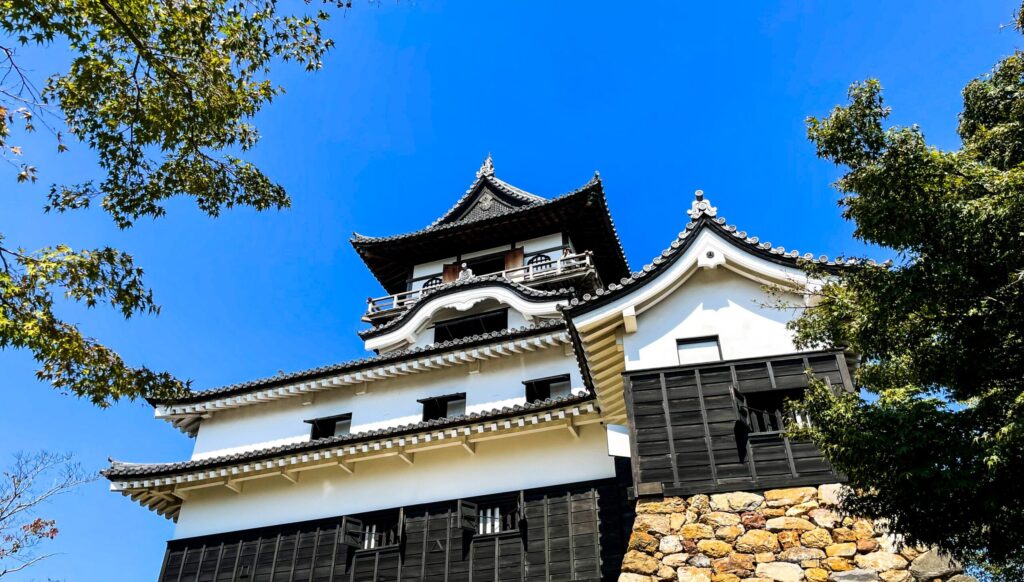
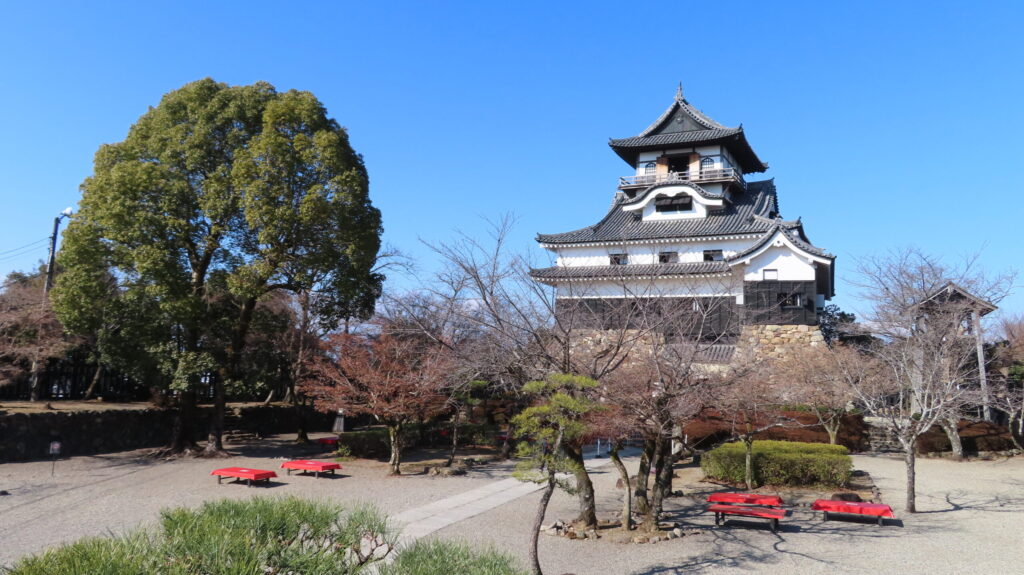
The castle’s tower is a bōrō-gata (watchtower-style) keep: a robust two-tiered base topped by a smaller lookout structure. Though it appears as three stories from the outside, it actually has four interior levels and two basement layers, creating a complex, vertical composition.
This early architectural style combines practicality and symbolism: the lower levels served for command and defense, while the uppermost served as a vantage point and emblem of authority.
Balance of Defense and Aesthetic
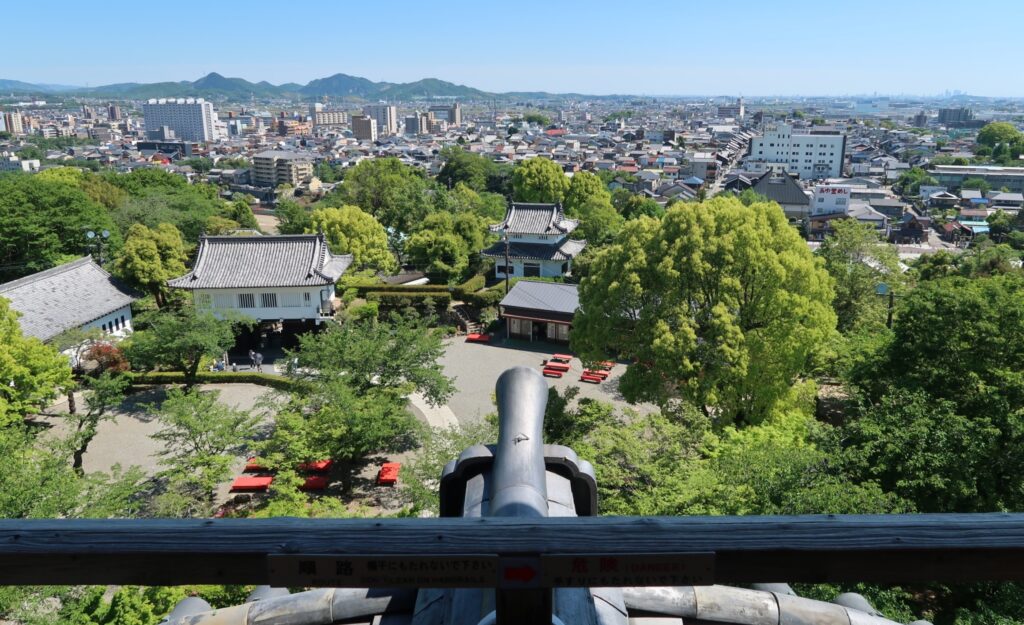
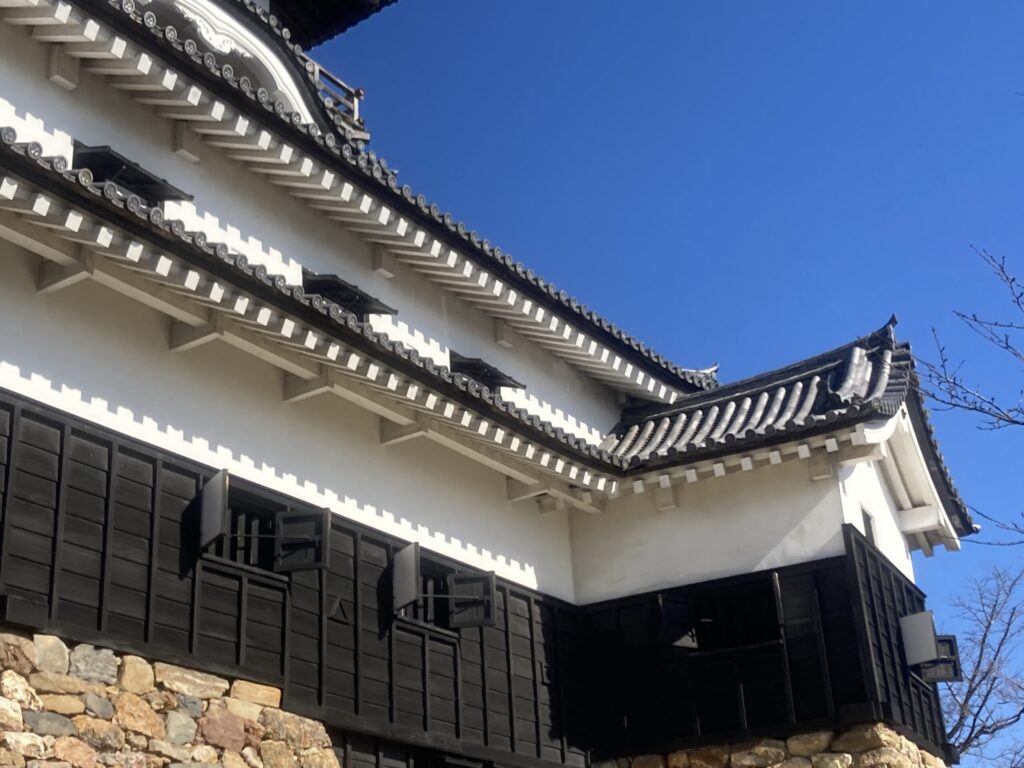
The keep’s walls are equipped with loopholes (sama) for archers and gunners, as well as ishi-otoshi openings for dropping stones on attackers.
The exterior is simple and unadorned, reflecting a warrior’s austerity rather than opulence.
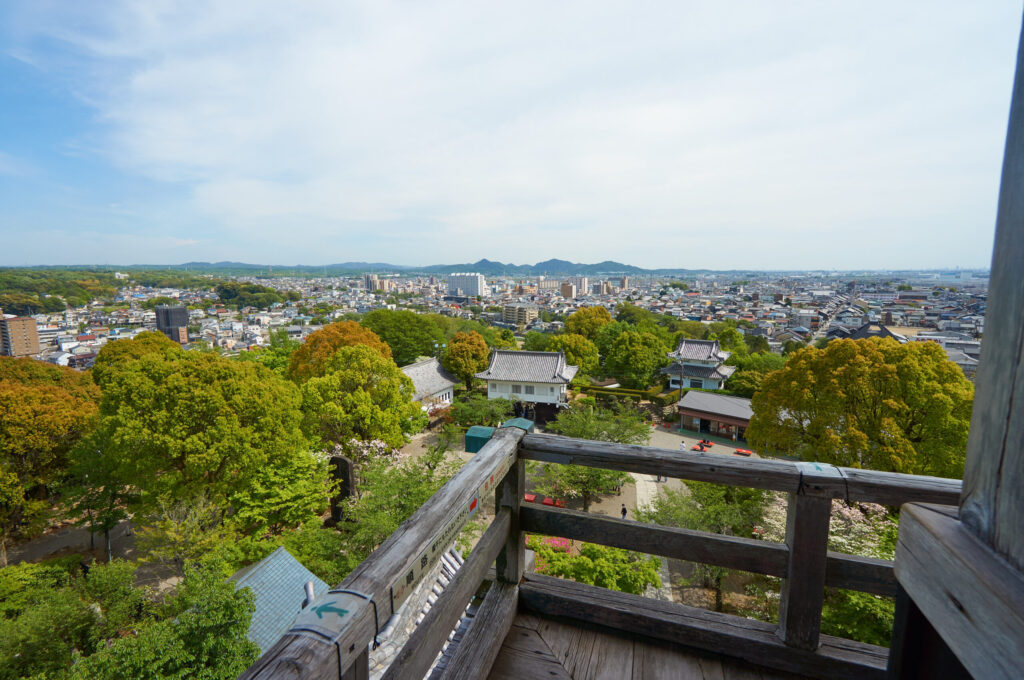
A wooden balcony encircles the top floor, offering a sweeping 360-degree panorama — from the winding Kiso River below to the distant Ibuki Mountains. On windy days, take care with hats and cameras; gusts can be strong.
Stone Walls and Natural Setting
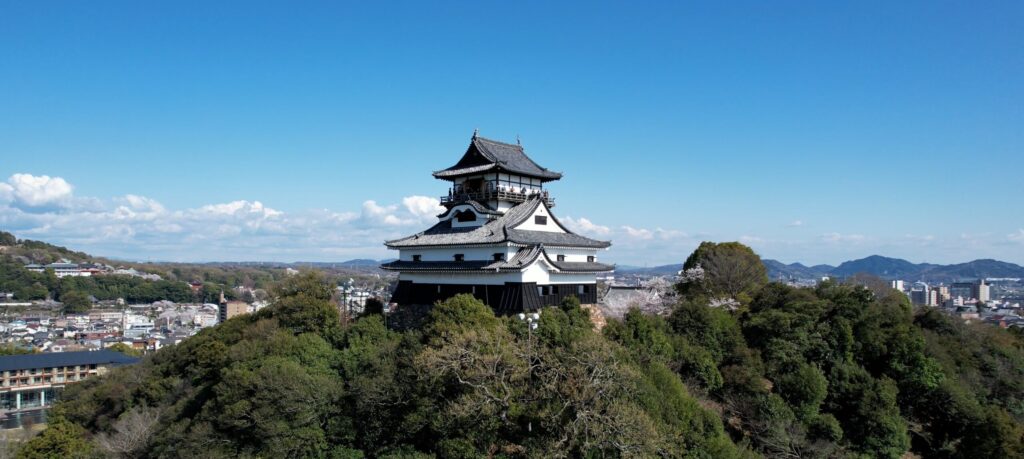
The base of the keep rests on fieldstone masonry (nozura-zumi) — roughly hewn natural stones piled without mortar, typical of early castles.
The sheer cliff and Kiso River form a natural rear moat, known as ushiro-kengo (“secured from behind”), creating formidable defense despite the keep’s small size.
The elevation difference between river and base is about 50 meters, giving the castle exceptional defensive advantage integrated with its terrain.
Visitor Information (as of 2025)
Hours: 9:00–17:00 (last entry 16:30)
Closed: December 29–31
Admission: Adults ¥550 / Elementary–Junior High Students ¥110
Address: 65-2 Kitakoken, Inuyama, Aichi Prefecture
Approx. Visit Time: 60–90 minutes
Inquiries: +81-568-61-1711 (Inuyama Castle Management Office)
Visitors move one-way from the basement level up to the top floor, with structural models and historical exhibits displayed along the route.
Access
By Train & On Foot
From Meitetsu Inuyama Station, it’s about a 20-minute walk to the castle. The recommended route follows Honmachi Street, lined with traditional machiya townhouses, shops, and cafés.
Alternatively, from Inuyama-Yūen Station, the walk takes about 15 minutes along the Kiso River.
By Car
From the Meishin Expressway (Komaki IC) or Chūō Expressway (Kasugai IC), it’s about 25 minutes by car.
City-run and coin-operated parking lots are available near the castle, but during weekends and the cherry blossom season, early arrival is advised.
Highlights of Inuyama Castle
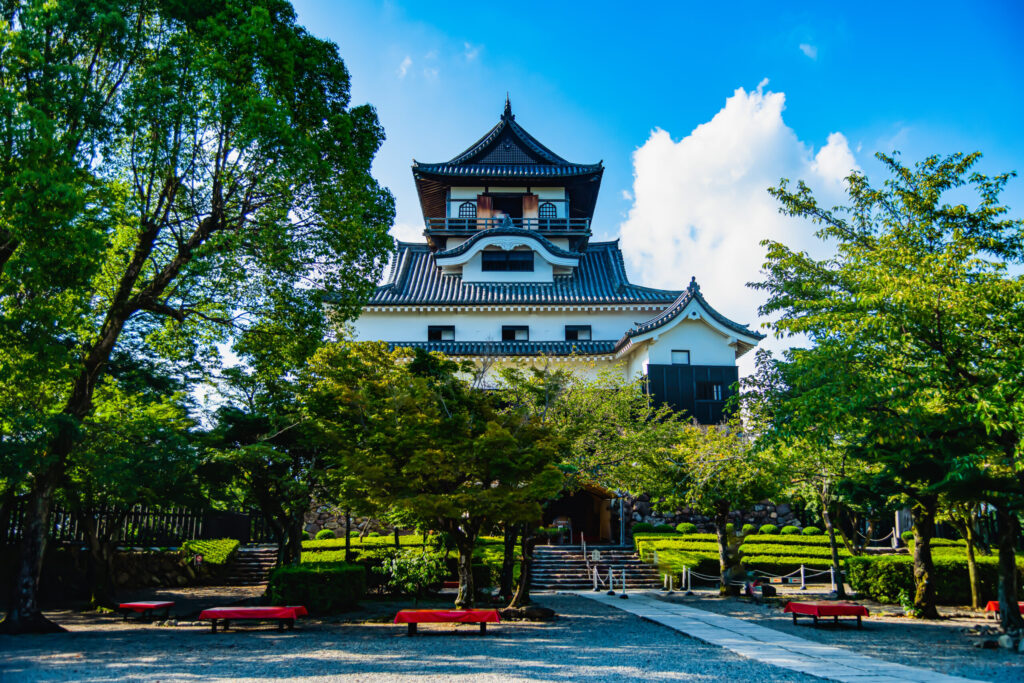
The Top-Floor Balcony
The castle’s wooden balcony is its most iconic feature. The view spans the meandering Kiso River, the Nōbi Plain, and distant mountains — breathtaking at any time of day.
Morning reflections and evening silhouettes make it a prime photography spot.
Castle Town — Honmachi Street
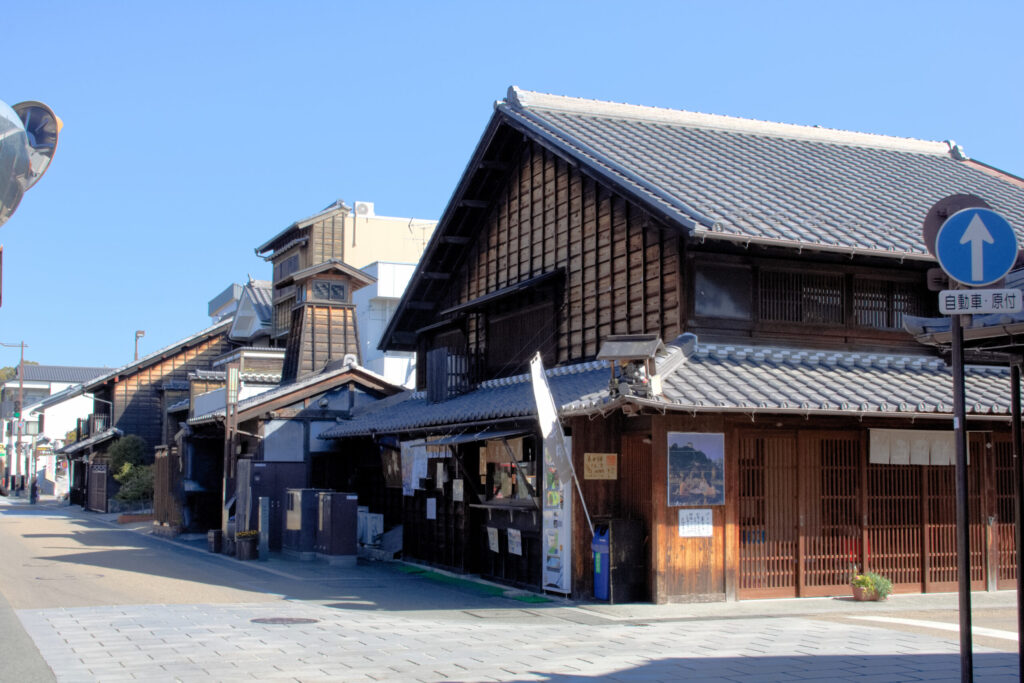
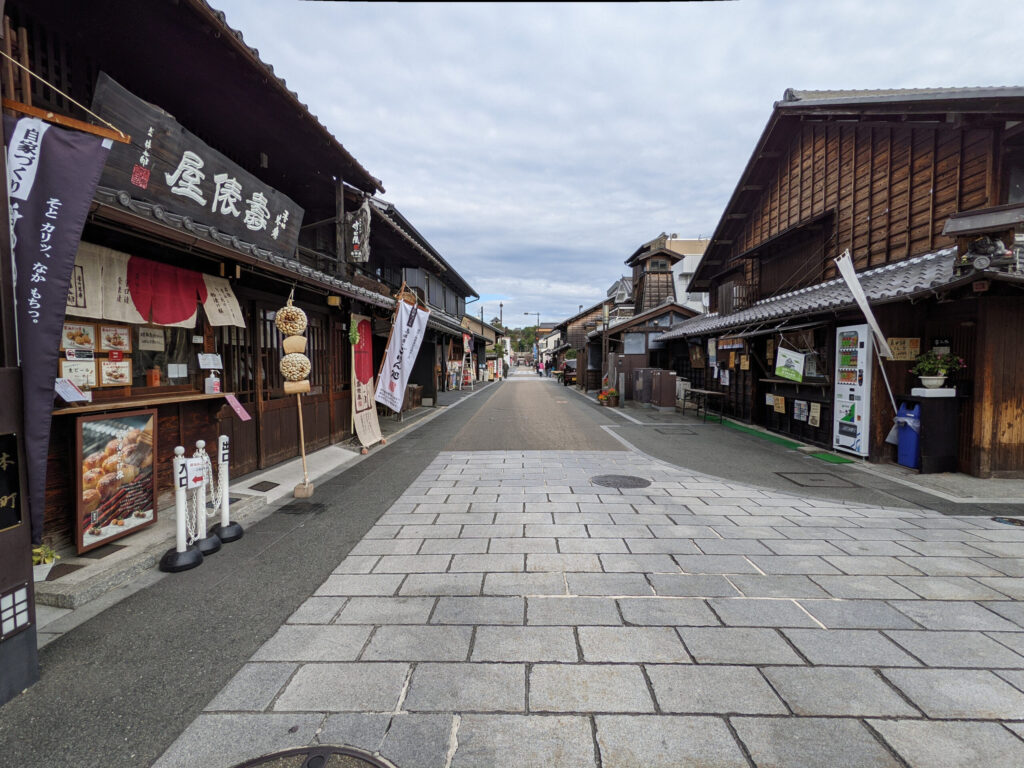
At the castle’s foot lies Honmachi Street, a picturesque lane with black-latticed townhouses, cafés, and souvenir shops.
Local specialties such as gohei-mochi (grilled rice cakes with miso), miso dengaku, and Ogura toast invite leisurely food strolls.
Sanko Inari Shrine
Located at the southern base of the hill, this shrine is famed for its pathway of red torii gates, creating a striking photo scene.
Its heart-shaped ema plaques and reputation for romantic blessings make it especially popular with young women. The path also serves as a convenient shortcut to the castle.
Urakuen & National Treasure Teahouse “Jo-an”
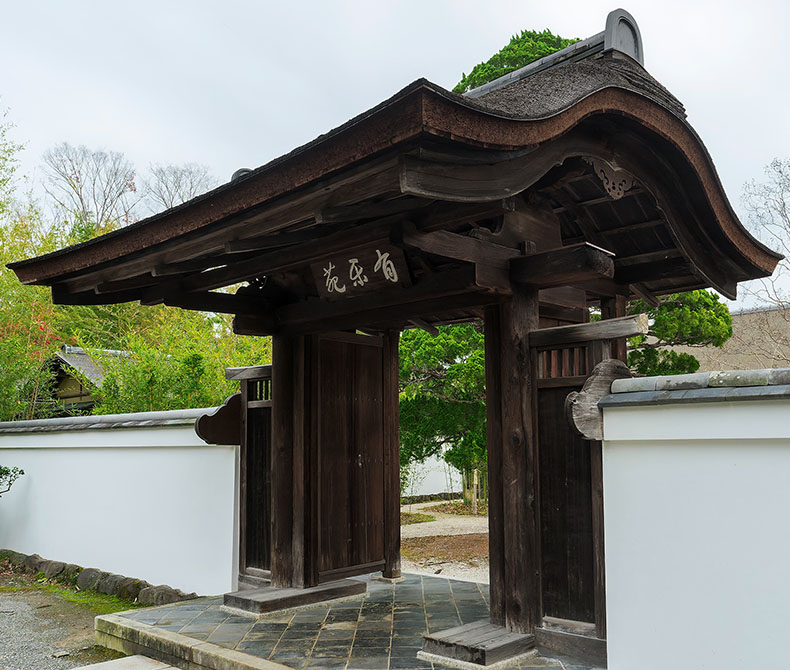
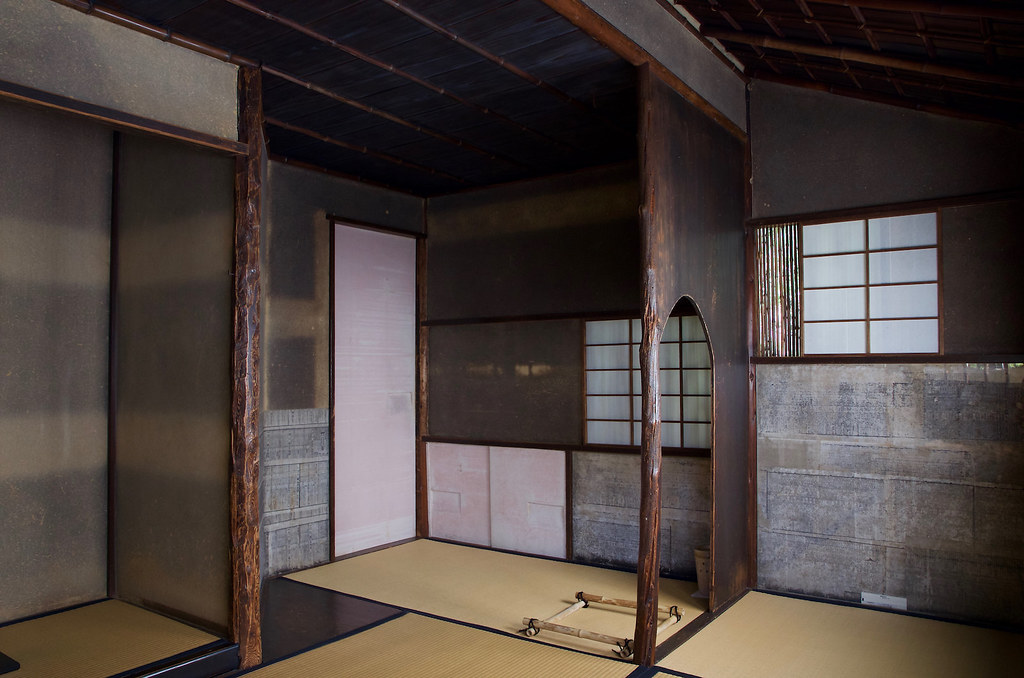
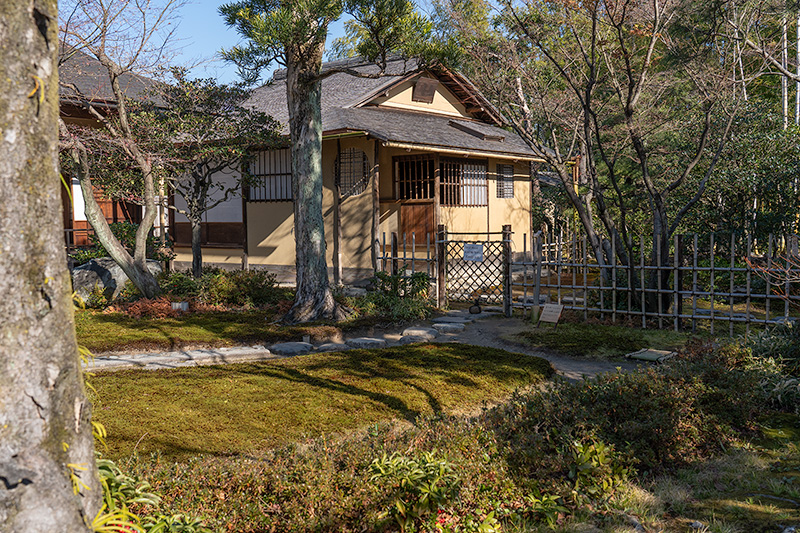
A short walk from the castle stands Urakuen Garden, home to Jo-an, a teahouse built by Oda Urakusai, Nobunaga’s younger brother.
Designated a National Treasure, it exemplifies early Edo-period tea ceremony architecture, offering a glimpse into the refined harmony between “warrior culture and the tea spirit” unique to Inuyama.
Inuyama Castle Through the Seasons
Spring — Cherry Blossoms & Festival Splendor
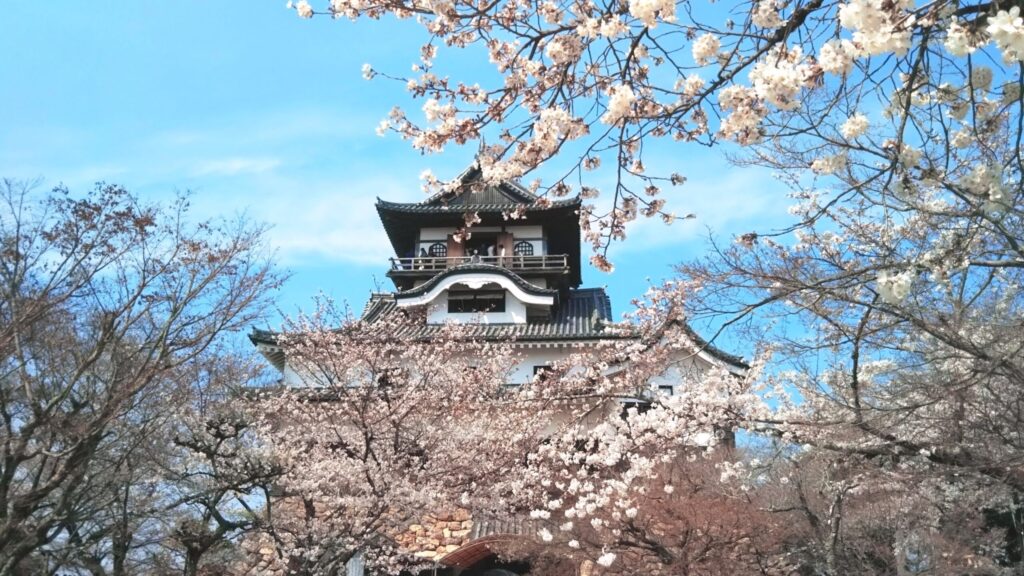
Spring paints Inuyama in pink and white as the riverside and castle town bloom together.
The Inuyama Festival (first weekend of April) features 13 ornate festival floats with mechanical karakuri dolls. At night, 365 paper lanterns illuminate the streets, creating a dreamlike atmosphere.
Summer — Blue River and White Walls
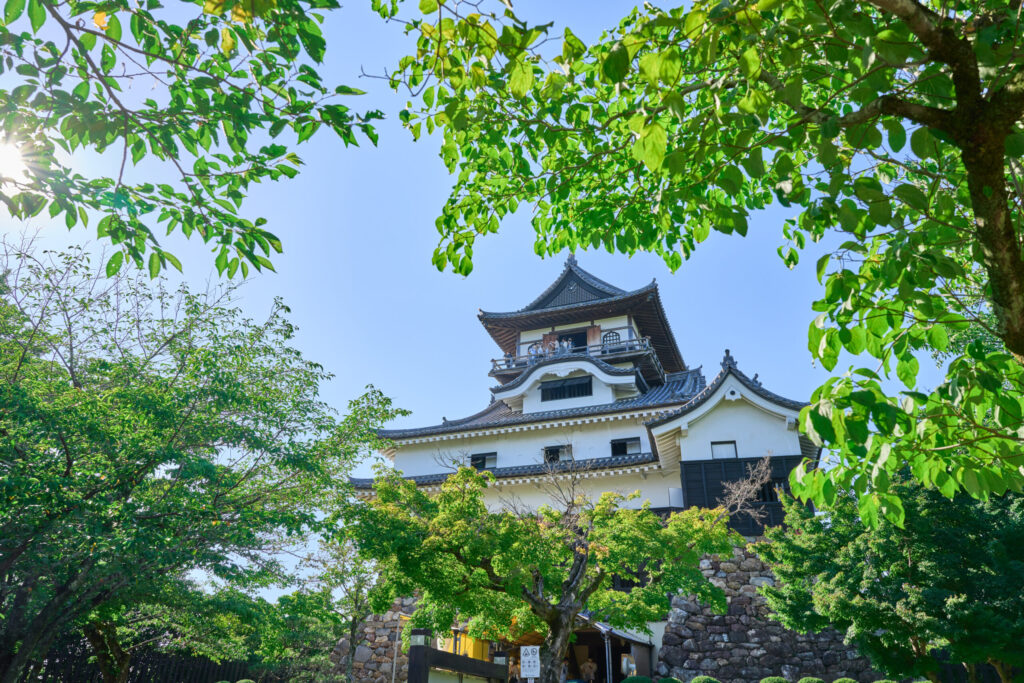
Summer deepens the greenery and brightens the Kiso River’s shimmer.
At sunset, the keep becomes a black silhouette against golden skies — a breathtaking sight. Cool treats like shaved ice and matcha desserts await in the castle town below.
Autumn — Reflections of Red and Gold
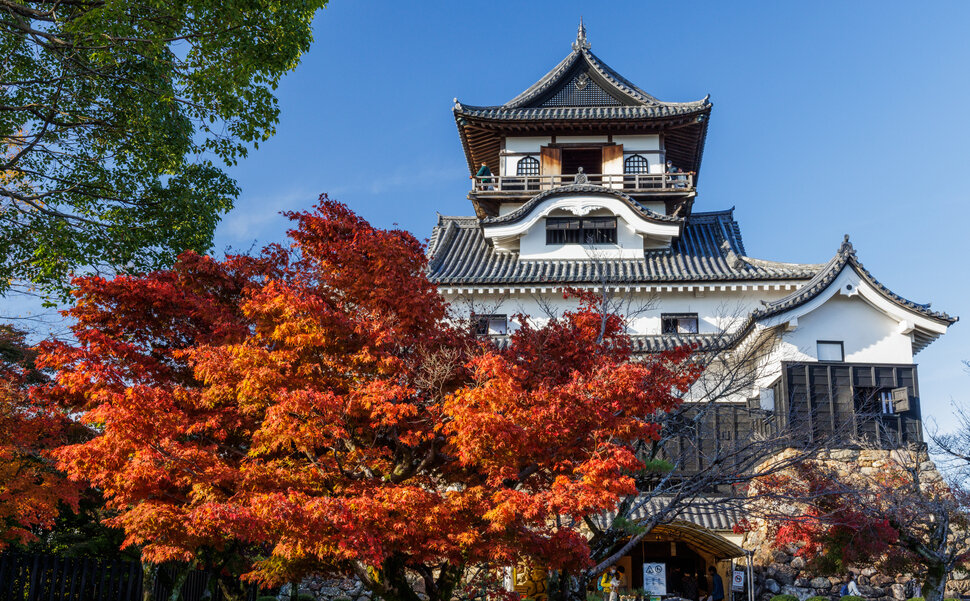
Clear skies and vivid maple leaves mark autumn. The “Upside-Down Inuyama Castle” reflected on the river’s surface attracts many photographers.
Early morning visits offer calm views before crowds arrive.
Winter — A Silent World of Black and White
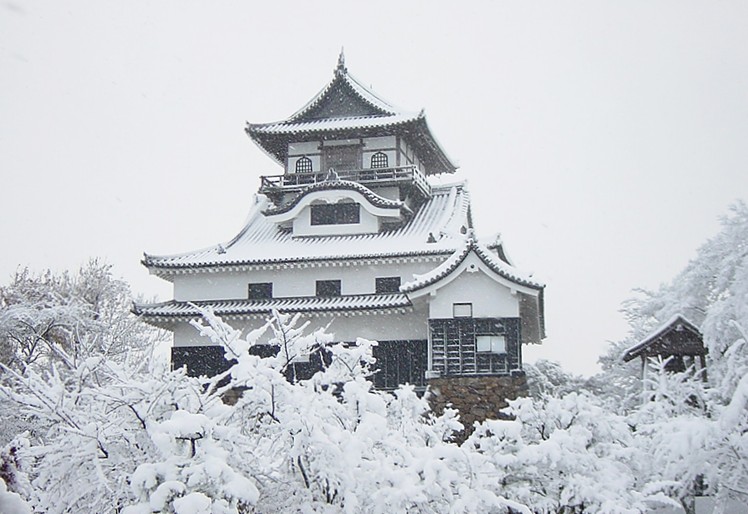
In winter, the bare trees frame the keep’s silhouette sharply.
When snow falls, the contrast between white plaster and black lacquer beams becomes striking.
It’s the best season to quietly appreciate the purity of the architecture.
Suggested Itineraries
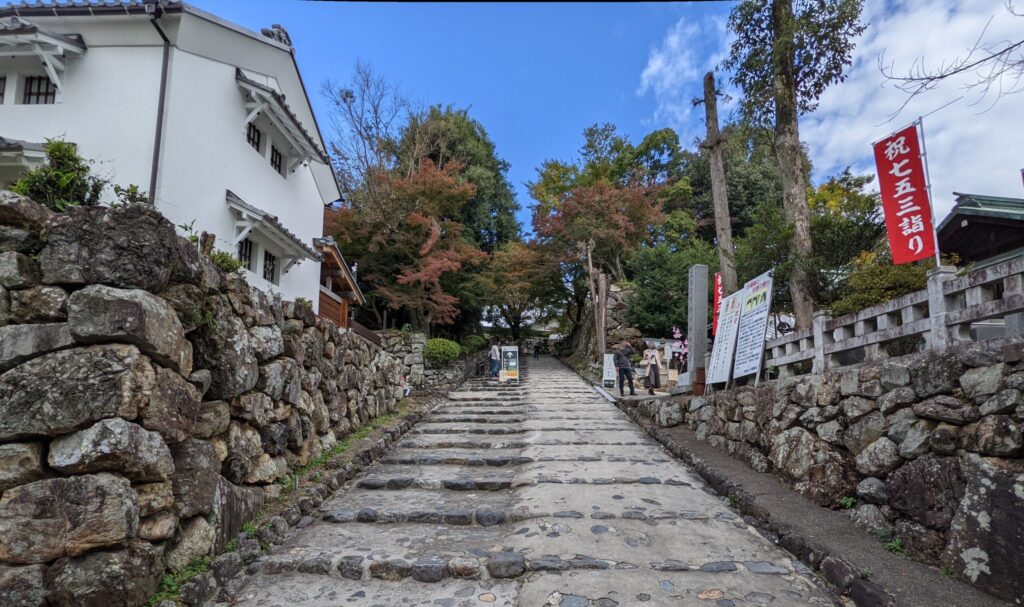
Half-Day Course (Approx. 3 Hours)
09:00 Arrive at Inuyama Station → Walk along Honmachi Street
09:30–10:30 Tour Inuyama Castle (keep & balcony)
10:40–11:10 Visit Sanko Inari Shrine
11:20–12:00 Lunch in the castle town (miso katsu or dengaku)
Full-Day Course (Approx. 6–7 Hours)
09:00 Arrive at Inuyama Station → Explore the castle town
09:45–11:15 Inuyama Castle (interior exhibits & tower climb)
11:30–12:30 Lunch (hitsumabushi eel rice or kishimen noodles)
13:00–14:30 Visit Urakuen & Jo-an Teahouse
15:00–16:00 Karakuri Puppet Museum or local archives
16:30 Sunset photography along the Kiso River → Dinner & departure
Visitor Impressions
“The view from the top balcony was spectacular — the Kiso River and Nōbi Plain stretched endlessly!”
“The scent of the wooden beams inside was wonderful; you can feel the craftsmanship up close.”
“Combining the castle with food-hopping in the town made for a perfect day.”
“The stairs are steep — sneakers recommended!”
“The red torii of Sanko Inari Shrine are incredibly photogenic.”
“Seeing Jo-an teahouse connected the worlds of samurai and tea in one day.”
Hidden Highlights for Castle Enthusiasts
- The Mystery of the Bōrō Keep:
Once thought to be relocated from another site, restoration surveys confirmed all timbers date from the same period — proving it stands in its original location. - A 50-Meter Cliff Fortress:
The steep Kiso River bluff functions as a natural moat, making this small castle extraordinarily hard to assault. - Loopholes and Angles:
Each floor’s gun and arrow slits differ in angle, designed for both short- and long-range defense. - The Naruse Clan and Sanko Inari Shrine:
The family worshipped the shrine as their guardian deity; its torii also guided samurai on the ascent. - Refined Details:
The katōmado (cusped windows) and karahafu gables on the upper floor reveal elegance despite its early construction date.
Practical Tips
- Avoid Crowds:
Visit early in the morning during cherry blossom or festival season. - Footwear:
Steep stairs — wear comfortable shoes. - Safety:
The balcony can be windy; secure hats and cameras. - Best Photo Spots:
Kiso River embankment for full views, torii gates of Sanko Inari Shrine, and the 360° panorama from the top balcony.
Note: Opening hours and admission may change; check the official website before your visit.
Conclusion
Inuyama Castle embodies both the martial practicality of the Sengoku era and the refined aesthetics of Edo Japan.
Its remarkably preserved wooden structure allows visitors to feel the warmth of the materials and the ingenuity of 16th-century craftsmanship.
Within walking distance lie a castle town rich in taste and charm, sacred shrines, and a tea house of sublime cultural value.
Compact yet profound, Inuyama Castle offers a day steeped in history, architecture, and quiet beauty — a must-visit for anyone seeking the origins of Japan’s castle heritage.
The Japanese version of this article is here.↓↓↓