Introduction
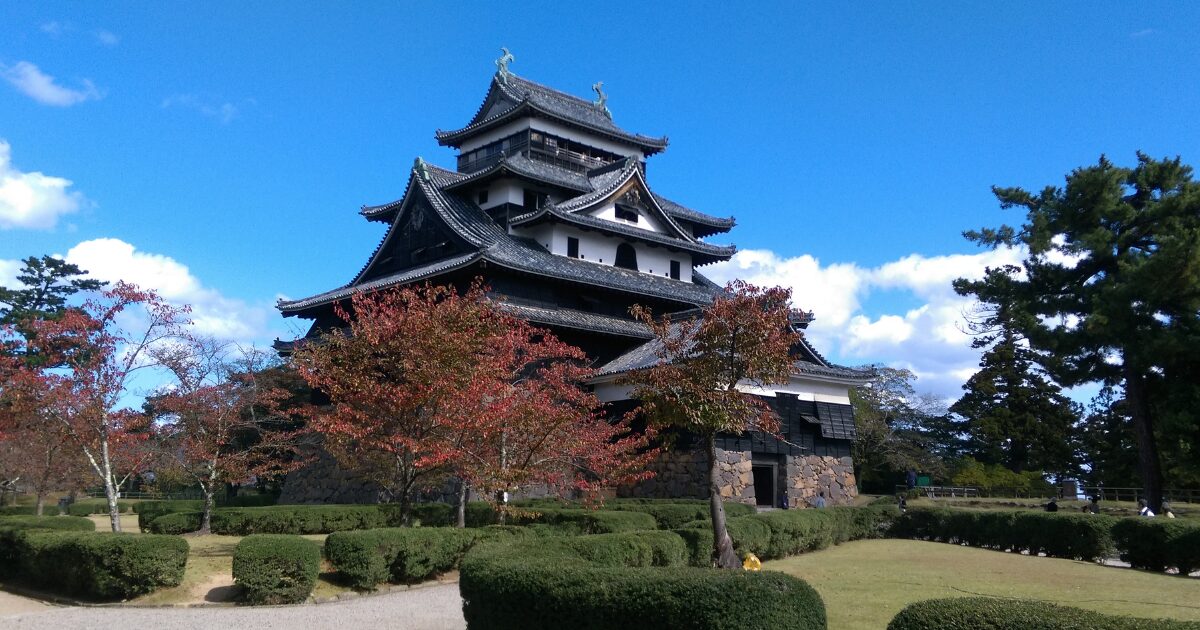
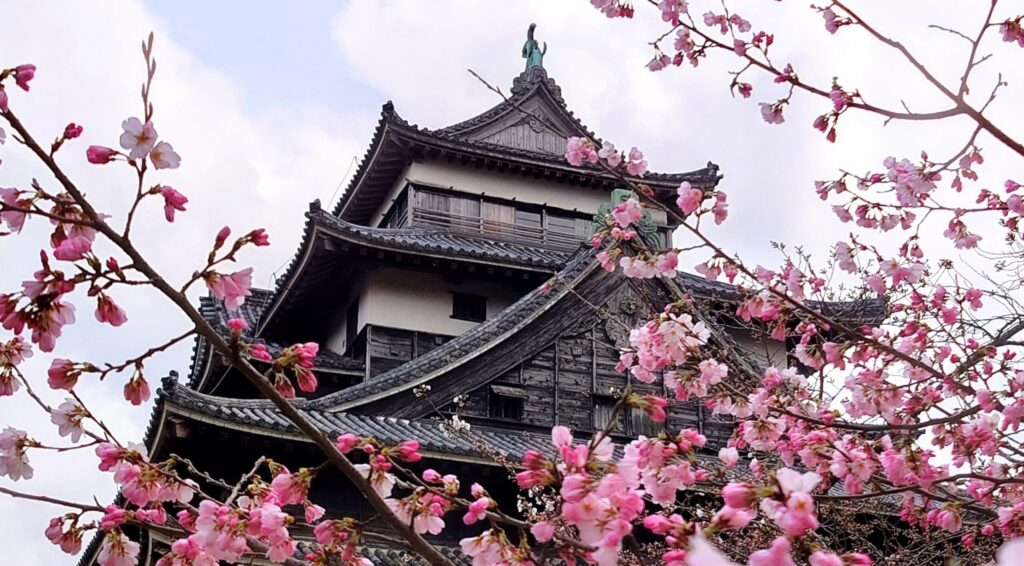
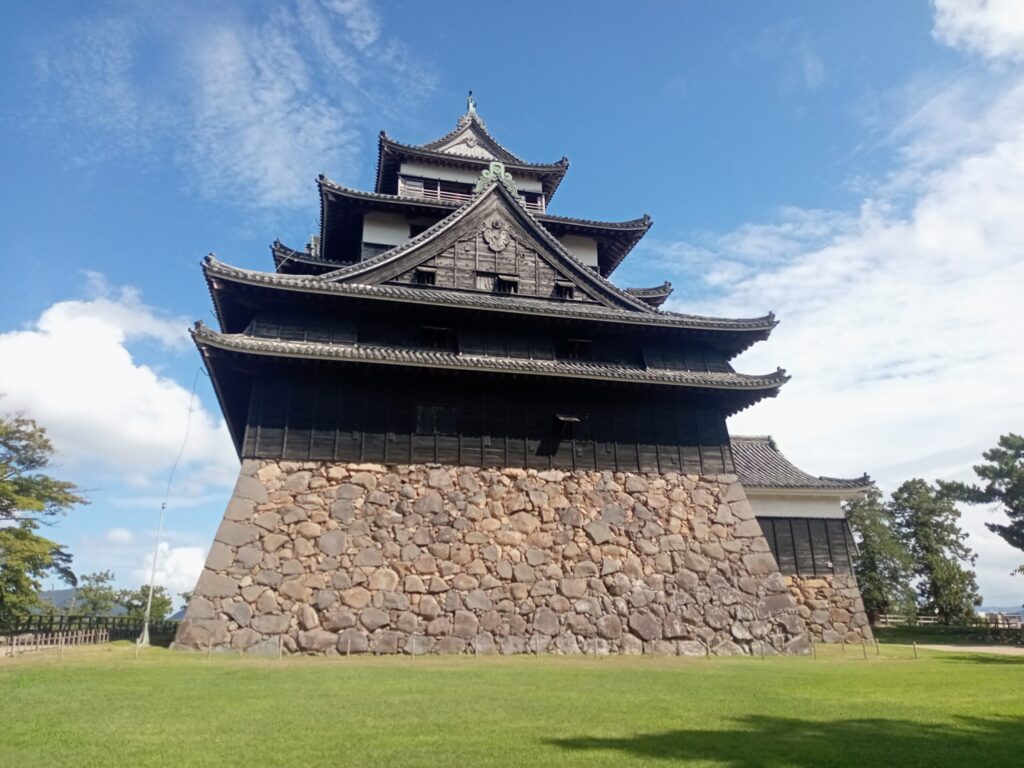
Standing with dignified grace beside Lake Shinji, Matsue Castle is one of Japan’s few surviving castles whose original tenshu (main keep) remains intact.
Its black-lacquered walls earned it the nickname Chidori-jō — “Castle of the Plovers” — for the way its layered roofs seem to spread their wings against the sky.
Built more than 400 years ago by the strategist Horio Yoshiharu, and later refined under the Matsudaira clan, the fortress embodies both the strength of the Warring States and the quiet refinement of the Edo period.
Today, Matsue Castle anchors the city’s historical heart. Visitors can sense the blend of martial power and cultural elegance that shaped Matsue, once known as the “Little Kyoto of the San’in region.”
This article traces its history, structure, highlights, surrounding townscape, and access information, offering context that deepens each view of the black tower mirrored in Lake Shinji’s evening glow.
As of 2025, the following five castles in Japan are officially designated as National Treasures and remain standing in their original form:
- Himeji Castle (Himeji City, Hyōgo Prefecture) — also a UNESCO World Heritage Site
- Matsumoto Castle (Matsumoto City, Nagano Prefecture)
- Inuyama Castle (Inuyama City, Aichi Prefecture)
- Matsue Castle (Matsue City, Shimane Prefecture)
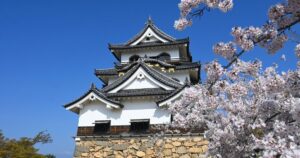
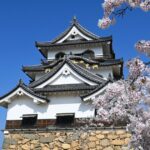
- Hikone Castle (Hikone City, Shiga Prefecture)
The Meaning of “National Treasure”
A National Treasure is a special title given to cultural properties of exceptional value in Japan.
It applies not only to castles, but also to temples, shrines, paintings, and statues of the Buddha.
In the case of castles, specific buildings such as the tenshu (main keep), yagura (turrets), gates, or walls are designated as National Treasures.
In other words, it is not the entire castle complex that is designated, but certain structures that possess outstanding historical and architectural value.
How Are They Chosen?
Only castles that meet the following three conditions are recognized as National Treasures:
- Historical Importance
The castle must have significant connections to major periods or events in Japanese history. - Architectural Excellence
The design, structure, and construction techniques must represent the highest level of craftsmanship of their time. - State of Preservation
Even after restorations, much of the original material and form must remain intact.
What Is a “Genzon Tenshu” (Original Keep)?
A genzon tenshu refers to a castle keep built centuries ago that has survived fires, wars, and natural disasters without being destroyed.
Although Japan once had over a hundred castles, only twelve still have their original keeps today.
All five National Treasure castles are among these twelve.
That means you can still see, with your own eyes, wooden beams, nails, and white plaster walls that were crafted hundreds of years ago.
Why Only Five?
In the Meiji period, the Japanese government issued the Castle Abolition Ordinance (Haijōrei), leading to the demolition of many castles.
Later, wars, fires, and earthquakes destroyed even more.
Amid these losses, only five castles managed to survive almost exactly as they were built.
Through repeated repairs and careful preservation, these five have been protected as true “Treasures of Japan.”
National Treasure castles are not merely tourist attractions.
They are living cultural properties—testimonies to Japan’s history, architecture, and the enduring dedication of the people who preserved them.
Each castle carries its own story, standing as a bridge between the past and the present.
If you ever have the chance, visit them and feel the centuries of history that still live within their walls.
A Castle Born from Water and Vision
Horio Yoshiharu’s Ingenious Design
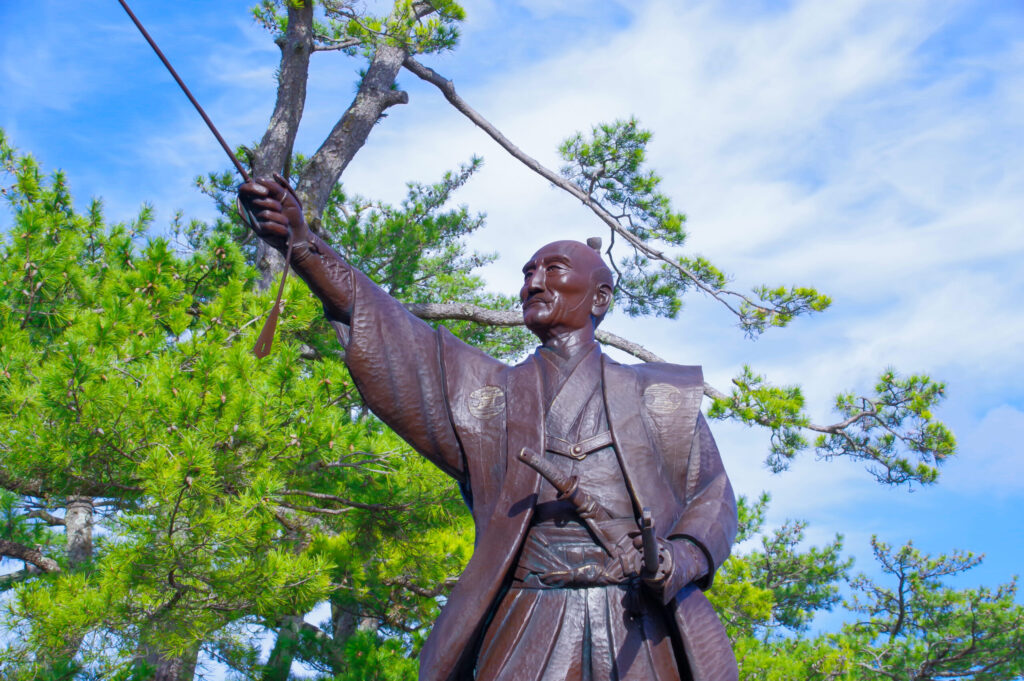
When warlord Horio Yoshiharu received control of Izumo after the Battle of Sekigahara (1600), he chose an unlikely site: a wide, marshy plain.
Rather than fight the water, he embraced it. Beginning in 1607, he transformed the wetlands into a defensive network of moats and canals linked to Lake Shinji and Nakaumi Bay.
After five years of work, the castle was completed in 1611 — a stronghold protected not by cliffs or walls, but by water itself.
A Castle to Protect People, Not Just Power
Yoshiharu’s guiding idea was humane: a castle should shelter townspeople as much as soldiers.
By controlling water levels and transport routes, the new fortress ensured both safety and prosperity.
That philosophy would later shape the entire identity of Matsue — a castle town built on coexistence between nature, commerce, and culture.
From the Sword to the Tea Whisk
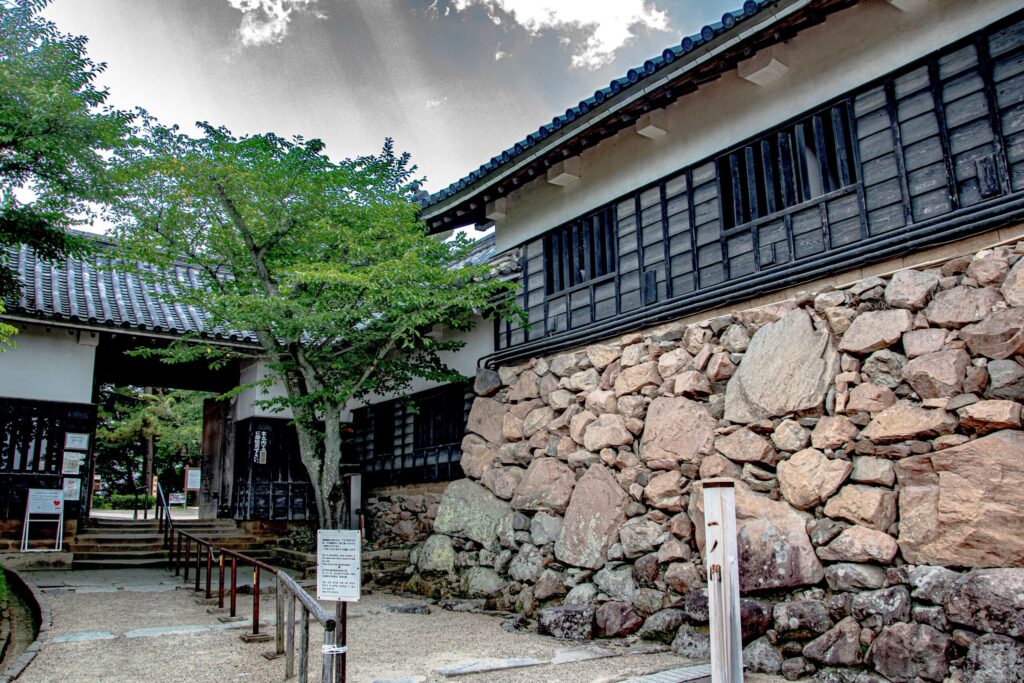
Matsudaira Naomasa and the Peaceful Domain
After the Horio line ended, rule passed briefly to the Kyōgoku family and then to Matsudaira Naomasa, a grandson of Tokugawa Ieyasu.
Under his leadership, Matsue entered a long era of stability. The city became a center of scholarship and good governance, where education and irrigation mattered more than warfare.
Lord Fumai and the Culture of Tea
Generations later, the tenth lord, Matsudaira Harusato — known to history as Lord Fumai — transformed the domain into a cultural capital.
He developed the Fumai School of Tea Ceremony, elevating everyday life into an art of harmony and restraint.
The sweets, ceramics, and tea traditions he fostered still flavor modern Matsue, where wagashi shops and quiet tea rooms trace their lineage to his vision.
In this way, Matsue Castle evolved from a symbol of battle into a symbol of refinement.
The Black Tower: Strength and Serenity
The Contrast of Black and White
Matsue’s five-story, six-level keep is sheathed in black lacquered planks that repel moisture and vanish into night.
The upper tiers, coated in white plaster, create a striking monochrome pattern that changes hue with each hour — a deliberate aesthetic of balance between strength and purity.
Design of a Warrior’s Mind
Inside, the keep reveals its Warring-States practicality: steep stairs, arrow slits, gun ports, and stone-drop chutes remain exactly as they were.
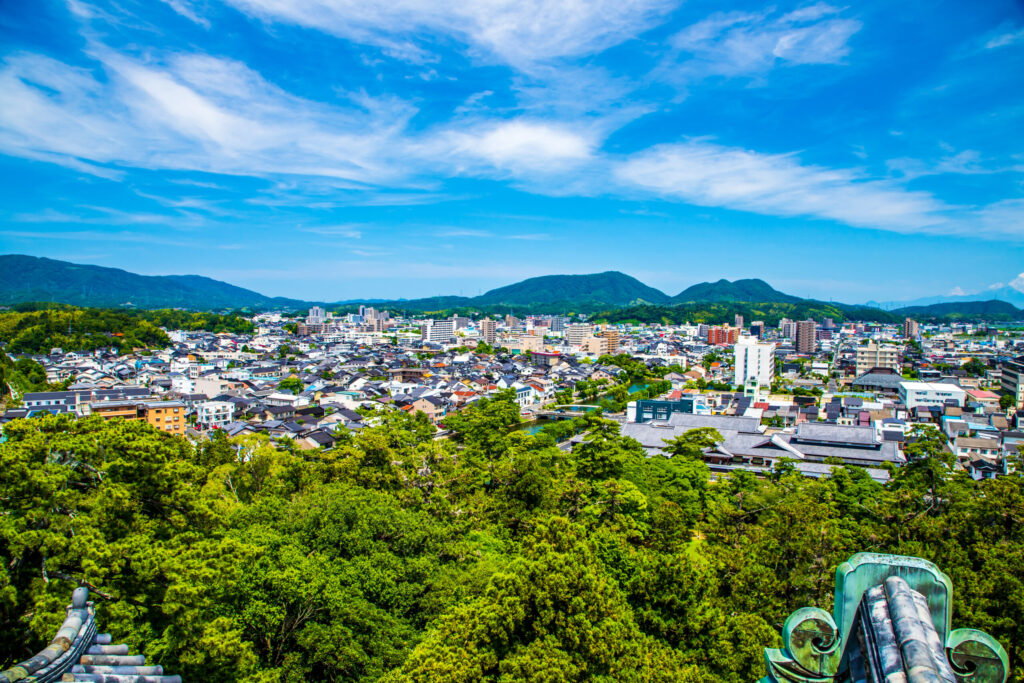
The uppermost watchtower commands a sweeping view of Lake Shinji, Nakaumi Bay, and Mount Daisen.
At sunset, the black walls glow crimson, and one feels the silence of centuries settle over the city.
Saved by Its Citizens
In 1873, Japan’s government ordered most castles dismantled. Matsue Castle was auctioned for demolition, but local educators and former samurai raised the funds to buy it back.
Their civic determination preserved what we see today.
In 2015, ink markings discovered on its beams confirmed the original construction date, leading to official recognition as a National Treasure — a title earned not only by age but by devotion.
Walking the Castle Town beside the Water
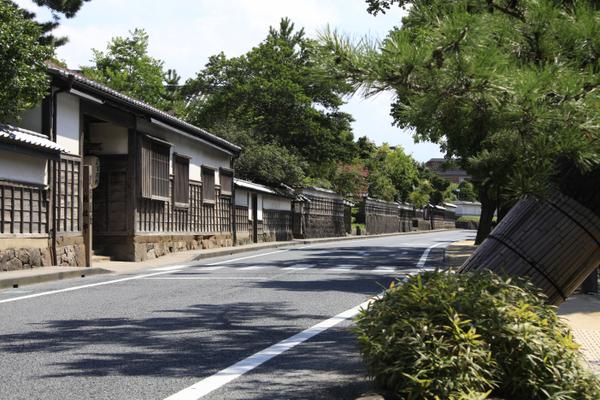
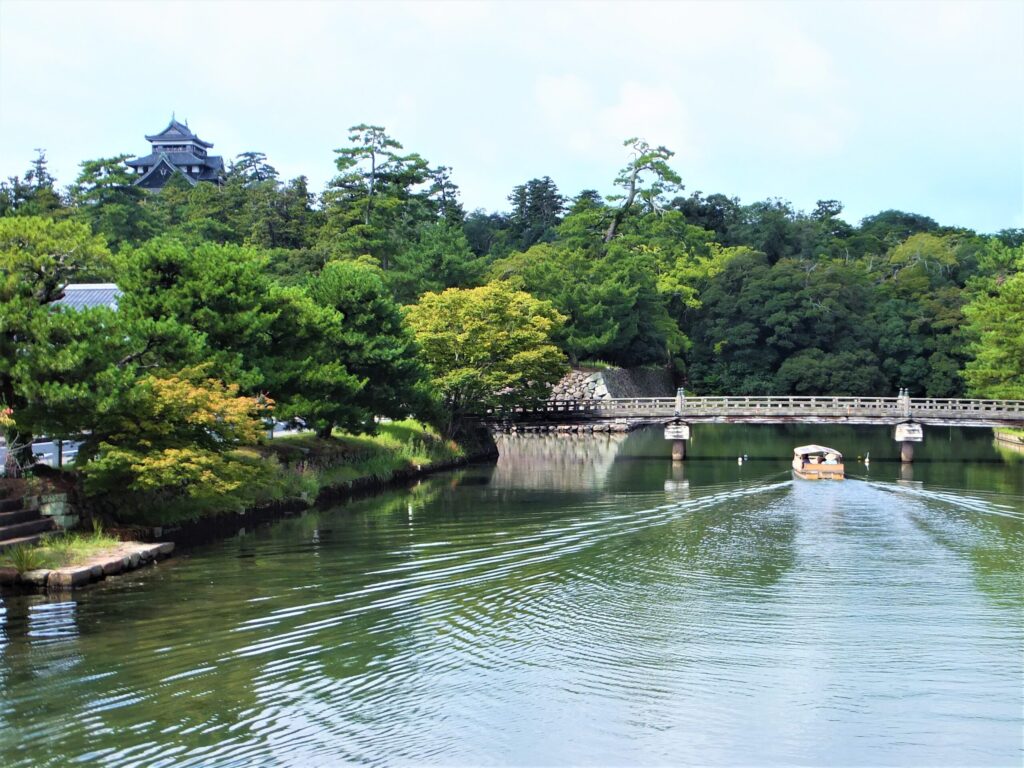
Shiomi Nawate and the Samurai Houses
North of the castle runs Shiomi Nawate Street, a quiet lane lined with white-walled samurai residences and weeping willows.
Here stand the Lafcadio Hearn Memorial Museum and the preserved Samurai Residence Park, where visitors can step into the rhythm of Edo-period life.
Horikawa Boat Cruise and Lake Shinji’s Sunset
The Horikawa Sightseeing Boat circles the castle moats under low wooden bridges, guided by boatmen who sing traditional songs.
At dusk, a short walk leads to Lake Shinji, where the sun melts into the water and the castle’s black silhouette burns gold.
It is a view that defines the aesthetic of “quiet beauty” for which Matsue is famed.
Seasons around Matsue Castle
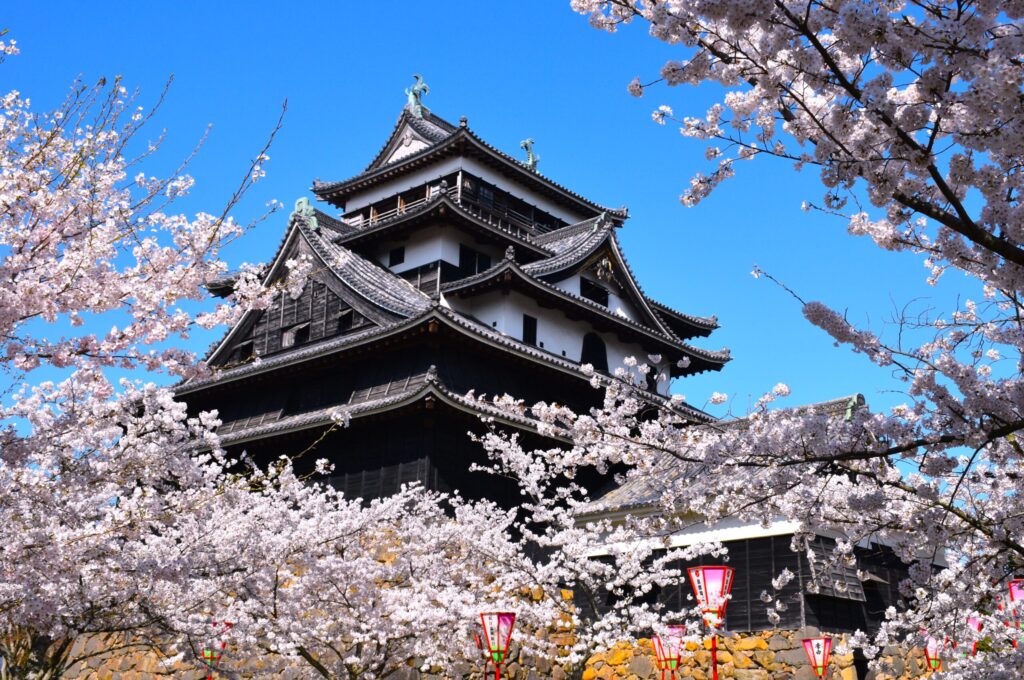

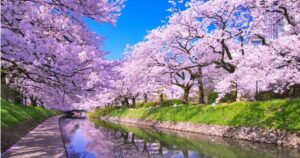
- Spring: Two hundred cherry trees bloom along the moats; night illumination turns the scene ethereal.
- Summer: Blue sky and green foliage sharpen the contrast with the dark keep.
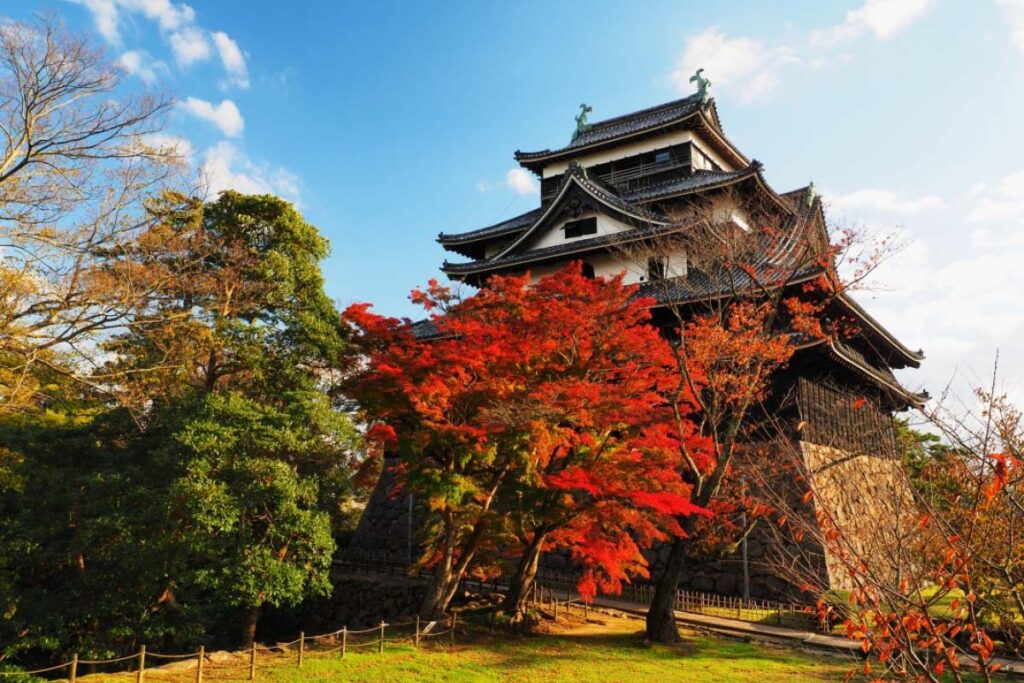
- Autumn: Maples flame against the stone walls and cool wind ripples the moat.
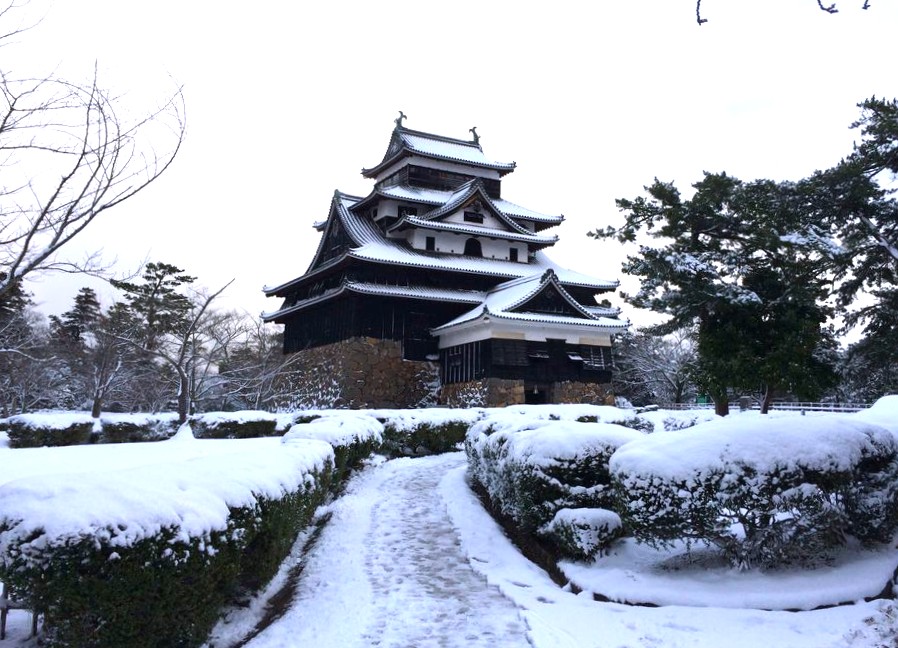
- Winter: Snow cloaks the roofs; the silence of the San’in winter deepens the castle’s dignity.
Access & Visitor Information
Location:
1-5 Tonomachi, Matsue City, Shimane Prefecture
Access:
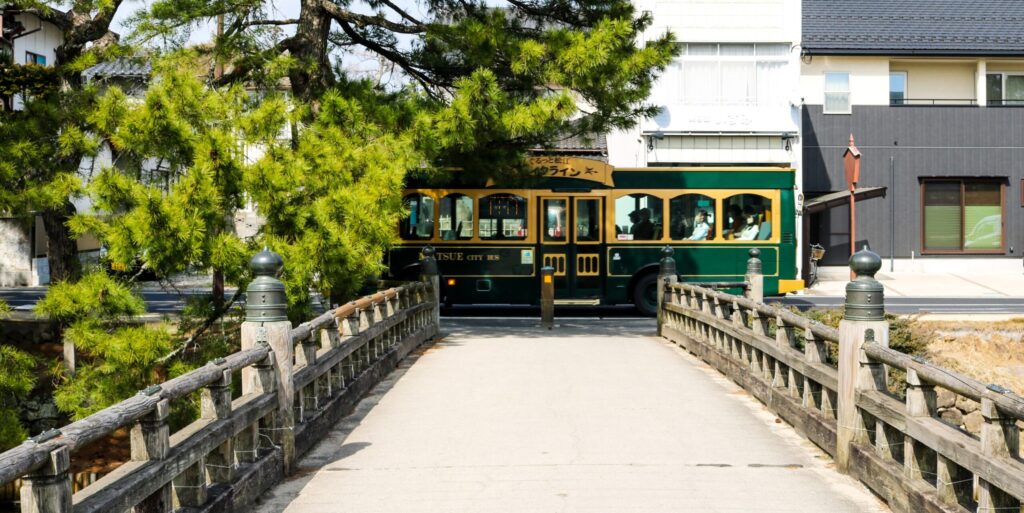
10 min by “Lake Line” City Bus from JR Matsue Station → alight at Kenchō-mae Stop → 5 min walk
Hours:
8:30 a.m.–6:30 p.m. (varies seasonally)
Closed:
Dec 29 – 31
Admission:
Adults ¥680 / Children ¥290
Nearby Attractions:
Matsue Jinja Shrine, Matsue History Museum, Karakoro Art Studio, Lake Shinji Sunset Viewpoint
Local Flavors:
Izumo soba noodles, wagashi such as Wakakusa and Yamakawa, and fresh shijimi clam dishes.
Conclusion – Power in Stillness
The black walls of Matsue Castle embody strength; the white plaster gleams with purity.
A fortress once built for war now soothes the hearts of travelers.
As the setting sun paints its lacquered surfaces red, one senses the presence of those who built, defended, and finally preserved it — proof that serenity, too, is a kind of power.
The Japanese version of this article is here.↓↓↓